

How to Remove Tree Sap from Your Car Without Damaging Paint
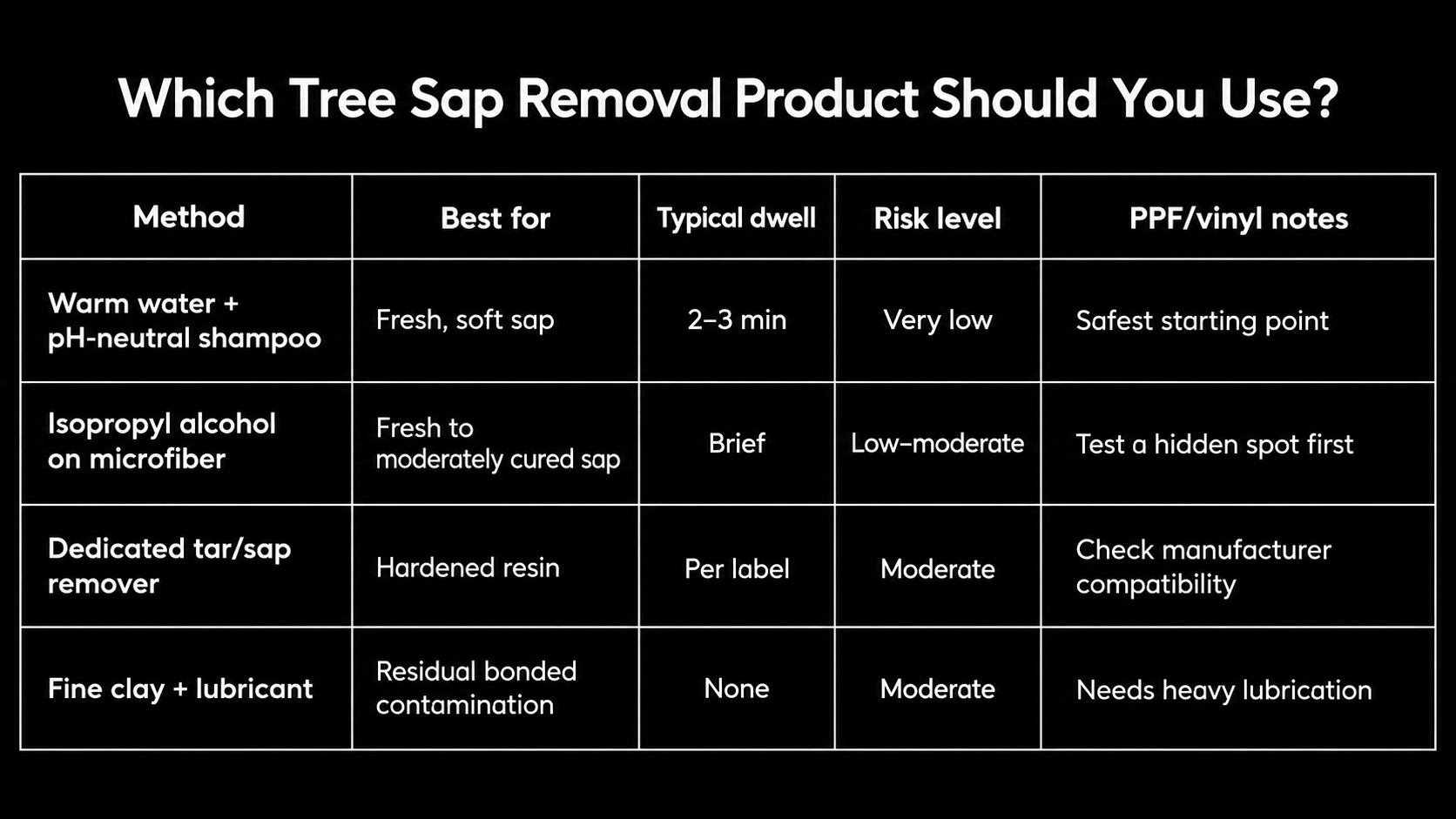
Tree sap should be removed using the least aggressive method first: cool the panel, rinse away loose grit, soften the sap with warm water and a pH-neutral car shampoo, then lift it with a clean microfiber towel. If it doesn't fully release, move up to a small amount of isopropyl alcohol or a dedicated automotive sap remover.
Never scrape hardened sap off with a fingernail, razor blade, plastic card, or abrasive paste. Once the sap is gone, check the spot for a cloudy outline or dull ring.
That can mean the clear coat underneath is already etched, and no amount of scrubbing will fix that. This is the same order of operations Fresh Layer Mobile Detailing's IDA-certified technicians follow on every San Diego decontamination visit, updated here for 2026.
Before you touch the sap:
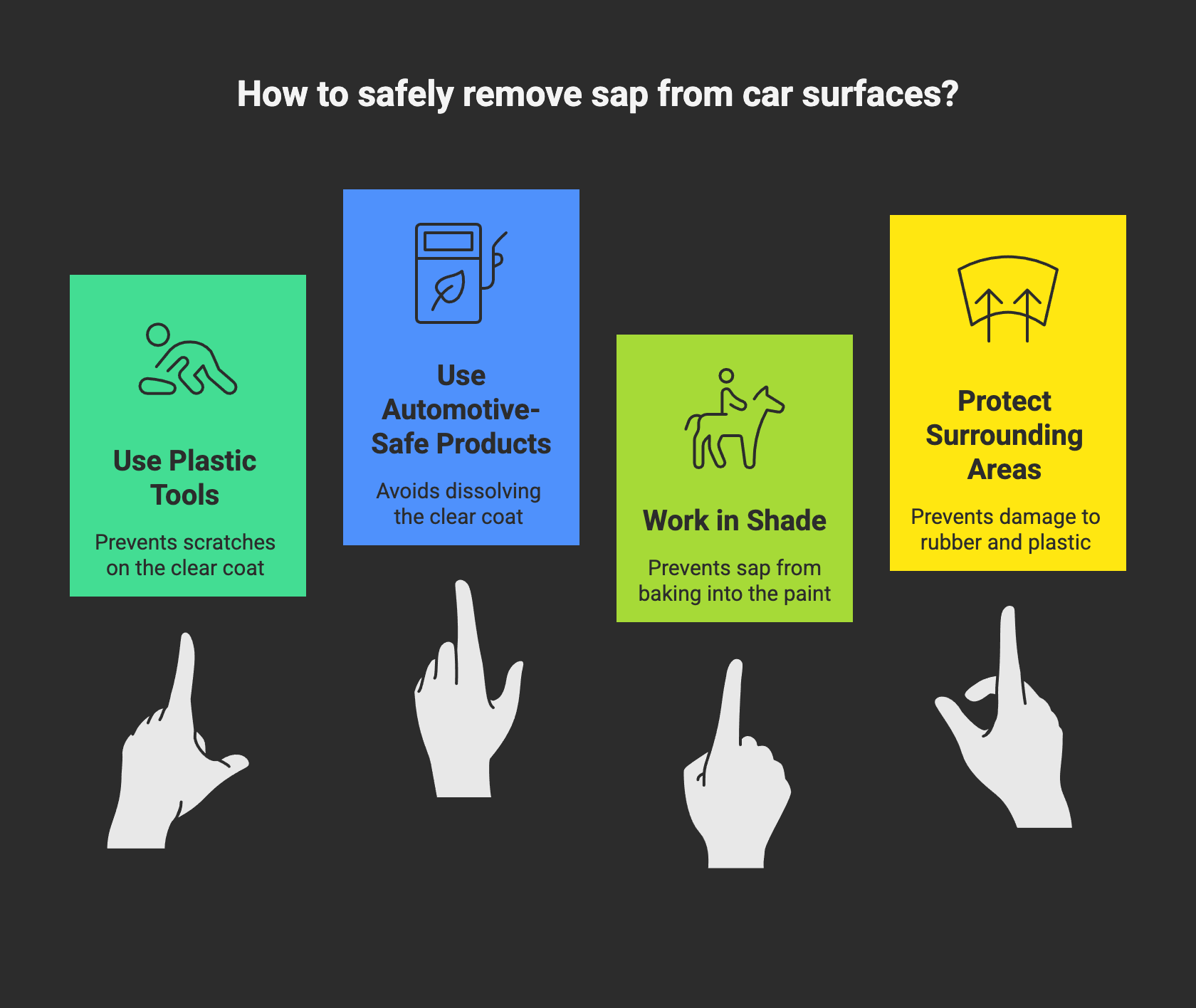
Move the car into shade.
Let hot paint cool down completely.
Rinse away dust and grit first.
Use only clean, plush microfiber towels.
Never dry-scrub or scrape hardened resin.
What Is Tree Sap, and Why Does It Damage Car Paint?

Fresh sap is soft, sticky, and comes off easily with the right approach. Give it a few hot San Diego afternoons and the same drop turns into a hardened resin that's bonded to the clear coat. That's when removal gets risky, because the sap itself has changed from a surface contaminant into something closer to a stuck-on stain.
Sap or honeydew? If your car sits under a eucalyptus tree, what's on the hood isn't always true sap. It's often honeydew, the sticky residue left by aphids and other sap-feeding insects. It behaves the same way on paint (sticky, sugar-based, more damaging the longer it sits), so the removal steps below work for both.
The real risk isn't the sap itself, it's what happens when you rub it. Dust and pollen get trapped in the sticky residue, and dragging a dry towel across that mix is like rubbing fine sandpaper across your clear coat. Removing the sap is only half the job. Checking what's left behind matters just as much.
How to Remove Tree Sap From Your Car Safely
Work through these steps in order. Stop as soon as the sap releases, don't jump straight to the strongest product because it feels faster.
1. Cool the panel. Never treat sap on hot paint. Pull into shade or a garage and let the surface come down to a comfortable temperature before applying anything.
2. Pre-rinse and wash the area. Use clean water and a pH-neutral automotive shampoo with a microfiber wash mitt. This clears loose dust and grit before you ever touch the sap itself, so you're not grinding contamination into the paint later.
3. Soften fresh sap with a warm compress. Soak a microfiber towel in warm water, lay it flat over the sap for 2 to 3 minutes, then lift, don't scrub. Repeat if the sap hasn't budged.
4. Use isopropyl alcohol carefully. Apply a small amount to the towel, never spray it directly onto the panel. Give it a brief dwell time, dab and lift, then wipe the area clean. Alcohol strips wax and sealant, so plan to reapply protection afterward.
5. Escalate to a dedicated sap remover if needed. Only reach for this if shampoo, warm water, and alcohol haven't fully worked. Follow the product label exactly, test an inconspicuous spot first, and don't let it sit longer than directed or dry on the paint.
6. Bring in clay only for what's left behind. Don't run a clay bar over a thick sap blob, you'll just drag it around. Remove the bulk of the resin chemically first, then use a fine clay bar with heavy lubrication for any remaining bonded residue. Clay can introduce light marring if the surface isn't wet enough, so don't skip the lubricant.
7. Inspect, then re-protect. Check the spot under angled light for a dull ring, staining, or haze. If it's clean, apply wax, sealant, or a coating-safe protectant right away, since the surface has no protection left after alcohol or chemical removers.
Professional Products:
Stoner Car Care Tarminator ($12-15)
Koch-Chemie Eulex ($18-22)
Clay bar kit with lubricant ($15-25)
Automotive-grade degreaser
Paint-safe polish or compound
Tree Sap Removal Product Reviews
Stoner Car Care Tarminator

Stoner Car Care Tarminator is a popular choice for removing tree sap, tar, and other stubborn contaminants from your car's surface. Its powerful formula quickly dissolves sap without damaging the paint. Users appreciate its ease of use and effectiveness, making it a staple in any car care kit.

Koch-Chemie Eulex is another highly recommended product for sap removal. Known for its strong cleaning capabilities, Eulex safely removes sap, tar, and other residues from the car's surface. It is particularly praised for its fast action and the ability to clean without leaving any streaks or damage.
What Not to Use on Tree Sap
Skip these, even if they seem like a faster fix: fingernails, razor blades, plastic cards, dry paper towels, dry microfiber on hardened sap, baking-soda paste, abrasive household cleaners, gasoline, acetone, brake cleaner, lacquer thinner, heat guns, and stiff brushes. Every one of these either scratches the clear coat directly or strips more than the sap.
The same goes for claying a thick, hardened blob before dissolving it. You're not lifting the sap at that point, you're grinding it into the paint with the clay as an abrasive.
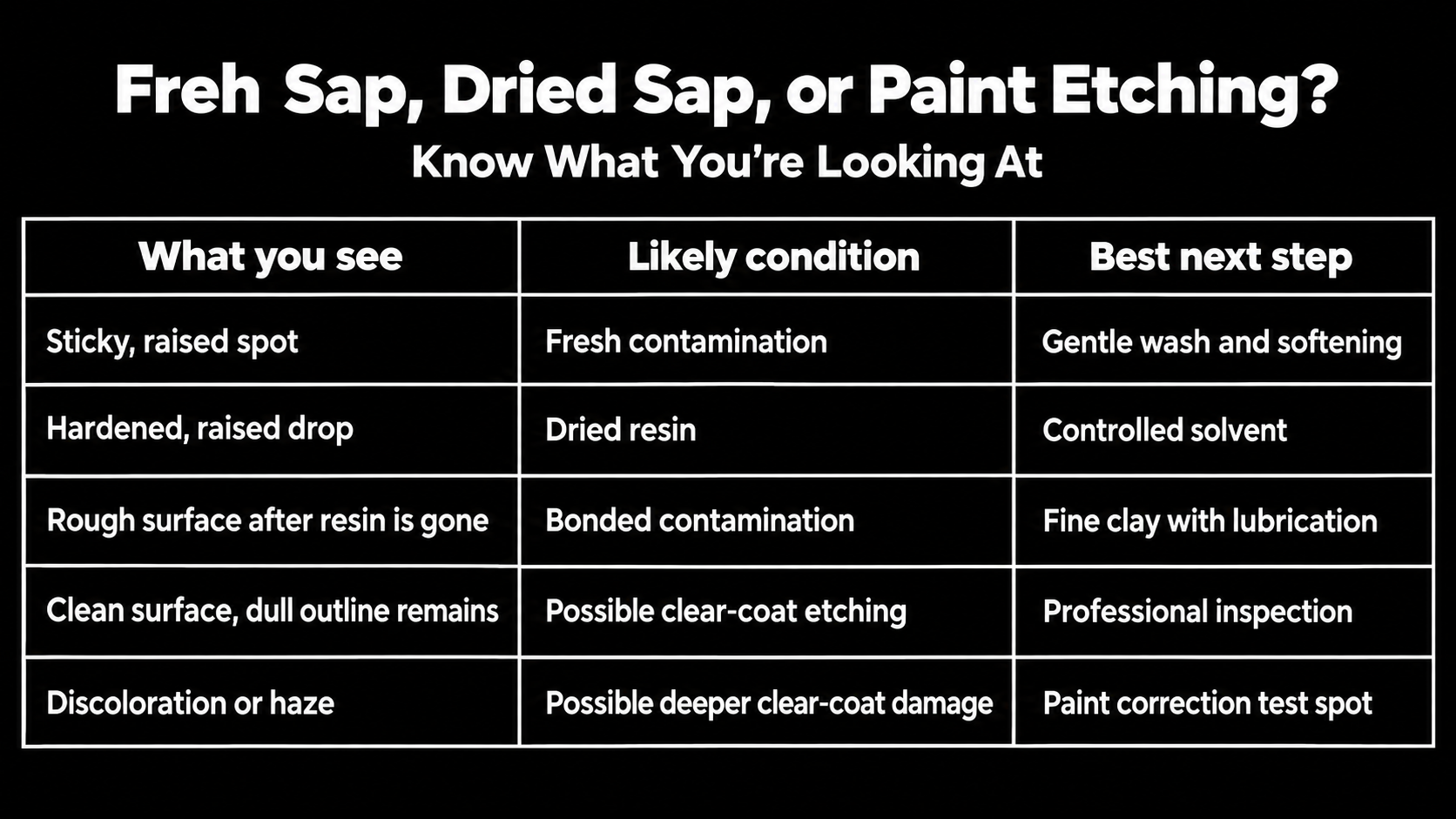
Cleaning doesn't fix etching. Sap removal clears away the contaminant sitting on top of your paint. Paint correction addresses damage the sap already caused inside the clear coat. They're not the same process, and no amount of extra scrubbing turns one into the other.
Sap is gone but a cloudy ring remains? Book a paint assessment with Fresh Layer before reaching for a stronger chemical. Our professional paint correction in San Diego service starts with an inspection under high-intensity lighting so you know exactly what you're dealing with before any machine work begins.
Why Tree Sap Is Tougher on Cars in San Diego
Coastal neighborhoods. In La Jolla, Point Loma, Pacific Beach, Torrey Pines, and Encinitas, tree residue mixes with overnight marine layer moisture. Cars that sit outside for long stretches near the coast pick up condensation on top of sap, which keeps the deposit softer but also spreads it further across the panel.
Inland heat. Further inland in Poway, El Cajon, Rancho Bernardo, and Scripps Ranch, exposed panels run hotter for longer. Sap that would stay workable for a day near the coast can bake into a hardened resin in an afternoon inland, which is why timing matters more the further you get from the water.
Heavy tree-canopy areas. Balboa Park, Rancho Bernardo, Point Loma, Scripps Ranch, and Torrey Pines all have dense eucalyptus and pine cover, meaning more sap and honeydew exposure for anything parked underneath for more than a few hours. If you park under trees regularly in any of these areas, treat sap removal as routine maintenance, not a one-off emergency.
Removing Tree Sap From PPF, Vinyl Wrap, Matte Paint, or Ceramic Coating
Ceramic coating makes cleanup easier since sap has less to bond to, but it's not immune. Stick to coating-compatible products and skip aggressive rubbing.
Paint protection film needs a test spot before any chemical goes on. Keep dwell time minimal, avoid saturating the film's edges, and never scrape it.
Vinyl wrap reacts differently to solvents than paint does. Confirm compatibility before using anything stronger than soap and water, and skip aggressive heat.
Matte paint and matte film can't be polished or treated with gloss-enhancing products. Use matte-safe chemistry only, or you'll create a shiny patch that never blends back in.
If the surface is coated, wrapped, matte, or covered in PPF and you're not sure what's safe, stop before experimenting.
When DIY Tree Sap Removal Should Stop
Call a professional when any of these apply: the sap has been hardened for weeks, the deposit is thick and brittle, more than one panel is affected, the vehicle has matte paint or expensive film, discoloration remains after cleaning, the area looks dull after removal, scratches show up during your own attempt, you're not sure whether the panel has been repainted, or you're working on a high-value or collector vehicle. Any one of these is a reason to stop and get an inspection rather than keep experimenting.
Can Paint Correction Fix Tree Sap Damage?
Often, yes, if the damage sits within the correctable portion of the clear coat. A test spot tells us exactly how much can be safely improved before we touch the rest of the panel, and a paint-depth reading comes before any aggressive correction. Some deep staining or clear-coat failure isn't safely fixable without repainting, which is exactly why we check first instead of guessing.
Our paint correction in San Diego service includes that inspection as the first step, every time. Book a Sap Damage & Paint Condition Assessment before deciding on anything more aggressive than what's in this guide.
How to Prevent Tree Sap From Bonding to Your Paint
Avoid long-term parking under resin-producing trees when you have a choice.
Remove fresh sap as soon as you spot it, don't let it sit through a hot afternoon.
Keep a microfiber towel and a safe detail spray in the car for quick hits.
Keep wax or sealant maintained so sap has less to grab onto.
Consider ceramic coating if you park under trees regularly, it makes cleanup noticeably easier.
Wash the car after long outdoor parking stretches during heavy sap or pollen season.
Never let fresh sap bake in direct sun. Even an extra hour makes removal harder.
Want sap to release more easily next time? Check out Fresh Layer's ceramic coating packages in San Diego.
Common Mistakes That Cause Paint Damage
Frequently Asked Questions About Removing Tree Sap
Can tree sap permanently damage car paint?
Yes. Heat and time can turn surface contamination into staining or clear-coat etching if it's left on the vehicle, which is why learning how to remove tree sap from your car quickly matters more in San Diego's heat than in cooler climates.
Can I use rubbing alcohol to remove tree sap?
Yes, carefully. Apply a small amount to a microfiber towel, give it a brief dwell time, dab rather than scrub, then clean the area and reapply wax or sealant afterward.
Can I use my fingernail to scrape off sap?
No. Fingernails, plastic cards, and razor blades can all scratch the clear coat, even when the sap feels hard enough to "pop off" cleanly.
Is eucalyptus sap different from pine sap?
Sometimes what's under a eucalyptus tree isn't true sap at all, it's honeydew from sap-feeding insects. Either way, the same safe approach applies: soften it, lift it, then inspect the paint underneath.
Why is there a dull spot after the sap is gone?
The contamination may be gone while the clear coat underneath stays etched. Cleaning can't reverse etching. That's a paint correction question, not a cleaning question.
Does ceramic coating stop tree sap damage?
No. A ceramic coating gives sap less to bond to and makes cleanup easier, but it doesn't make the surface immune to etching if sap sits long enough.
Can a clay bar remove tree sap?
It helps with residual bonded contamination once the bulk of the resin is already dissolved. Don't drag a clay bar across a thick, hardened blob, that just spreads the abrasive risk around instead of removing anything.
How quickly should I remove sap in San Diego?
As soon as it's practical, especially during hot weather or after the car has sat outside for a long stretch. The gap between "easy wipe" and "professional removal" closes fast once the heat gets involved.San Diego's Professional Sap Removal Services
At Fresh Layer Mobile Detailing, we offer expert tree sap removal services across San Diego. From La Jolla to Chula Vista, we bring professional care to your doorstep. Trust our team to restore your car’s appearance with safe and effective techniques.
Tree Sap Damage? Fresh Layer Comes to You
If tree sap has hardened, stained your clear coat, or left a cloudy outline after removal, Fresh Layer can inspect the vehicle at your San Diego home or office and recommend the least aggressive safe fix, whether that's a decontamination visit or a full paint correction. We bring our own water and power, so apartment and condo parking with no hose access isn't a problem.
Regular maintenance and protective measures can help prevent future sap issues, keeping your vehicle looking its best. Trust Fresh Layer Mobile Detailing for professional sap removal and comprehensive detailing services to ensure your vehicle remains pristine.
Written by Alex Bratkov
Owner & Master Detailer, Fresh Layer Mobile Detailing
10 years of professional detailing experience · IDA & RightLook Certified · System X Certified Installer · Gtechniq Accredited