
Verdict Box: Triphene vs Graphene—Which Wins for Your Car?
Bottom line: In 2026, most "Triphene" products behave like short-cycle polymer sprays—great for quick gloss, terrible durability.
Graphene coatings (when professionally installed with proper prep) deliver multi-year protection that actually lasts.
San Diego reality check:
Our coastal salt film, UV index 10+ summers, and hard water (150-300 ppm minerals) destroy short-term toppers in weeks. If you park west of I-5 (Pacific Beach, La Jolla, Ocean Beach, Coronado) or commute beach-to-freeway daily on I-5/805
Graphene wins for durability and easier maintenance. The salt alone eats spray sealants alive.
When Triphene makes sense: Show prep for quick shine before events, temporary gloss topper if you're reapplying every 2-4 weeks anyway, or you genuinely enjoy frequent detailing as a hobby.
If you want one-and-done protection: Choose professional-grade Graphene coating with proper paint correction prep. After installing 1,000+ coatings in San Diego's harsh climate, we've seen the difference—Graphene survives where sprays fail.
Why This Comparison Matters in 2026 (Marketing vs Measurable Results)
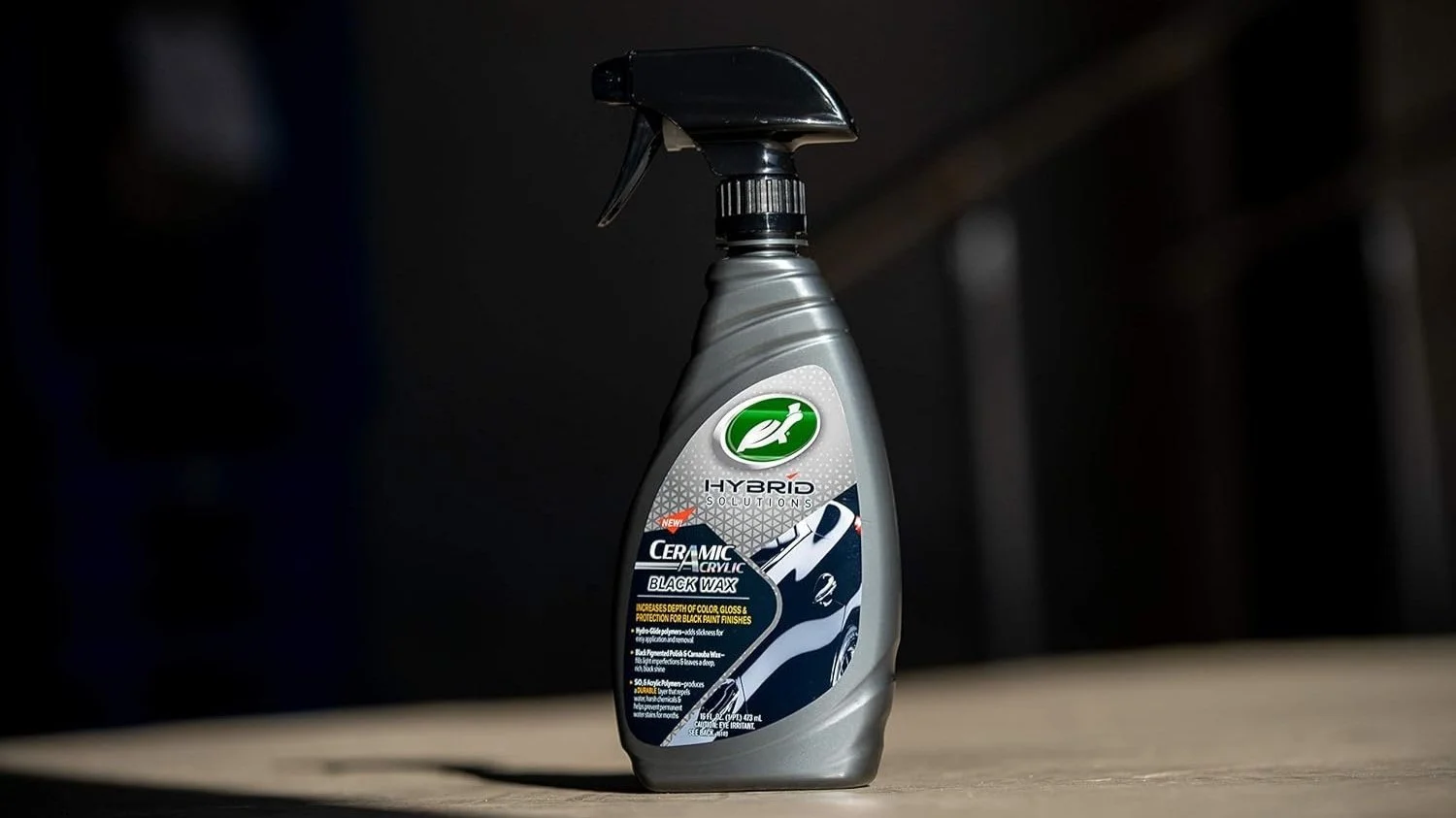
You searched "triphene vs graphene" because you want an actual answer, not marketing fluff saying "both are great." Here's the truth: these aren't comparable products. It's like comparing wax to ceramic coating—different chemistry, different durability, different prep requirements.
What San Diego drivers actually want: Less washing frequency. Fewer water spots. Easier drying without streaks. Paint that stays glossy through summer UV and winter marine layer. Protection that doesn't disappear after three car washes.
The problem with most comparison content: It avoids declaring a winner. Companies selling Triphene say it's "revolutionary." Companies selling Graphene say it's "next-generation." Both claim "years of protection." Reality? One lasts weeks, one lasts years. The difference matters when you're paying for professional installation.
Our position after 1,000+ installations: For San Diego's coastal salt + inland heat + hard water trifecta, Graphene coating systems win on every metric that matters long-term: durability, chemical resistance, ease of maintenance, and cost-per-month value.
When comparing triphene vs graphene car coatings in San Diego specifically, your climate dictates which investment makes sense. Quick spray toppers fight losing battles against marine layer salt and 105°F hood temperatures. Proper coating systems are engineered for exactly these conditions.
Quick Definitions (So You Don't Get Sold a Buzzword)
Let's remove confusion fast before you waste money on the wrong product.
What People Mean by "Triphene" in the Real World
Triphene is marketed as a "coating" but functions as a spray sealant or polymer blend topper in most consumer products. You spray it on, wipe it off, buff to shine. Takes 5-10 minutes. No cure time. No prep beyond basic wash.
The chemistry: Polymer blends (usually silicone-based or hybrid SiO2/polymer) suspended in spray carrier. They create temporary bonding—think mechanical grip rather than chemical bond.
The reality: If a product can be sprayed on and wiped off in 5 minutes with zero cure requirements, it's a topper, not a long-term coating system. That's not criticism—toppers serve a purpose (quick gloss, event prep, maintenance between real details). But calling them "coatings" creates false expectations about durability.
What you'll see marketed: "Triphene nano technology," "advanced polymer matrix," "graphene-enhanced Triphene." The names change, the durability doesn't. Weeks to couple months, max.
What Graphene Coatings Actually Are
Graphene coating refers to a professional coating system where graphene oxide nanoparticles are integrated into ceramic (SiO2/SiC) base chemistry.
It's not a spray-and-wipe. It's a multi-step process: paint correction → decon → panel wipe → coating application → 24-48 hour cure → maintenance plan.
The chemistry: Silicon dioxide and silicon carbide create chemical bonds with clear coat. Graphene adds flexibility (reduces cracking), heat dissipation (harder to damage from hot panels), and enhanced hydrophobic properties.
The process:
Paint correction removes swirls/oxidation (coating magnifies defects, so start perfect)
Chemical decon removes bonded contamination
Panel wipe removes oils so coating bonds properly
Coating applied in controlled environment (not 100°F parking lot)
Cure time: 24-48 hours before water contact, 7-10 days full cure
Maintenance washes with pH-neutral soap to preserve coating
The reality: Professional Graphene coatings last 2-5 years when properly maintained. That's 24-60 months vs 4-8 weeks for Triphene sprays. The math matters.
The San Diego Stress Test (Salt Film, Heat, Hard Water)
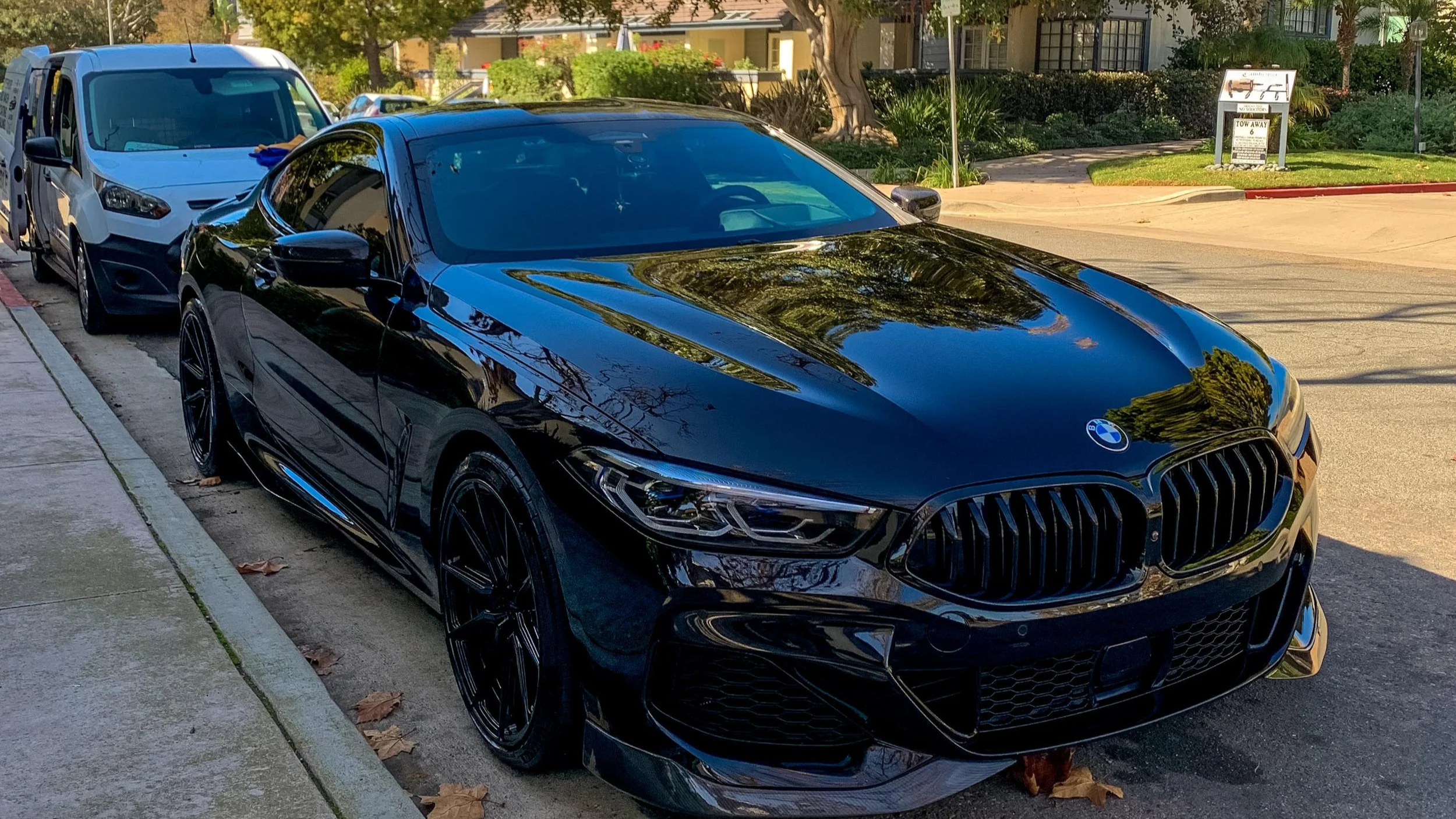
After 1,000+ coatings across every San Diego microclimate since 2018, we've learned which protection survives and which gets destroyed. Your neighborhood determines whether cheap toppers are viable or wasteful.
Coastal Zone (La Jolla, PB, OB, Del Mar): Marine Layer Salt Film
The challenge: Marine layer fog contains microscopic salt particles. They settle on cars overnight. Morning dew activates them. Now you've got a corrosive, abrasive film bonded to paint—especially lower panels, rockers, behind wheels.
What happens to Triphene sprays: Salt film chemically breaks down polymer bonds. After 2-3 weeks of coastal parking, beading deteriorates. After 4-6 weeks, the product's functionally gone. You're washing bare paint again.
What happens to Graphene coatings: Chemical bonds resist salt corrosion. Properly installed Graphene maintains beading and slickness through 18-24 months of coastal exposure. Yes, it degrades eventually, but you're measuring years, not weeks.
Real example: Client in Pacific Beach, parks outside on Garnet Ave. Tried Triphene spray topper—reapplied every month because salt killed it. Switched to our Graphene coating August 2023. January 2026: Still beading strong, easier washing, zero reapplication.
If you park outdoors west of I-5, Triphene is throwing money away. The marine layer wins every time.
Inland Heat (El Cajon, Santee, Poway): Hot Panels + Streak Risk
The challenge: Summer temps 95-105°F. Your black hood reaches 160-180°F after parking. Spray toppers applied to hot panels flash-dry before you finish buffing. Result: streaking, hazing, uneven coverage.
What happens to Triphene sprays: Application window shrinks. You're racing evaporation. Miss a spot, you've got haze. Over-apply trying to cover, you've got smearing. Reapplication in summer becomes frustrating.
What happens to Graphene coatings: Applied in controlled environment (not 100°F parking lot). Once cured, heat doesn't affect performance. Your coating laughs at 160°F panels. Washing in heat becomes easier—water sheets off faster, less chance of spotting.
Real example: Client in El Cajon, black Tesla Model 3. Tried DIY Triphene spray three times. Every application: streaks, frustration, uneven results. Switched to professional Graphene coating. Application done in our controlled setup. Result: flawless finish, zero heat-application struggles, maintains performance through two summers.
If you're inland and applying DIY sprays in summer, you're fighting physics. Professional installation in controlled conditions wins.
Hard Water Spotting: Why Coatings Live or Die on Maintenance
The challenge: San Diego tap water contains 150-300 ppm dissolved minerals (calcium, magnesium). When water evaporates, minerals stay. They etch into unprotected paint or weak toppers.
What happens to Triphene sprays: Short-term polymer layers don't resist mineral bonding well. Water spots etch through topper reaching clear coat underneath. You're polishing out spots every few months.
What happens to Graphene coatings: Chemical bonding creates harder surface resisting mineral etching. Spots form on coating surface (easier removal) rather than etching paint. Drying aid spray after washing prevents most spots entirely.
Critical truth both need: Neither coating prevents spots if you wash at noon and air-dry. Physics wins. But Graphene gives you a longer window before spots bond—easier to wipe away before they etch.
If you park outdoors, wash at home with tap water, and live in hard water area (most of SD), coating quality matters. Graphene's chemical resistance buys you time. Triphene doesn't.
Side-by-Side Comparison Table (The Core Ranking Asset)
Here's the honest comparison after installing both across 1,000+ San Diego vehicles. This is triphene vs graphene reality, not marketing.
| Feature | Triphene (Typical Spray/Topper) | Graphene (Pro-Installed Coating) | What It Means in San Diego |
|---|---|---|---|
| Durability | 4-8 weeks realistic | 24-60 months system-dependent | Coastal salt film eats short-term products fast—weekly maintenance becomes monthly or less |
| Heat Behavior | Streaks on hot panels, difficult summer application | Applied in controlled environment, performs through heat | Inland summer washes easier long-term—coating doesn't care if hood is 160°F |
| Water Behavior | Good beading first 2-3 weeks, then degrades | Strong beading 18-24 months, then gradual decline | Fewer "why did my coating die?" panic moments after car washes |
| Chemical Resistance | Limited—bug guts, bird droppings, tree sap etch through quickly | Stronger barrier—chemicals sit on surface longer before etching | Beach parking + freeway tar + bird droppings less stressful |
| DIY Friendliness | Easy—spray, wipe, buff done | Not DIY—requires prep, application skill, cure management | Pro install reduces risk of haze, streaks, uneven coverage |
| Best Use Case | Quick gloss for events, temporary shine between details | Daily driver year-round protection, outdoor parking, harsh climates | Most SD commuters parking outdoors benefit from Graphene investment |
The pattern after 1,000+ installations: Triphene works for garage-kept cars with light use, or as temporary gloss toppers. Graphene works for everything else—especially San Diego's coastal salt + inland heat + hard water environment.
The Truth About "Durability" (What Companies Don't Explain)
Marketing says "years of protection." Reality? Depends on definitions, maintenance, and honesty.
Durability vs Appearance (Gloss Can Outlast Protection)
Here's what confuses people: Product looks glossy after 6 months, so you think it's working. But appearance isn't protection. The hydrophobic barrier (water beading) degrades before gloss does.
Triphene sprays: Gloss lasts 4-6 weeks. Hydrophobic protection? 2-4 weeks in San Diego coastal conditions. You're polishing paint that's functionally unprotected.
Graphene coatings: Gloss lasts 3-5 years (with maintenance). Hydrophobic protection degrades gradually—18-24 months strong, then declines but still functional through year 3-5.
Why this matters: If you measure "durability" by ease of washing (how water sheets off, how grime releases), Graphene wins by 10x. If you measure by "looks shiny," both work temporarily. Choose based on what you actually want.
Why Prep Decides Everything (Decon, Polishing, Panel Wipe)
The secret nobody tells you: Coating durability is 70% prep, 30% product. Bad prep? Even expensive Graphene fails in months.
What proper prep involves:
Decontamination: Iron remover, clay bar—removes bonded contamination so coating bonds to clean surface
Paint correction: Polish removes swirls, oxidation, etching—coating magnifies defects, so start perfect
Panel wipe: IPA wipe removes polishing oils—creates clean bonding surface
Why Triphene sprays skip this: They're toppers. They mechanically sit on whatever's there (dirt, wax, oils). Durability suffers but application is fast.
Why Graphene demands this: Chemical bonding requires clean surface. Skip decon? Coating bonds to contamination, not clear coat. Fails in weeks. Waste of $800-1,500.
After 1,000+ installations, we refuse to coat without proper prep. Customers unhappy with short coating life? 90% had insufficient prep. The other 10% used harsh chemicals or automatic car washes.
The "Maintenance Tax" (How Often You'll Reapply/Wash)
Triphene maintenance tax:
Reapply spray every 4-8 weeks ($15-30 product cost each time)
Total: 12-24 applications per year
Annual product cost: $180-720
Time investment: 2-4 hours per year
Graphene maintenance tax:
Annual maintenance wash (optional ceramic boost spray): $100-200 per year
Time investment: Easier washing (5-10 min faster per wash due to slickness)
The difference: Triphene requires frequent active maintenance (reapplication). Graphene requires passive maintenance (proper washing, occasional boost). Time is money. Easier washing for 3 years beats frequent reapplication.
Cost-Per-Month Calculator (The Simplest Way to Decide)
Everyone focuses on upfront cost. Smart decision? Calculate monthly cost over ownership.
The Math That Changes Minds
Triphene spray topper:
Product cost: $20-40 per bottle
Realistic reapplication: Every 6-8 weeks (San Diego coastal conditions accelerate breakdown)
Applications per year: 6-8 times
Annual cost: $120-320
Monthly cost: $10-27
Professional Graphene coating:
Installation cost: $800-1,500 (includes paint correction, prep, coating, cure management)
Durability: 36-60 months realistic (San Diego climate, proper maintenance)
Monthly cost over 36 months: $22-42
Monthly cost over 60 months: $13-25
| Option | Upfront Investment | Realistic Maintenance | Cost Per Month (3 Years) |
|---|---|---|---|
| Triphene Spray/Topper | $20-40 per bottle | Reapply every 6-8 weeks | $10-27 |
| Pro Graphene Coating | $800-1,500 installed | Annual boost optional ($100-200) | $22-42 initial, $13-25 long-term |
The insight: Graphene costs more upfront but similar or less monthly over 3+ years—while delivering vastly better protection and easier washing.
If you own car 3+ years and park outside in San Diego, Graphene is cheaper per month of actual protection when you factor in time saved, better performance, and avoided paint damage from inadequate protection.
Real-World Outcomes (What You'll Notice on Your Car)
After installing 1,000+ coatings, here's what customers actually report—not what marketing promises.
Washing Gets Faster (Less Stuck-On Grime)
With Triphene sprays: First 2-3 weeks, washing is easier. Week 4-6, grime starts sticking again. By week 8, you're back to scrubbing.
With Graphene coatings: Bug guts wipe off easily (instead of etching in). Bird droppings release with water (instead of bonding). Brake dust washes away (instead of baking on). Tar spots dissolve with tar remover (instead of grinding into paint).
San Diego specific: Beach parking + freeway commuting creates unique grime cocktail—salt spray + brake dust + tar. Graphene's chemical resistance makes this combo less destructive. Lower panels (where grime concentrates) stay cleaner longer.
Customer quote, David R., Santee:
"After Graphene coating, my truck washes in 20 minutes instead of 45. Dirt sheets off with spray, doesn't stick like before. Inland dust used to bake on in summer—now it rinses clean."
Drying Is Easier (Fewer Streaks, Fewer Spots When Done Right)
With Triphene sprays: Water behavior improves temporarily. After 3-4 weeks, water starts sheeting poorly. Mineral spots return.
With Graphene coatings: Water sheets off in continuous flow. Less water remains on surface after rinsing. Drying towel glides easier (less friction). Result: Fewer water spots, faster drying, less chance of towel marring.
Hard water hack both need: Use drying aid spray after washing. Encapsulates remaining minerals. But Graphene gives you larger safety window before spots etch.
Customer quote, Sarah M., Pacific Beach:
"I used to get white spots everywhere after washing. With Graphene coating + drying aid spray, spots are 90% gone. The few that appear wipe off easy instead of requiring polish."
Paint Stays Cleaner Longer (Especially Lower Panels)
With Triphene sprays: Slickness degrades fast. Dirt adhesion increases weekly.
With Graphene coatings: Lower panels (rockers, behind wheels, rear bumper) where salt film and brake dust concentrate stay visibly cleaner. You're washing every 2-3 weeks instead of weekly. Garage-kept cars go 4-6 weeks between washes.
Why this matters in San Diego: Coastal cars parking outside (Pacific Beach, Ocean Beach, La Jolla, Coronado) deal with daily salt film deposits. Inland cars (El Cajon, Santee, Poway) deal with dust + heat baking grime on. Graphene's slickness fights both—dirt has less surface tension to grip.
Customer quote, Jessica L., La Jolla:
"My Audi used to look filthy after 5 days parked near coast. Salt film, dust, everything stuck. With Graphene, it looks clean 2 weeks later. Washing went from twice weekly to bi-weekly."
Risks and Mistakes (Especially for DIY Sprays in SD Heat)
After fixing dozens of bad DIY topper applications and failed coatings, here are the disasters to avoid.
Streaking on Hot Panels (Why It Happens, How to Avoid)
The problem: Spray Triphene on 140°F hood at noon in Santee or El Cajon. Product flashes (dries) before you finish buffing. You're spreading dry product creating haze and streaks.
Why it happens: Polymer carriers evaporate in heat. You're left with semi-dry residue dragging under towel instead of liquid gliding smoothly.
The fix for sprays:
Apply in shade or cool hours (7-9am, 6-8pm)
Cool panel check: If you can't hold palm on panel for 5 seconds, it's too hot
Work smaller sections: Spray, wipe, buff immediately before flash-dry
Use minimal product: More doesn't mean better—means more streaking
Why Graphene avoids this: Professional application in controlled environment (not 100°F parking lot). Once cured, coating doesn't streak during washing—it's bonded, not wiping on/off.
Real disaster we fixed: Customer applied Triphene spray to black BMW in August at 2pm. Entire car hazed. Spent 3 hours trying to remove streaks. Brought to us. We polished off residue, installed Graphene properly. Problem solved.
Layering Too Much Product (Smearing, Hazing, Windshield Issues)
The problem: Customer thinks "more product = more protection." Applies Triphene spray to entire car including glass. Now windshield is hazy, wiper blades smear, visibility compromised.
Why it happens: Polymer buildup on glass creates film. Wiper blades can't remove it. Rain? Worse visibility.
The fix:
Avoid glass entirely with spray toppers (or use glass-specific products)
Less is more: 3-4 sprays per panel sufficient
Flip towels frequently: Don't reuse dirty side—you're spreading excess product
Do this instead:
Apply in shade
Cool panel temperature check
Use minimal product (3-4 sprays per 2'×2' section)
Flip towels often—use clean side per panel
Avoid glass (or use glass-specific coating)
Why Graphene avoids this: Professional application. We control product amount. Glass gets separate ceramic glass coating if customer wants. No guessing, no mistakes.
Fresh Layer's "Coastal Durability Lab" Approach
After 1,000+ coating installations across every San Diego microclimate since 2018, we've developed a process that matches protection to environment—not generic recommendations.
How We Evaluate Which Coating You Actually Need
Not every car needs expensive Graphene. Not every car survives with cheap Triphene. Here's how we assess:
Where the car lives:
West of I-5 (coastal)? Salt film priority—Graphene wins
Inland heat zones (El Cajon, Santee, Poway)? Heat resistance priority—Graphene wins
Garage-kept, light use? Spray toppers can work
Parking situation:
Outdoors full-time? Graphene non-negotiable
Garage nights, outdoor days? Graphene recommended
Garage full-time? Premium spray topper viable
Wash style:
DIY hand wash pH-neutral? Both can work
Touchless automatic? Coating protects against harsh chemicals
Tunnel brush wash? Neither survives—don't coat
Existing paint condition:
Swirls/oxidation present? Correction required before coating—Graphene install includes this
Perfect paint? Spray topper can maintain (temporarily)
Our Controlled Process (What $800-1,500 Actually Buys)
Paint inspection: Thickness gauge, LED light inspection—verify clear coat depth sufficient for correction
Decontamination: Iron remover, clay bar—remove bonded contamination
Paint correction: 1-2 stage polish removes swirls, oxidation, water etching—coating magnifies defects, so start perfect
Panel wipe: IPA solution removes polishing oils—clean bonding surface
Coating application: Controlled environment (not parking lot)—proper temperature, humidity, lighting
Cure management: 24-48 hours before water contact, 7-10 days full cure—we provide detailed instructions
Aftercare plan: pH-neutral wash soap, drying aid recommendations, maintenance schedule
Why this matters: Coating durability is 70% prep, 30% product. We handle prep correctly. DIY Triphene sprays skip all of this—hence poor durability.
Real Customer Testimonials (Names, Neighborhoods, Outcomes)
Quote 1—Coastal Client:
Michael T., Pacific Beach:
"Parked on Garnet Ave right off the beach. Salt destroyed every spray product I tried. Fresh Layer's Graphene coating survives 18 months now—still beading, washing is way easier, lower panels don't collect white crud."
Quote 2—Inland Client:
Aman P., El Cajon:
"Black Tesla, 100°F+ summers, water spots were constant nightmare. Since Graphene coating, spots are 80% reduced and the ones that form wipe off easy. Summer washing doesn't stress me out anymore."
Quote 3—New Car Owner:
Jennifer K., La Jolla:
"Dealer wanted $2,500 for 'protection package' (probably cheap spray). Fresh Layer charged $1,200 for real Graphene coating with full paint correction. Car looks showroom 2 years later."
Aleyda Solis principle (adapted):
"Comparison pages win when they're built for mobile scanning: clear verdict, tables, and short direct answers."
Which Should You Choose? (Decision Tree by Neighborhood + Driving Habits)
Honest assessment after 1,000+ installations. No sales pressure—just matching product to reality.
Pick Graphene Coating If…
✅ You park outdoors (full-time or even overnight)
✅ You drive I-5 or I-805 daily (salt spray + brake dust + tar combo)
✅ You live west of I-5 (Pacific Beach, Ocean Beach, La Jolla, Coronado, Del Mar—marine layer attacks protection)
✅ You want low-maintenance protection (easier washing, less frequent reapplication)
✅ You own car 3+ years (cost-per-month math favors Graphene long-term)
✅ Your paint has swirls/oxidation (Graphene install includes correction—two services in one)
✅ You wash at home with hard water (chemical resistance buys time before spots etch)
Triphene Spray Can Work If…
✅ You want quick gloss for event (car show, wedding, photo shoot—temporary shine acceptable)
✅ You're okay reapplying every 4-8 weeks (and enjoy detailing as hobby)
✅ Garage-kept car, light use (5,000 miles/year, weekend drives only)
✅ You're maintaining existing ceramic coating (spray topper between annual pro details)
✅ You're selling car soon (temporary gloss for sale photos/test drives)
GEO examples:
La Jolla / Pacific Beach coastal cars parking outside: Graphene wins—salt film destroys spray toppers in 3 weeks
El Cajon / Santee inland heat: Graphene wins—DIY application of sprays in heat creates streaks; professional coating applied in controlled conditions performs flawlessly
Poway / Escondido garage-kept weekend car: Triphene spray viable—light use, protected parking, reapplication not burdensome
The pattern: Harsh conditions (salt, heat, outdoor parking, daily driving) favor Graphene. Protected conditions (garage, light use, temperate climate) allow spray toppers.
FAQs: Triphene vs Graphene Car Coatings
-
Most "Triphene" consumer products are polymer spray sealants—toppers, not coatings. They mechanically sit on paint, don't chemically bond. Durability: 4-8 weeks. Compare to Graphene ceramic coatings which chemically bond to clear coat lasting 24-60 months. If product wipes on in 5 minutes, it's a topper regardless of marketing. (57 words)
-
No. Coating ≠ paint protection film (PPF). Graphene adds chemical resistance and makes washing easier, but it's microns thin—not impact protection. Rock chips? You need PPF. Coating prevents water spots, etching, chemical damage, oxidation. Don't expect it to stop physical impacts. Honest answer beats false promises. (50 words)
-
Graphene wins for coastal (west of I-5). Marine layer salt film chemically breaks down polymer spray toppers in 2-4 weeks. Graphene's chemical bonding resists salt corrosion lasting 18-24 months before noticeable degradation. Customer in Pacific Beach: Triphene died monthly, Graphene survives 18+ months. Salt environments punish short-term products. (52 words)
-
Product flashes (dries) before you finish buffing. Polymer carriers evaporate on 140-160°F panels (common El Cajon, Santee summer). You're dragging semi-dry residue creating haze. Solution: apply in shade, cool panels first, work tiny sections. Or choose Graphene applied professionally in controlled environment—once cured, heat doesn't affect performance. (54 words)
-
Yes, but not magic. Graphene's chemical bonding creates harder surface resisting mineral etching—spots form on coating (easier removal) not in clear coat. Buys you time before spots bond. Still need drying aid after washing and proper drying technique. Neither coating nor spray prevents spots if you wash noon and air-dry. (56 words)
-
24-48 hours minimum before water contact. 7-10 days for full cure. Washing too early interrupts chemical bonding process—coating fails prematurely. We provide detailed cure instructions: where to park, what to avoid, when first wash is safe. Patience during cure determines 2-year durability vs 6-month failure. (50 words)
Ready for Real Protection That Makes Washing Easier in San Diego?
After installing 1,000+ coatings across San Diego County since 2018, we've learned which protection survives coastal salt, inland heat, and hard water—and which fails in weeks.
We'll recommend the right coating based on where you park, how you drive, and what you actually need—not what's most expensive.
What Booking Fresh Layer Coating Service Includes:
✅ Paint inspection with thickness gauge (verify sufficient clear coat for correction)
✅ Honest assessment (we'll tell you if spray topper is sufficient or Graphene is necessary)
✅ Prep plan customized to your paint (decon, clay, 1-2 stage correction if needed)
✅ Coating options matched to your use (we install premium Graphene systems, not cheap consumer spray "coatings")
✅ Aftercare plan for San Diego climate (pH-neutral soap recommendations, drying aid, maintenance schedule)
✅ Cure management instructions (detailed guidance preventing premature failure)
✅ Mobile service available (we come to your home or office)
Coating packages:
Graphene Single-Layer: $800-1,200 (includes 1-stage correction, decon, coating, 2-3 year durability)
Graphene Multi-Layer: $1,200-1,800 (includes 2-stage correction, decon, coating, 3-5 year durability)
New vehicle protection: $700-1,000 (no correction needed, decon + coating only)