

Car Buffing Guide: Buffing vs Polishing Explained (2026)
Car buffing removes surface defects by cutting into the clear coat with an abrasive compound. Car polishing refines the surface afterward — removing the haze that buffing leaves behind and restoring full gloss. You almost always need both processes, in that order, to get a truly clean result.
Most DIY paint damage comes down to two points: wrong pad and compound combination, and skipping the decontamination wash before the machine ever touches the car. This guide covers what car buffing and car polishing actually do at the paint surface, how to read your paint's condition, and when professional paint correction in San Diego makes more sense than doing it yourself.
Quick Answer: What Is Car Buffing?
One-sentence truth: Car buffing means cutting—removing tiny amounts of clear coat to level defects—while polishing refines clarity and gloss after cutting.
Safety headline: Most DIY damage comes from skipping prep, using the wrong pad, or working edges too aggressively.
Climate reality: Coastal salt air behaves like microscopic sandpaper if you skip chemical decon. Extreme dry heat (100°F+) dries compounds instantly, creating dust clouds. Dark paint shows every mistake under intense sun.
Bottom line: If you want zero haze and no edge burn-through, book a paint inspection first.
What Car Buffing Actually Does to Your Paint
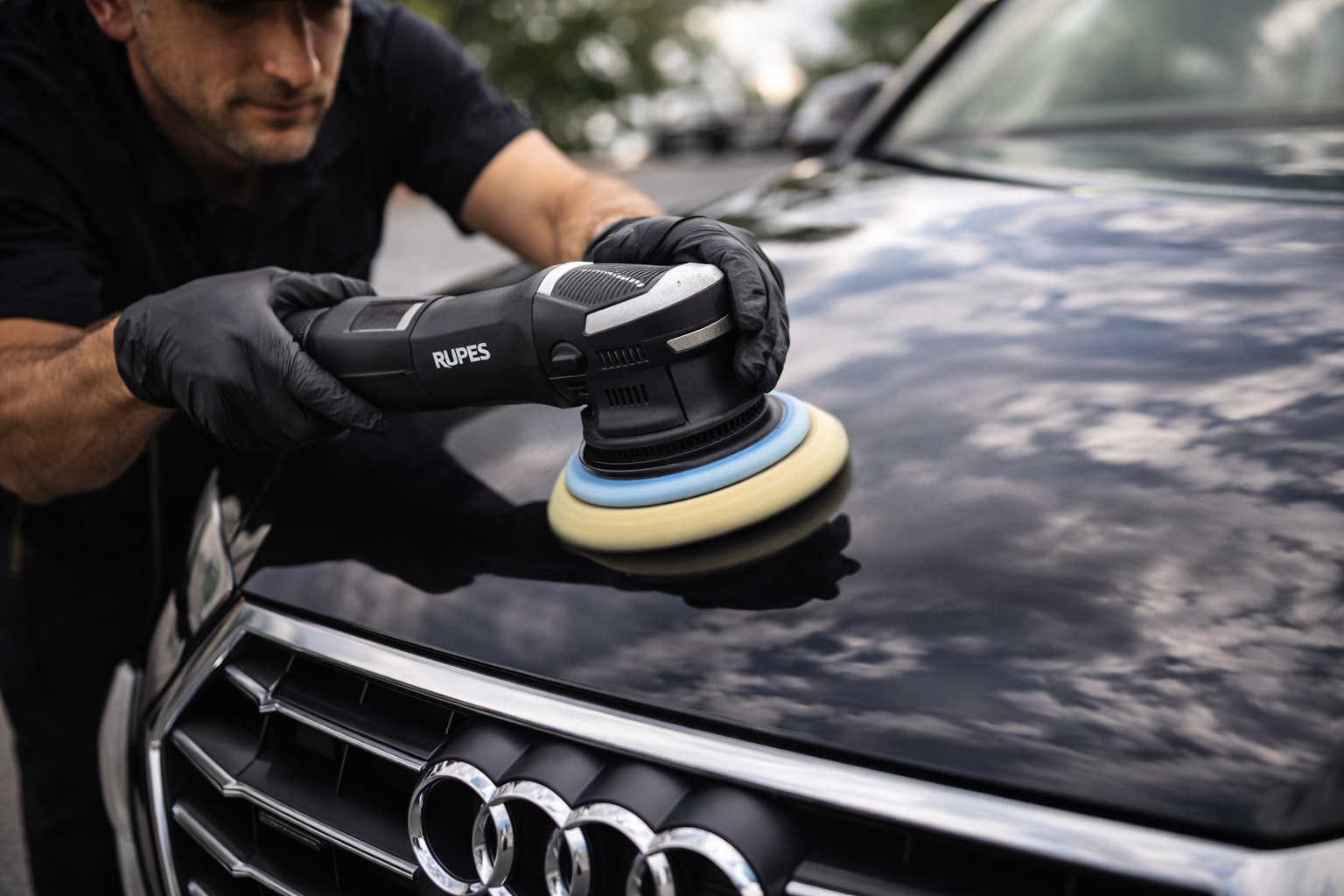
Car paint is a layered system. From the metal outward: primer, base coat (the color), and clear coat on top. The clear coat is what you're working with every time you buff or polish a car. On most modern vehicles it runs 40–60 microns thick — and each heavy-cut buffing pass removes 1–3 microns. That's a finite resource, which is why technique matters as much as the machine.
How Buffing Works on the Clear Coat
Car buffing works by abrading the top of the clear coat to level it. A swirl mark or light scratch is essentially a tiny valley in the surface.
Buffing uses an abrasive compound combined with a rotating foam or wool pad to cut the surrounding clear coat down until it meets the depth of the scratch. The defect doesn't disappear — the surface around it gets leveled to match it, and the scratch becomes invisible.
This is why buffing is called a cutting process. You're removing material. Done correctly, you end up with a flat, defect-free surface.
Done with too much pressure or heat, you can burn through panel edges, create new swirl marks, or leave a hazy finish that's harder to fix than what you started with.
What Polishing Does After Buffing
After a cutting compound does its job, the surface looks flat but not truly reflective.
That's micro-marring — fine abrasion marks left by the cutting pad that scatter light instead of reflecting it cleanly.
Car polishing uses a finer abrasive on a softer pad to remove those micro-scratches and restore clarity.
Think of it like woodworking: buffing is 120-grit sandpaper, polishing is 400-grit finishing paper. Both steps are necessary.
Skipping the polishing stage is why a lot of cars look "almost right" after correction — they've been buffed but not finished.
Paint Correction San Diego
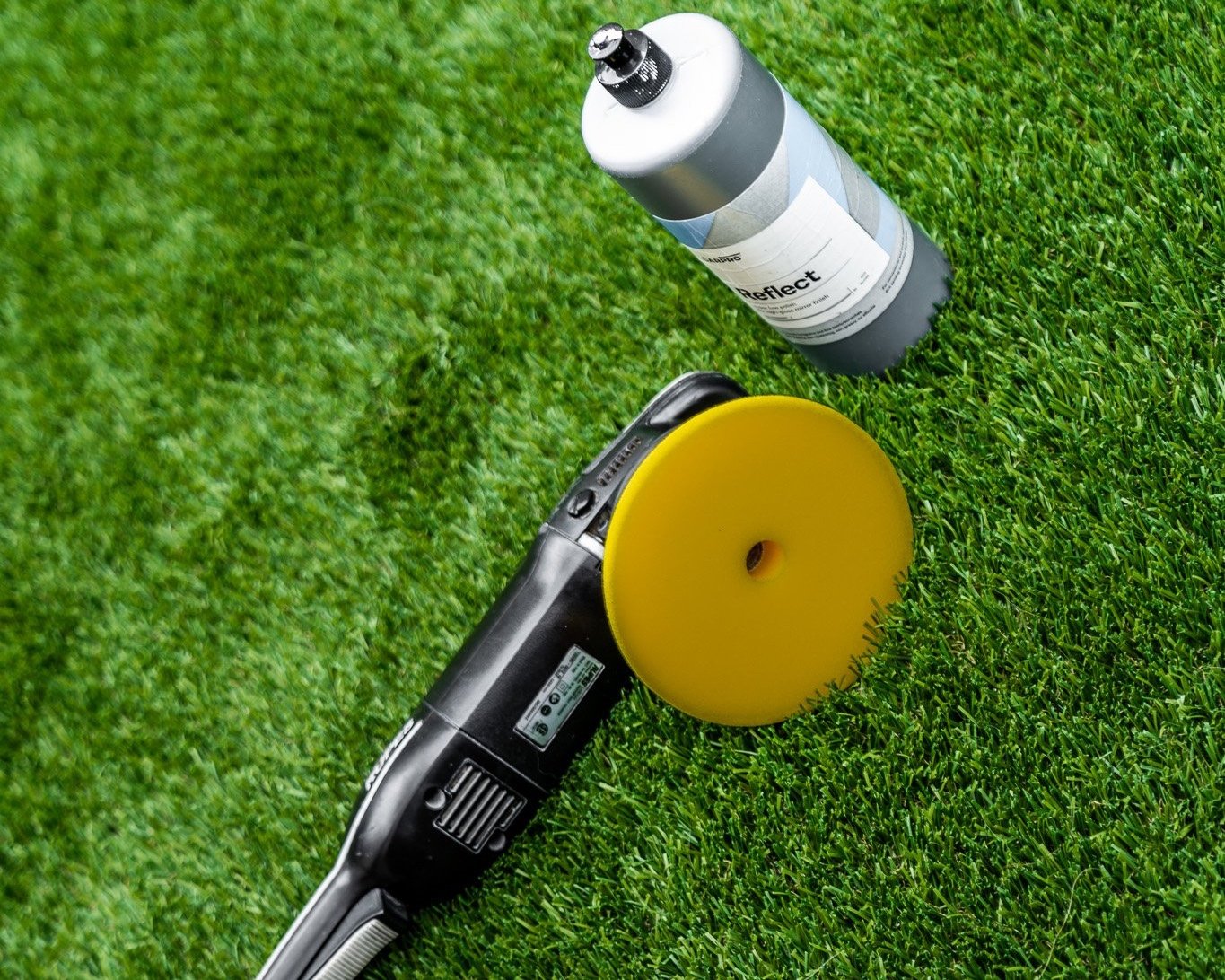
Here is A few thinks about pain correction, polish, and buffing.
Why San Diego Paint Takes More Damage Than You'd Expect
San Diego feels like a dream climate for cars. Mild temperatures, rarely any rain, no road salt. That assumption is exactly what leads to neglected paint.
The coast pushes fine salt particles into the air around the clock. Those particles settle on paint and act like ultra-fine sandpaper over time, accelerating swirl marks and oxidation even on cars that get washed regularly.
UV intensity here is high year-round — clear coat degrades faster under sustained UV exposure in San Diego than in most northern or cloudy climates, and dark paint shows the results more visibly.
Inland areas present a different problem. In El Cajon, Santee, or Lakeside on a 100°F summer day, polishing compounds flash-dry before you can work them in.
You get white dust clouds, dried product grinding back into the surface, and fresh scratches created while trying to remove old ones.
Professional car detailing accounts for all of this. Timing the work, selecting compounds rated for the ambient temperature, and always running a chemical decontamination wash before any buffing starts. This is one of the reasons our mobile car detailing results in San Diego look different from a rushed express detail — the prep work is half the job.
Find the Right Paint Restoration Solution
Answer these simple questions for a tailored recommendation
Question 1: What is the current condition of your car’s paint?
Buffing vs Polishing: What's the Real Difference?

The terms get used interchangeably everywhere — including by shops that should know better. Here's the practical breakdown.
Car buffing (cutting): Uses medium to heavy cutting compounds on a cutting foam or wool pad. Removes scratches, swirl marks, water spot etching, and oxidation. Higher risk — removes clear coat permanently.
Car polishing (finishing): Uses fine to ultra-fine abrasive compounds on a soft foam pad. Removes the haze and micro-marring that buffing leaves behind. Restores full gloss and paint depth. Lower risk — minimal material removal.
Both have their place. The mistake most people make is reaching for a car polishing product when the paint actually needs a cutting compound — and then wondering why the swirls are still there.
When Your Paint Needs Buffing
Your paint needs a cutting compound when it has:
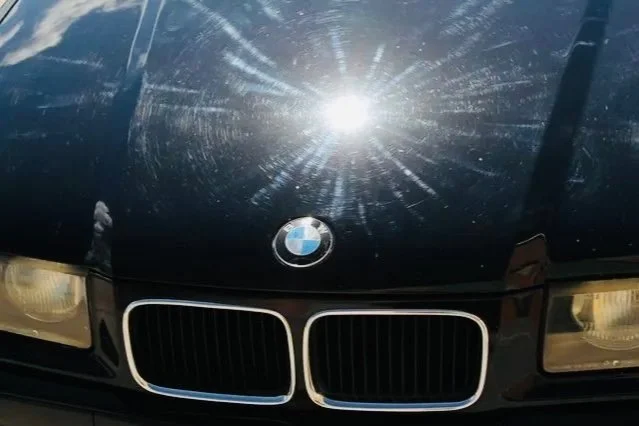
Swirl marks visible in direct sunlight (the circular haze pattern from car wash brushes or improper washing)
Light scratches that don't catch your fingernail when you drag it across the surface
Water spot etching that won't come off with regular washing
Oxidation — the chalky, faded look common on older or sun-damaged clear coat
Paint that looks clean when wet but flat and dull once it dries
The fingernail test is the fastest way to size up a scratch before buffing. Drag your nail across it lightly. If it glides over without catching, the scratch lives in the clear coat and buffing will likely fix it. If your nail drops into a groove, the scratch has cut through the clear coat into the base coat — buffing alone won't make it disappear.
When Polishing Alone Is Enough
If the paint is in decent shape but has lost its depth and gloss, a finishing polish is often all it needs. This is the right call for:
Paint that's 1–2 years old, well maintained, but looking a little flat
After-wash dullness on dark-colored cars (especially black and navy paint)
Annual paint maintenance before applying a fresh layer of wax or sealant
Buffing vs Polishing vs Waxing — the Right Order
Wax sits on top of the paint and provides a protective layer. It does not fix defects. The correct sequence is: decontamination wash → clay bar → buffing (if needed) → polishing → wax, sealant, or ceramic coating. Waxing over swirled paint just makes swirled paint shinier.
Does Buffing Remove Scratches?
Yes — with one important limit.
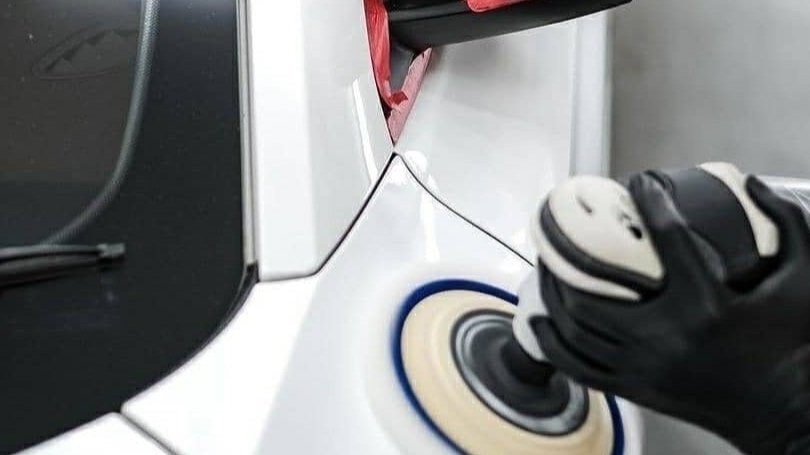
Buffing removes scratches that are contained within the clear coat. Use the fingernail test: drag your nail across the scratch at an angle. If it glides over without catching, the scratch is in the clear coat and buffing will fix it. If your nail catches in a groove, the scratch has gone through the clear coat into the base coat or primer. At that point, touch-up paint is needed before any machine work.
Scratches and Defects Buffing Can Fix
Swirl marks from incorrect washing technique — the most common issue we see in San Diego
Light to moderate random scratches from road debris, car covers, or incidental contact
Water spot etching from mineral deposits or bird dropping acid
Oxidation and fading on single-stage or aging clear coat
Light paint transfer from contact with other surfaces
What Buffing Cannot Fix
Deep scratches that have cut through to the base coat or primer
Clear coat that is already peeling — buffing peeling clear coat accelerates the damage
Rust that has started underneath the paint surface
Dents or physical panel damage — buffing has no effect on the underlying metal shape
If you're unsure which category your paint falls into, a paint inspection before correction is the right first step. We assess every vehicle's paint depth and defect severity before recommending a correction approach as part of our paint correction service in San Diego.
Polishing - A More Gentle Approach

Polishing Purpose
Polishing is a technique that involves the use of a finer abrasive material to remove very fine scratches and swirl marks from the paintwork.
The car polish process also helps to enhance the shine and gloss of the paint, giving it a more reflective and lustrous appearance.
Polishing is a more gentle approach than buffing and is typically used when the paintwork is in relatively good condition but needs some enhancements and gloss.
Polishing is a more gentle approach that is typically used for maintaining the appearance of a car's paintwork and shiny surface rather than repairing significant imperfections.
The abrasive material used in polishing is finer than that used in buffing, which means it removes less material from the paint and is less likely to cause damage.
Polishing generates less heat and friction than buffing, making it a safer option for maintaining the appearance of the paintwork.
Polishing can be done more frequently than buffing to maintain the car's appearance, as it is less aggressive and does not remove as much material from the paint.
Overall, both buffing and polishing can be effective techniques for improving the appearance of a car's paintwork, but they should be used carefully and with the appropriate equipment to avoid causing damage. It's always recommended to seek the assistance of a professional detailer to ensure the best results.
The Disadvantages of Buffing a Car

Buffing is not a free fix. Every machine pass removes a measurable layer of clear coat, and clear coat doesn't grow back. Understanding the trade-offs helps you make smarter decisions about when to buff and when to hold off.
Clear Coat Thinning Over Time
A typical factory clear coat is 40–60 microns. Paint depth gauges let professionals measure what's left before starting any correction work. Once the clear coat is gone — from aggressive buffing, sun exposure, or both — the only fix is a full respray.
This is why "how often should I buff my car" is actually a long-term paint longevity question. Polishing once or twice a year for maintenance is reasonable. Full machine correction with a heavy cutting compound should only happen when the defects genuinely warrant it — not as a routine.
Swirl Marks and Holograms from Wrong Technique

Paint Holograms
New swirl marks and holograms introduced during buffing are among the most common complaints from cars that have gone through body shops or quick-detail operations. The causes are consistent: wrong pad for the paint hardness, too much speed on a rotary polisher without proper technique, or skipping the finishing polish step.
Holograms — the geometric reflection patterns visible in certain light angles — are caused specifically by rotary polishers used without a follow-up finishing polish. A dual-action (DA) polisher is significantly safer for beginners. It oscillates rather than spinning in a fixed circle, which reduces heat buildup and the risk of burning through panel edges.
Edge Burn-Through Risk
Panel edges — door edges, hood lips, trunk lid corners — have less clear coat than flat surfaces and heat up faster during machine work. These are the spots that most commonly get burned through during amateur correction. When working near edges, reduce machine speed, ease up on pressure, and keep the pad moving constantly. Or skip the edges entirely and let a professional handle them.
How to Buff a Car: What the Process Actually Looks Like

The machine is the last step, not the first. Professional paint correction follows a specific sequence, and most DIY failures come from jumping straight to the buffer.
Step 1 — Decontamination Wash
A regular car wash removes surface dirt. It doesn't remove the embedded contamination that builds up in paint over time — iron particles from brake dust, industrial fallout, tree sap residue, and mineral deposits. A decontamination wash uses an iron remover and often a clay bar to pull this out before any polishing compound touches the surface. Skip this step and you're dragging contamination under your buffing pad, creating the swirl marks you're trying to fix.
In San Diego coastal areas, iron contamination from brake dust is heavier than most people realize. Cars that park near freeways or do a lot of stop-and-go driving in beach traffic benefit from an iron decontamination step every six months.
Step 2 — Paint Inspection and Depth Reading
Before any machine work, check the paint depth with a gauge and inspect each panel under a focused light. This tells you which panels are safe to correct, how aggressive the compound can be, and whether any areas have existing damage that machine work would make worse.
Step 3 — Compound and Pad Selection
Matching your polishing compound and buffing pad to the job is where most people go wrong. Compound and pad selection depends on the defect severity and paint hardness. Harder paints common on Japanese and Korean vehicles need more aggressive compounds to cut efficiently. Softer European finishes — certain BMW and Audi clears — cut quickly and burn faster. Getting the compound-to-pad match wrong means either no correction or new damage.
Heavy defects (deep swirls, oxidation): cutting foam or wool pad + heavy cutting compound
Moderate defects (light swirls, water spots): light-cut foam pad + medium compound
Finishing pass: soft finishing pad + ultra-fine finishing polish
Step 4 — Machine Work in Sections
Work in sections roughly 18" × 18" at a time. Spread compound at low speed before increasing. Keep the pad flat — tilting concentrates pressure and creates uneven cutting. Slow down significantly at edges and body lines. After each section, wipe with a clean microfiber and inspect under direct light before moving on.
Step 5 — Finishing Polish
After all cutting passes are done, follow with a finishing polish on a softer pad. This removes the micro-marring from the cutting stage and restores the reflective depth you're after. This is what separates a corrected finish from a truly sharp one.
Step 6 — Paint Protection
A freshly corrected surface has zero protection on it. Apply wax, a paint sealant, or — for the longest-lasting result — a ceramic coating. Ceramic coating bonds chemically to the clear coat and creates a hard, hydrophobic layer that dramatically slows down the rate at which new contamination and swirl marks accumulate. After a full correction, it's the best way to protect the work long-term.
How Often Should You Buff or Polish Your Car?

There's no single right answer — it depends on how much clear coat is left, what the paint is exposed to, and how the car is maintained between sessions.
Practical Frequency for San Diego Drivers
For most daily drivers in San Diego:
Full machine correction (buffing): only when the paint has visible defects that warrant it — typically every 1–2 years
Finishing polish: once or twice a year for paint maintenance
Wax or sealant: every 3–6 months on top of the polished surface
Ceramic coating: if applied after correction, reapplication every 2–5 years depending on the product tier — no buffing or polishing needed in between unless new defects appear
Dark Paint vs Light Paint
Dark paint — black, dark gray, navy, deep red — shows swirl marks significantly more than white or silver. Not because it scratches more easily, but because swirls scatter light at angles that stand out against dark backgrounds. If you drive a dark car in San Diego's sun, your maintenance schedule should be more frequent and your day-to-day washing technique matters more. A two-bucket hand wash method will extend the time between correction sessions considerably compared to drive-through car washes.
How San Diego UV Exposure Factors In
San Diego averages over 260 sunny days a year. UV is the primary cause of clear coat oxidation and long-term paint fading. Cars parked outside consistently in San Diego — especially facing south or west — accumulate UV damage faster than garage-kept vehicles in northern or cloudy climates. A paint sealant or ceramic coating works harder here than it would almost anywhere else in the country, because it's actively blocking that radiation every single day rather than just adding a temporary shine layer.
DIY Car Buffing vs Professional Paint Correction
DIY buffing is possible and can produce good results on the right paint. It's not the right call for every situation.
What You Can Realistically Do Yourself
A dual-action polisher, quality finishing polish, and a few foam pads will handle light swirl marks and annual maintenance polishing on most vehicles. If your paint has no deep scratches and no oxidation — just a bit of dullness — this is achievable at home.
The most common DIY mistakes:
Starting on contaminated paint (always decon wash first)
Working in direct sunlight on a warm panel (polishing compound dries too fast)
Using a rotary machine without experience (high risk of burning through)
Skipping the finishing polish and leaving micro-marring behind
Not inspecting the work under proper lighting before calling it done
When Professional Paint Correction Makes Sense
Hand it to a pro when:
The paint has significant oxidation or heavy swirl damage
You're unsure how much clear coat is left
The car is dark-colored, high-value, or has a soft factory paint finish
You want the correction followed immediately by a ceramic coating
You've tried it yourself and the result isn't where it needs to be
Professional correction uses calibrated paint depth gauges, dedicated correction lighting, and compounds matched to your specific paint chemistry. The result isn't just better looking — it's safer. A professional stops before going too far. Over-buffed clear coat from a DIY job that went sideways is a respray.
Frequently Asked Questions About Car Buffing and Polishing
-
Buffing generally refers to the initial process of removing imperfections from a vehicle's paintwork. This method uses a buffing pad and a machine to even out the surface by minimizing deep scratches and oxidation marks. It often involves using compounds that are slightly abrasive to remove a thin layer of paint or clear coat from the vehicle's exterior.
-
Polishing is a follow-up process to buffing, designed to achieve a smooth, shiny finish on the vehicle's surface. It uses finer abrasives compared to buffing and is often done with a softer pad and a less abrasive product, like a polish, to enhance the paint's gloss and shine. Polishing helps in removing any fine scratches or swirl marks left by the buffing process.
-
The primary difference in purpose between buffing and polishing is their role in the detailing process. Buffing is mainly corrective, targeting and minimizing visible defects and damage to the paint's surface. Polishing, on the other hand, is finishing, aimed at achieving a high gloss finish that enhances the vehicle's aesthetic appeal.
-
While both buffing and polishing can be attempted as DIY projects, they require careful handling to avoid damage to the paint. Professional detailers are recommended because they have the correct tools and expertise to perform these tasks safely and effectively.
-
Both processes require a rotary or dual-action polisher but differ in the type of pads and compounds used. Buffing uses coarser pads and more abrasive compounds to remove deeper imperfections, while polishing uses finer pads and polishes to create a high shine.
-
The frequency depends on the vehicle’s exposure to the elements and how it is used. Generally, buffing should be done sparingly, as it removes a small amount of paint. Polishing can be done more frequently, like once or twice a year, to maintain the vehicle’s aesthetic appeal and protect the paint.
-
Yes, if not done correctly, both buffing and polishing can lead to paint damage. Over-buffing can thin out or even remove the clear coat, exposing the paint to environmental elements. Incorrect polishing can create swirl marks or holograms, particularly if using an overly abrasive polish or pad.
Professional Car Buffing and Paint Correction in San Diego
Fresh Layer Mobile Detailing has corrected over 1,200 vehicles across San Diego County — from daily drivers with years of accumulated car-wash swirl marks to weekend cars being prepped for ceramic coating. Every paint correction job starts the same way: a paint depth reading and full-panel inspection before any machine touches the clear coat.
For paint that's been neglected, we run a multi-stage correction — heavy cutting compound first, then a finishing polish to remove any remaining haze. For vehicles that just need a refresh, a single-stage car polish is usually all it takes. For San Diego's coastal cars specifically, we include a dedicated iron decontamination step in every correction job. Brake dust contamination near freeways and beach traffic in San Diego is heavier than most people realize, and car buffing over it creates the swirl marks you're paying to remove.
All of our mobile car detailing and paint correction work comes to you — your home, office, or wherever the car lives in San Diego County. No drop-offs, no waiting around.
What we offer:
Paint correction (single and multi-stage) — included in our full detail packages starting at $349
Ceramic coating following paint correction — packages from $599
Paint depth assessment and inspection before any correction work
If your paint has swirls, oxidation, or scratch damage — or you just want to know what you're actually working with before spending money on correction — give us a call or book online.
📞 (619) 874-4115 🌐 Book at fresh-layer.com
We serve all of San Diego County: Downtown, North Park, La Jolla, Chula Vista, Coronado, Encinitas, Escondido, El Cajon, Santee, Lakeside, and everywhere in between.
Car buffing and car polishing are straightforward once you know what each one actually does. Buffing cuts defects out of the clear coat. Polishing refines the surface after cutting. Neither one is a permanent fix — they're part of a maintenance routine that extends the life of your paint and keeps it looking the way it should.
Light maintenance polishing is a reasonable DIY job if you're careful and patient. If the paint has real defects, you're working on a dark or high-value car, or you want the result protected with a ceramic coating afterward — that's where professional paint correction in San Diego gives you a better result with significantly less risk.
See our full mobile detailing and paint correction packages →