
Can Car Detailing Effectively Remove Scratches?
TL;DR: Detailing can safely remove scratches that live in your clear coat; deeper damage into the color layer or bare metal needs paint correction or a body shop.
San Diego’s high UV and coastal salt air accelerate exactly this kind of damage, so the earlier you address it, the less it costs.
Car detailing can remove scratches but only certain kinds, and knowing which kind you have changes everything about your next step.
Clear coat scratches, the shallow marks left by automatic car washes, parking lot contact, and dry wiping a dusty hood? Those come out clean with machine polishing. Scratches that reach the color layer need paint correction. Anything that hits bare metal needs bodywork before a detailer should touch it.
At Fresh Layer Mobile Detailing, we deal with all three types across San Diego County every week. Here's a practical guide to figuring out what you're actually looking at - and what can realistically be done about it.
Written by Alex Bratkov, owner of Fresh Layer Mobile Detailing. IDA-certified and Gtechniq-certified, with 5+ years detailing vehicles across San Diego County.
Understanding Scratches: Types and Causes
Not all scratches are created equal. The effectiveness of car detailing in removing scratches largely depends on the depth and severity of the damage.
Understanding the types of car scratches is crucial in assessing the potential of car detailing in mitigating these imperfections.
Scratches on a vehicle's surface can vary significantly in depth and severity, each affecting the car's appearance and value differently. Here, we categorize and explain the common types of car scratches.

Clear Coat Scratches
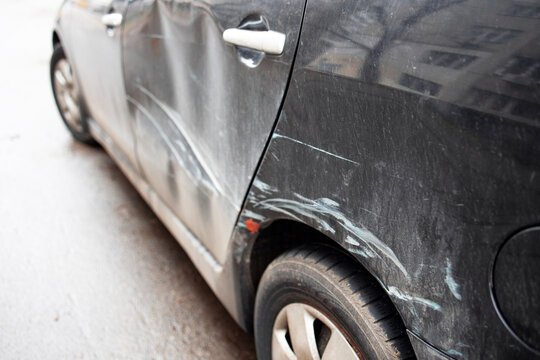
The clear coat is the outermost layer of your paint it's what gives your car its gloss and protects the color underneath. Clear coat scratches don't break through to the color. They show up as white or light-gray marks on the surface, and they're by far the most common type we see.
These respond well to polishing. Because the damage stays in the top layer, leveling the surface around the scratch removes it without touching the paint below.
Common causes: Automatic car washes with worn brushes, dry wiping, minor contact abrasions, swirl marks from improper washing technique.
Paint Scratches
These go deeper through the clear coat and into the actual color layer. You'll notice a contrast in color where the scratch line runs: the scratch looks lighter than the surrounding paint, or you can see a different tone peeking through.
Standard polishing won't fix these. They need paint correction multi-stage machine polishing with progressively finer compounds and even then, full removal depends on the depth and how much clear coat is left to work with.
Deep Scratches
Deep scratches cut through the clear coat and color both, reaching the primer or bare metal underneath. These are the most serious and the most urgent. Once bare metal is exposed on a San Diego vehicle especially anywhere within a few miles of the coast - you're on a clock before rust starts.
Deep scratches are outside the scope of detailing. They need bodywork: fill, prime, paint, refinish. Polishing over-exposed metal doesn't conceal the damage it embeds metal particles into the surrounding paint and creates a larger problem. The right sequence is body shop first, detailer second.
A reputable San Diego body shop will fill the scratch, prime the area, paint-match the panel, and apply clear coat. Once that work is done and fully cured - usually 30 days minimum - paint correction on the surrounding panels removes any overspray halos or blending marks, and ceramic coating locks the full repair in against UV and salt air. That's where we come back into the picture.
How to Tell What You're Dealing With (3-Step Test)
Before calling anyone, run this quick check. It takes about 30 seconds and gives you a much clearer picture of what you're dealing with. Consumer Reports recommends the same basic approach for diagnosing scratch depth before spending money on any repair method.
Step 1 - The Fingernail Test Run your thumbnail lightly across the scratch. If your nail glides over it without catching, it's in the clear coat. If your nail catches and drags, the scratch is deeper than the clear coat. If it catches hard and you can feel a ridge, you're likely at paint or primer.
Step 2 - The Water Test Pour a small amount of water over the scratch. If it temporarily disappears or becomes much less visible when wet, it's almost certainly a clear coat scratch - water fills the surface irregularity and mimics what polishing achieves. If it stays clearly visible when wet, the damage goes deeper.
Step 3 - Visual Inspection in Direct Light Look at the scratch in direct San Diego sunlight rather than shade. Clear coat scratches often look worse in direct sun - they catch the light and scatter it. But they don't show a different color. If you see white primer, a metallic undercoat, or bare silver-gray metal, you're past the point where detailing alone will fix it.
If you park near the coast and notice a scratch looks worse after the morning marine layer burns off, that's often salt residue etching into the clear coat overnight a common pattern in La Jolla, Pacific Beach, Del Mar, and Coronado.
Car Detailing Techniques for Scratch Removal
The technique used depends entirely on the scratch type. Here's what each method does and where it applies.

Polishing and Buffing
what’s a deferents ?
Polishing and Buffing
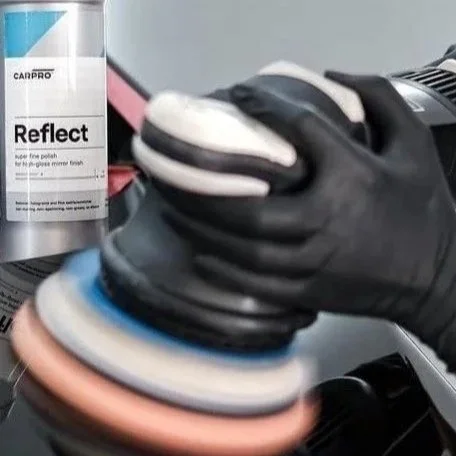
Buffing uses a mild abrasive compound to remove a very thin layer of clear coat surrounding the scratch, leveling the surface until the mark disappears. Polishing follows to restore gloss and blend the corrected area with the surrounding paint. What a difference?
We use Rupes dual-action polishers for this work. Dual-action machines are safer on paint than rotary machines because they reduce heat buildup - rotary polishers in the wrong hands can burn through clear coat fast, especially on thinner factory paint from certain manufacturers. Correct pad selection and compound pairing matters as much as the machine itself.
For clear coat scratches, polishing typically removes the mark entirely. For deeper clear coat damage or light marring, a more aggressive compound followed by a finishing polish achieves the same result.
Paint Correction
Paint correction is multi-stage machine polishing for defects that can't be resolved with a single polishing pass deeper scratches, heavy swirl marks, oxidation, water spot etching. The process starts with a paint depth measurement using a digital gauge to confirm there's enough clear coat to work with before any abrasive touches the surface.
From there, the work moves through progressively finer compound and pad combinations: aggressive cuts first to address the defect depth, then medium and fine stages to refine the surface, then a finishing polish to restore full clarity. We inspect under LED lighting at each stage to catch anything natural light hides.
Paint correction can significantly reduce the visibility of moderate scratches and remove swirl marks and oxidation entirely. Whether a specific deep scratch fully disappears depends on how far it goes.
Touch-Up Paint
For scratches that have broken through the color layer, touch-up paint applied to the exposed area conceals the damage and, more importantly, seals the exposed undercoat or primer from moisture and oxidation.
It won't look invisible - color matching on metallic and pearl finishes is difficult to achieve perfectly with touch-up methods but it stops active damage from progressing until a more complete repair is done.
Ceramic Coating
A ceramic coating adds a hard, chemically bonded layer over your paint that resists minor scuffs and makes the surface easier to clean. It doesn't remove existing scratches. The correct sequence is always correction first, then coating - not coating over damage. Sealing scratches under ceramic locks them in permanently.
What to Realistically Expect: Before and After
Clear coat scratches that pass the fingernail test where your nail glides over without catching - typically show 85–95% improvement after a single polishing stage. Most disappear completely. The ones that don't fully resolve after one pass usually need a more aggressive compound, not a body shop.
Moderate scratches that catch the fingernail lightly but don't show primer or metal can often be reduced 50–75% through paint correction. A single-stage correction addresses the majority of the defect; multi-stage work gets you closer to full removal. Results depend on paint thickness, paint hardness, and how deep the scratch actually runs.
Deep scratches showing primer or metal: detailing won't remove them. Polishing around them will clean up the surrounding area and make the damage clearer, but it won't fill or hide what's there. These need bodywork.
One honest note: dark-colored vehicles black, dark blue, dark gray show remaining defects more clearly in San Diego's direct sunlight. A scratch on a black car that looks 90% corrected in a garage might still catch the light at certain angles outdoors. Set your expectations for your paint color accordingly.
Indications for Professional Repair
Visibility of Bare Metal or Primer: If the metal body of the car is visible through a scratch, or if the primer layer is exposed, this is a clear indication that professional repair is needed. Leaving such scratches untreated can lead to rust and further degradation of the vehicle's body.
Depth of the Scratch: If running a fingernail over the scratch catches it significantly, this is a sign that the scratch is too deep for standard detailing to address effectively.
Large Areas of Damage: For scratches and damage that cover a large area or multiple areas of the vehicle, professional bodywork and painting are often required to restore the vehicle's appearance adequately.
Complex Paint Colors or Finishes: Some vehicles have specialized paint finishes (like matte, metallic, or pearlescent) that are challenging to match and repair. In such cases, professional repair services with expertise in dealing with these unique finishes are necessary.
Car detailing can work wonders on minor and some moderate scratches, significantly improving a vehicle's appearance.
However, for deep scratches, especially those revealing the primer or metal, or for extensive surface damage, professional bumper repair services are recommended.
DIY vs. Professional Scratch Removal
DIY vs. Professional Scratch Removal
| Feature | DIY Methods | Professional Detailing |
|---|---|---|
| Cost | Low (basic tools and products) | Higher (depends on service level) |
| Effectiveness | Limited to minor scratches | Comprehensive for various scratch types |
| Risk | Higher risk of damage | Minimal risk with trained professionals |
| Time | Time-intensive | Efficient and thorough |
DIY scratch removal kits are legitimate for the right job. For the wrong job, they create new problems.
When DIY Makes Sense
If the scratch passes the water test (disappears or nearly disappears when wet) and your fingernail glides over it, a quality consumer polishing compound and a dual-action machine can handle it. Start with the least aggressive compound available. Work in small sections. Check your progress in direct light frequently.
Consumer-grade random-orbit polishers run $80–$200 and are much safer than rotary machines for first-time users. Polishing compounds from reputable brands run $15–$50. For a single clear coat scratch on a light-colored vehicle, this is a reasonable approach.
When to Call a Professional
Dark-colored vehicles are unforgiving. A halo left by too much heat or pressure on a black hood shows up clearly in San Diego's direct sun and is difficult to correct without professional equipment. If your car is black, dark blue, or charcoal, a professional is the right call for anything beyond the most superficial surface mark.
Similarly, if the scratch catches your nail, if it remains visible when wet, or if you can see color contrast in the scratch line, a DIY kit won't resolve it. Paint correction requires proper compound aggressiveness, pad selection, and paint depth knowledge to avoid cutting through the clear coat entirely. Fixing a botched DIY correction typically costs more than doing it right the first time.
Any scratch on a luxury, leased, or high-value vehicle warrants professional assessment before anything touches the paint.
| Comparison | DIY Methods | Professional Detailing |
|---|---|---|
| Cost | $15–$200 (compounds + machine) | Varies by service level |
| Best for | Clear coat, light surface scratches | Clear coat through moderate paint scratches |
| Risk | Buffer halos, compound residue, thin spots | Minimal with paint gauge and proper technique |
| Result | Inconsistent - depends on skill | Verified under LED lighting before completion |
| Dark vehicles | High risk | Safe with correct pad/compound pairing |
Tips for Choosing the Right Option
Assess the Scratch: If the scratch is shallow and only affects the clear coat, a DIY kit might suffice. For deeper scratches or those that reach the paint or primer, professional detailing is advisable.
Consider Your Skill Level: If you're comfortable with basic car maintenance tasks, a DIY approach for minor scratches can be effective. However, if you're unsure, it's safer to go with professional services.
Evaluate the Cost vs. Benefit: For high-value or luxury cars, investing in professional detailing might be more beneficial to maintain the car’s value.
Cost Breakdown for Scratch Removal in San Diego
Scratch correction pricing varies by depth, panel coverage, and method. Here's a general framework for what you'd expect to pay in the San Diego market:
| Service | Scope | Approximate Range |
|---|---|---|
| Light clear coat polishing | Single panel, surface-level marks | $75–$150 |
| Single-stage paint correction | Full vehicle, swirls + light scratches | $150–$350 |
| Multi-stage paint correction | Full vehicle, moderate scratches + oxidation | $350–$600+ |
| Deep scratch / body repair | Per panel, primer or metal exposed | $400–$800+ (body shop) |
| Touch-up paint application | Single scratch, exposed color/primer | $50–$150 |
These are San Diego market averages - Fresh Layer pricing varies by vehicle condition. Call (619) 874-4115 or book a paint correction assessment and we'll give you an exact quote based on what your paint actually needs.
Why San Diego Makes Scratches Worse
San Diego is one of the harsher environments for car paint in the country, and most people don't realize it until they see the damage.
The UV index in San Diego hits 10.3+ in July and stays elevated through September categorized as extreme UV by NOAA's UV index scale, the same level that sunburns exposed skin in under 15 minutes. Clear coat degrades under sustained UV exposure, becoming more brittle and more susceptible to scratching over time. A car parked outside in Mission Valley or Santee without paint protection will show visible oxidation within 18–24 months.
On top of that, San Diego's coastline runs 17 miles, and salt particles travel up to 10 miles inland. That means vehicles in Poway, El Cajon, and Lemon Grove are still getting meaningful salt exposure, not just beachfront neighborhoods. Salt bonds to paint, gets embedded in scratch grooves, and accelerates corrosion on any exposed metal.
The marine layer adds another layer of stress. Coastal moisture condenses on paint overnight, carrying those salt particles with it, and then the sun bakes it off in the morning. Vehicles in La Jolla, Ocean Beach, and Coronado experience this cycle daily during marine layer season.
The result: scratches that might be cosmetic annoyances in a dry inland city become active problems in San Diego. Addressing clear coat damage early costs a polishing session. Waiting until it reaches bare metal costs bodywork.
Recommendations for Protective Coatings or Films
Clear Paint Protective Films Or PPF: Consider applying a clear protective film, especially on high-impact areas like the front bumper, hood, and side mirrors. These films are designed to be nearly invisible and can protect against scratches and chips.
Ceramic Coatings: A ceramic coating provides a hard 9H, protective layer over the car's paint, offering excellent protection against various elements and reducing the risk of scratches.
By weighing the pros and cons of DIY versus professional detailing for scratch removal and taking preventative measures to protect your car's paint, you can maintain your vehicle's aesthetic appeal and safeguard its value.
Frequently Asked Questions
Can mobile detailing remove scratches at my home in San Diego?
Yes. Fresh Layer comes to your driveway, apartment parking lot, office structure, or anywhere your car is parked across San Diego County. We bring the equipment, water, and power. The process is the same as a fixed shop machine polishing, LED lighting inspection, and paint depth gauging before we start. Mobile service doesn't mean cutting corners on the process; it means you don't have to drop your car off anywhere.
How much does scratch removal cost in San Diego?
Light clear coat polishing on a single panel runs roughly $75–$150. Single-stage paint correction for a full vehicle typically falls in the $150–$350 range. Multi-stage correction for moderate scratches and oxidation runs $350–$600+. Deep scratches that have reached primer or bare metal need body shop repair first, which can run $400–$800+ per panel. Call (619) 874-4115 for a quote based on your specific vehicle and damage.
Does salt air make car scratches worse?
Yes, significantly. Salt particles from the Pacific travel up to 10 miles inland across San Diego County, and they bond to paint surfaces and collect in scratch grooves. Once a scratch reaches the color layer or bare metal, salt accelerates corrosion and expands the damage. Coastal neighborhoods La Jolla, Pacific Beach, Coronado, Del Mar, Ocean Beach see this faster, but even inland areas like Santee and El Cajon face meaningful salt exposure.
What's the difference between paint correction and car detailing?
Car detailing covers a broad range of services: washing, interior cleaning, paint decontamination, and protection application. Paint correction is a specific process within detailing multi-stage machine polishing that removes defects like swirl marks, scratches, and oxidation from the clear coat and paint layer. Not every detail includes paint correction. It's a separate service that takes additional time, equipment, and expertise.
Can detailing remove key scratches?
Key scratches typically cut through the clear coat and into the color layer, sometimes reaching primer. They're usually too deep for polishing alone. Paint correction can reduce their visibility significantly especially the raised edges and surrounding damage but full removal depends on depth. Scratches that show the bare metal or primer underneath need touch-up paint or body shop repair before correction, not instead of it.
How do I know if my scratch is too deep for detailing?
Run the three-step test: fingernail, water, and visual inspection. If your nail catches in the scratch, if it stays clearly visible when wet, or if you can see a color different from your paint (white primer, silver metal), the damage is past what polishing can address alone. When in doubt, have a professional assess it a paint depth gauge and LED lighting reveal things that are invisible under normal conditions.
Benefits of Professional Scratch Removal
1. Enhanced Appearance
Professional detailing restores your car’s finish, making scratches less noticeable or eliminating them entirely.
2. Prevents Further Damage
Addressing scratches promptly prevents rust and corrosion, especially for deeper ones that expose metal.
3. Increases Resale Value
A well-maintained exterior boosts your car’s resale value, as buyers prefer vehicles without visible damage.
4. Saves Time and Effort
Professional services are faster and more effective than DIY attempts, ensuring quality results.
Tips for Preventing Future Scratches
Wash Properly: Use a two-bucket method and microfiber cloths to avoid creating swirl marks.
Park Safely: Avoid tight spaces or areas with overhanging branches.
Apply Protective Coatings: Use ceramic coating or paint sealants to guard against minor abrasions.
Handle with Care: Be cautious when loading or unloading items from your car.
Schedule Regular Detailing: Routine maintenance helps address and prevent scratches.
Conclusion
Car detailing removes scratches that live in the clear coat. For damage that reaches the color layer, paint correction gives you the best shot. For anything hitting primer or bare metal, body repair comes first.
The mistake most San Diego car owners make is waiting. A clear coat scratch in La Jolla's salt air that gets ignored through the summer becomes etched oxidation by fall. Oxidation that gets ignored becomes paint damage. Paint damage that gets ignored becomes rust. Each step up the ladder costs significantly more than the one before it.
If you're not sure what you're dealing with, run the fingernail test and the water test. Then reach out Fresh Layer Mobile Detailing comes to you anywhere in San Diego County and will give you a straight answer on what's fixable through detailing and what isn't.
One more thing worth knowing before you decide: in San Diego's used car market, corrected paint typically returns $300–$800 on resale, depending on the vehicle category, often more than the correction service costs. Buyers notice scratched paint immediately and use it as leverage in negotiations. A detail before listing is one of the highest-return prep steps you can make.
Call (619) 874-4115 or book a paint correction assessment online for a free quote.