How to Remove Tree Sap from Your Car Without Damaging Paint
Tree sap is one of the faster ways to damage car paint, and it works quickly in San Diego's heat. The natural acids and sugars in sap begin bonding with your clear coat within hours of landing, and once it hardens under direct sun, wiping it off without scratching the paint becomes a real challenge.
The safest removal method for fresh sap is 70 to 90% isopropyl alcohol applied to a clean microfiber cloth, letting it dwell for 2 to 3 minutes before gently wiping. At Fresh Layer Mobile Detailing, sap removal is part of every decontamination step we run before paint correction or ceramic coating jobs, so we've worked through every stage of this problem across San Diego.
How do I remove tree sap from car paint in San Diego without damaging the clear coat
Tree sap removal in San Diego's heat requires immediate action before the sap bakes onto your paint.
Safe Removal Method:
Never dry-wipe sap - it will scratch
Use isopropyl alcohol (70-90%) on a microfiber cloth
Let it dwell 2-3 minutes to dissolve sap
Gently wipe away with clean microfiber
Wash area with soap and water immediately
Apply wax or sealant to protect
Alternative Products:
Bug & Tar Remover (Chemical Guys)
Butter Wet Wax (gentle enough for sap)
Hand sanitizer (contains alcohol - use sparingly)
WD-40 (rinse thoroughly after)
San Diego Tip: Under eucalyptus or pine trees in Balboa Park, sap hardens faster in our heat. Address within 24 hours to prevent permanent etching.
Does Tree Sap Damage Car Paint?

Yes, and faster than most people expect. Tree sap contains organic acids, sugars, and plant compounds that chemically react with automotive clear coat on contact. When sap first lands on your paint, it's soft and lifts off easily. Leave it in the San Diego sun for a day or two and that same spot becomes a hardened deposit that actively etches into the clear coat.
What etching looks like: if you remove sap and still see a dull ring or a slight depression where it sat, the clear coat has been damaged. That's no longer a cleaning problem. At that point, a polish or paint correction is needed to restore the surface.
Tree type matters too. Pine, eucalyptus, and Torrey pines produce sap that tends to stay tacky longer and is generally easier to remove. Sweet gum trees and some oaks produce a harder resin that bonds more aggressively with paint. Jacarandas drip honeydew rather than true sap, which is stickier and collects dust on top of the residue.
How to Remove Tree Sap from Car Paint Step by Step
This method works for fresh sap or deposits that have been on the paint for less than a week.
What you need:
Isopropyl alcohol (70 to 90%)
Clean microfiber cloths (at least three)
Car wash soap and water
Wax or paint sealant to finish
Steps:
Park in the shade. Working in direct sun causes the alcohol to evaporate before it can soften the sap.
Saturate a microfiber cloth with isopropyl alcohol. Do not spray it directly onto the paint.
Lay the saturated cloth flat over the sap deposit. Let it sit for 2 to 3 minutes without rubbing.
Wipe with light pressure in a back-and-forth motion. The sap should lift without much resistance. If it does not, repeat the dwell step.
Wash the treated area with car soap and water immediately to remove alcohol residue.
Apply a coat of wax or sealant. Isopropyl alcohol strips the existing protective layer, so this step is not optional.
For tougher sap that alcohol does not fully dissolve, a dedicated tar and sap remover like Stoner Tarminator or Koch-Chemie Eulex works better. These products are formulated specifically for removing tree sap from car paint and will not damage clear coat when used as directed.
Professional Products:
Stoner Car Care Tarminator ($12-15)
Koch-Chemie Eulex ($18-22)
Clay bar kit with lubricant ($15-25)
Automotive-grade degreaser
Paint-safe polish or compound
Tree Sap Removal Product Reviews
Stoner Car Care Tarminator

Stoner Car Care Tarminator is a popular choice for removing tree sap, tar, and other stubborn contaminants from your car's surface. Its powerful formula quickly dissolves sap without damaging the paint. Users appreciate its ease of use and effectiveness, making it a staple in any car care kit.

Koch-Chemie Eulex is another highly recommended product for sap removal. Known for its strong cleaning capabilities, Eulex safely removes sap, tar, and other residues from the car's surface. It is particularly praised for its fast action and the ability to clean without leaving any streaks or damage.
How to Remove Hardened Tree Sap from Your Car
Hardened tree sap requires more dwell time and a different approach. Scrubbing harder with alcohol will not work and risks leaving swirl marks in the paint.
Start with a tar and sap remover applied directly to the deposit. Let it sit for 5 minutes. The product needs time to re-soften the hardened material before you attempt to wipe it. If the sap moves but leaves residue behind, apply a second round and wait again. Patience here saves the paint.
If a chemical remover does not fully dissolve the deposit, a clay bar is the next step. Lubricate the surface with clay bar spray, then glide the clay in straight lines over the hardened sap. The clay grabs surface contaminants that chemicals cannot dissolve, and does so without scratching. Fold the clay frequently to expose a clean working surface.
Avoid using WD-40 as your primary method for hardened sap. It can soften the deposit but leaves an oily residue that attracts contamination and requires thorough washing to remove. A purpose-built sap remover is a cleaner and more reliable option.
Step-by-Step DIY Methods to Remove Sap from Car
Method 1: The Rubbing Alcohol Technique (Best for Fresh Sap)
This is often the safest starting point for how to get tree sap off car paint without risking damage.
Cool the Surface: Park in shade and allow the car surface to cool completely. Hot paint can cause alcohol to evaporate too quickly.
Apply Alcohol: Saturate a microfiber towel with isopropyl alcohol. Don't spray directly onto the paint - this wastes product and can damage surrounding areas.
Gentle Contact: Place the saturated towel over the sap and let it sit for 2-3 minutes. This allows the alcohol to penetrate and soften the sap.
Circular Motion: Using light pressure, work the sap in small circular motions. The sap should begin to dissolve and lift away from the paint.
Clean and Inspect: Wipe away residue with a clean, damp microfiber towel and inspect the area. Repeat if necessary.
Success Rate: 85% effective on sap that's been on the car for less than one week. Time Required: 5-10 minutes per spot.Cost: Under $5 for supplies.
Method 2: The WD-40 Approach (Best for Hardened Sap)
When alcohol isn't strong enough, WD-40 can be surprisingly effective for stubborn sap removal.
Spray Sparingly: Apply a small amount of WD-40 directly to the sap. A little goes a long way.
Wait and Soften: Allow 5-10 minutes for the product to penetrate the hardened sap.
Gentle Removal: Use a soft plastic scraper to gently lift the softened sap. Work slowly to avoid scratching.
Thorough Cleaning: Wash the area immediately with car soap to remove all WD-40 residue, which can attract dirt if left behind.
Success Rate: 90% effective on moderately hardened sap. Time Required: 15-20 minutes per area. Cost: $6-8 for a can of WD-40.
Method 3: Hand Sanitizer Method (Emergency Solution)
In a pinch, alcohol-based hand sanitizer can help you remove pine sap from car surfaces when you don't have dedicated products available.
Choose the Right Product: Use sanitizer with at least 70% alcohol content. Gel formulations work better than liquid.
Apply Generously: Cover the sap completely with sanitizer and let it sit for 5 minutes.
Work Gently: Use a microfiber towel to work the softened sap in circular motions.
Rinse Thoroughly: Clean the area with water to remove sanitizer residue.
Success Rate: 70% effective on fresh to moderately aged sap. Time Required: 10-15 minutes. Cost: $2-3 for travel-size sanitizer.
Common Mistakes to Avoid
Scraping the Sap: Never use sharp objects or abrasive pads to scrape off the sap, as this can scratch the paint. Always use soft, gentle tools like microfiber towels and clay bars.
Using Harsh Chemicals: Avoid harsh chemicals like acetone or paint thinners, which can damage the paint and clear coat. You can stick to products specifically designed for automotive use.
Rubbing Too Hard: Excessive force can cause scratches and damage to the paint. Always use gentle, circular motions. Patience is critical to avoiding damage.
Professional Removal Techniques for Stubborn Cases
Sometimes DIY methods aren't enough, especially when dealing with large amounts of sap or resin that's been sitting for months. Here's how professionals approach challenging removal situations:
Does Clay Bar Remove Tree Sap?
Yes. A clay bar is one of the safest tools for lifting stubborn sap from car paint, specifically for deposits that have not yet etched the clear coat. Clay works by physically grabbing and pulling surface contaminants off the paint without harsh chemicals.
The key is lubrication. Without enough clay bar spray on the surface, the clay drags and can cause fine scratches. Keep the surface wet, work in straight lines, and fold the clay regularly. After claying, the paint should feel noticeably smoother to the touch.
Clay bar will not help if the sap has already caused clear coat etching. In that case, the damage is below the surface and needs a polish or paint correction to address. Run your fingernail lightly across the area after removing the sap. If you feel a faint ring or the surface looks hazy, the clear coat has been compromised and needs professional attention.
Steam Cleaning Benefits
Professional-grade steam cleaners can soften even the most stubborn sap without chemicals. The high temperature breaks down sap structure while the moisture prevents heat damage to paint. This method is particularly effective for how to get sap off car paint in sensitive areas like around trim pieces or decals.
When to Call Professionals
Consider professional help when:
Sap covers more than 20% of a panel
DIY methods have failed after multiple attempts
You notice paint etching or discoloration under the sap
The vehicle has premium paint or ceramic coating
You're uncomfortable working with chemicals or tools
Professional removal typically costs $50-150 depending on the extent of contamination, which is far less than repainting damaged panels.
Post-Removal Care Tips
Wax the Area: After removing the sap, apply a layer of car wax to the affected area to restore shine and provide a protective barrier. Waxing also helps to prevent future sap from bonding with the paint.
Regular Washing: Keep your car clean to prevent sap and other contaminants from accumulating. Regular washing removes any sap residue before it hardens.
Use a Car Cover: If you frequently park under trees, consider using a car cover to protect your vehicle from sap and other debris. A cover can prevent sap from reaching the car's surface altogether.
What to Do If the Sap Has Already Damaged the Paint
If sap removal leaves a dull spot, ring, or faint indentation in the surface, the clear coat has been etched. Surface-level damage from sap that sat for less than a few weeks can usually be addressed with a single-stage machine polish. This removes a very thin layer of clear coat to level out the affected area.
Deeper etching that has gone further into the clear coat needs professional paint correction. A detailer can assess the depth of the damage using a paint depth gauge and select the right compound and polishing system to restore the surface without burning through the remaining clear coat.
If sap has already left marks on your paint, our paint correction in San Diego service starts with a full paint assessment before any machine work begins.
Preventing Future Tree Sap Damage
The best strategy for dealing with tree sap is preventing it from reaching your car in the first place. Here are proven prevention methods:
Smart Parking Strategies:
Avoid parking under pine, maple, birch, or sweet gum trees
Use covered parking whenever possible
If you must park under trees, choose spots with good air circulation
Consider the season - sap production peaks in spring and early summer
Protective Coatings:
Apply quality car wax every 3-4 months to create a barrier
Consider ceramic coating for long-term protection
Paint protection film provides the ultimate shield for high-risk areas
Regular Maintenance:
Inspect your car weekly during peak sap season
Remove fresh sap immediately when discovered
Wash your car regularly to prevent sap from hardening
These prevention strategies can reduce your sap exposure by up to 90%, saving you time and potential paint damage.
Common Mistakes That Cause Paint Damage
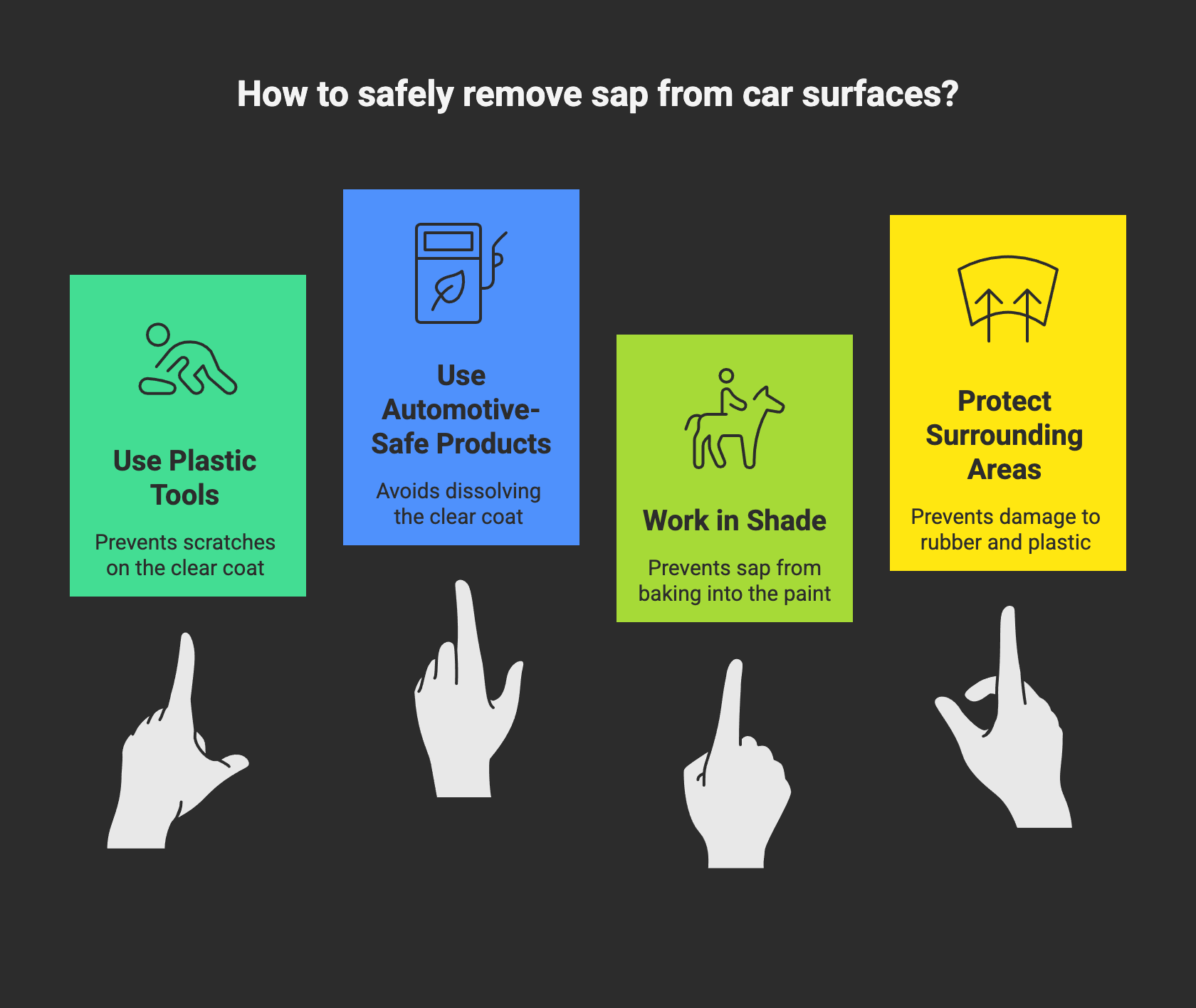
Avoid these costly errors when attempting to remove sap from car surfaces:
Never Scrape Aggressively: Using metal scrapers or razor blades will scratch your clear coat. Always use plastic tools and gentle pressure.
Don't Use Acetone or Paint Thinner: These harsh solvents can dissolve your car's clear coat along with the sap. Stick to automotive-safe products.
Avoid Working in Direct Sunlight: Heat causes products to evaporate quickly and can bake sap deeper into the paint. Always work in shade.
Don't Ignore Surrounding Areas: Sap removal products can damage rubber trim and plastic components. Mask these areas or clean them immediately after contact.
Seasonal Timing and Urgency
Understanding when trees produce the most sap can help you plan your car care routine:
Peak Sap Seasons:
Spring (March-May): Trees wake up from winter dormancy
Early Summer (June-July): Maximum sap production
Fall (September-October): Trees prepare for winter
Our keyword data shows search volume peaks in fall months, confirming this is when most people discover sap problems. In San Diego's climate, eucalyptus and pine trees can produce sap year-round, making regular inspection even more important.
FAQs About Tree Sap Removing
Does tree sap damage car paint if left untreated?
Yes. Tree sap contains organic acids that chemically bond with your car's clear coat over time. In San Diego's heat, fresh sap can begin etching within 24 to 72 hours. Left for weeks, it can cause permanent damage that requires paint correction to fix. Acting within the first 24 hours gives you the best chance of clean removal without any lasting marks on the clear coat.
How do you remove hardened tree sap from car paint?
Apply a dedicated tar and sap remover to the deposit and let it dwell for 5 minutes to re-soften the hardened material. Wipe gently with a clean microfiber cloth. If the sap does not fully come off, a clay bar with plenty of lubricant will lift what the chemical remover leaves behind. Never use a razor blade, metal scraper, or dry cloth on hardened tree sap.
Is it safe to use isopropyl alcohol on car paint?
Yes, when used correctly. Apply 70 to 90% isopropyl alcohol to a clean microfiber cloth rather than spraying it directly on the paint. Work in the shade, let it dwell before wiping, and wash the area with car soap and water immediately after. Follow up with wax or a paint sealant. Alcohol strips the protective layer, so that last step is important.
Does clay bar remove tree sap?
Yes. Clay bar is one of the safest methods for sap that has not yet etched the clear coat. Use it with generous clay bar lubricant and work in straight lines. The clay physically lifts surface contaminants without harsh chemicals. If the sap has already caused etching, clay bar will not correct the damage. A polish or paint correction is needed in that case.
How long before tree sap permanently damages car paint?
In San Diego's climate, sap can begin to etch clear coat within 24 to 48 hours during summer, when parked car surfaces regularly exceed 150 degrees. In cooler conditions you typically have a longer window, sometimes a week or more. The damage moves from surface-level etching to permanent clear coat loss over weeks. Remove sap as soon as you find it.
What's the best product to remove tree sap from car paint?
For fresh sap, 70 to 90% isopropyl alcohol on a microfiber cloth is safe and reliable. For hardened or stubborn deposits, a dedicated sap remover like Stoner Tarminator or Koch-Chemie Eulex dissolves the residue more effectively than household products. For sap that will not budge with either approach, clay bar treatment followed by a light machine polish restores the finish. Fresh Layer uses professional-grade sap removers as part of every decontamination service.
Can a regular car wash remove tree sap?
Typically no. Automated car washes and hand washing do not apply the dwell time or the right chemistry to dissolve tree sap. Wash brushes and mitts can smear partially softened sap across the paint surface and cause swirl marks. You need isopropyl alcohol or a chemical sap remover to dissolve the deposit before any wiping or rinsing.
Top Tips to Prevent Tree Sap from Sticking to Your Car
Park Wisely: Avoid parking under trees, especially during the spring and summer when sap production is at its peak.
Use a Car Cover: A quality car cover is an excellent investment to protect against sap, bird droppings, and UV damage.
Wash Regularly: Frequent washing helps remove contaminants before they have a chance to adhere strongly to the paint.
Apply a Ceramic Coating: Ceramic coatings create a hydrophobic layer that prevents sap from bonding to your car’s surface.
Inspect Your Car Weekly: Early detection of sap spots makes removal easier and reduces the risk of damage.
Cost Analysis: DIY vs Professional Service
DIY Removal Costs:
Basic supplies (alcohol, towels): $10-15
Professional products: $30-50
Time investment: 1-3 hours
Total: $40-65 plus time
Professional Service Costs:
Basic sap removal: $50-100
Full detail with sap removal: $150-300
Paint correction (if needed): $300-800
Total: $50-800 depending on damage level
For minor sap issues, DIY removal makes financial sense. However, extensive contamination or paint damage often requires professional intervention to avoid costly repainting.
When Insurance Might Cover Sap Damage
In rare cases, comprehensive auto insurance may cover sap damage if:
The damage is extensive and considered "vandalism by nature"
You can prove the sap caused permanent paint etching
The repair cost exceeds your deductible
Document sap damage with photos and get professional estimates before attempting removal if you're considering an insurance claim.
Expert Tips from Professional Detailers
After years of handling sap removal in San Diego's challenging climate, here are insider tips that make the difference:
Temperature matters: Work when surfaces are between 60-75°F for best results
Test first: Always test removal products on a hidden area before treating visible surfaces
Work in sections: Don't try to remove all sap at once - focus on one area completely before moving on
Follow up with protection: Always wax or seal treated areas within 48 hours
Troubleshooting Difficult Cases
Problem: Sap won't budge after multiple attempts
Solution: Try combining methods - soften with heat (hair dryer on low), then apply alcohol, followed by gentle scraping
Problem: White residue remains after sap removal
Solution: This is often oxidation damage - use automotive polish to restore the finish
Problem: Sap in textured areas (bumpers, trim)
Solution: Use cotton swabs dipped in removal solution to work into crevices
San Diego's Professional Sap Removal Services
At Fresh Layer Mobile Detailing, we offer expert tree sap removal services across San Diego. From La Jolla to Chula Vista, we bring professional care to your doorstep. Trust our team to restore your car’s appearance with safe and effective techniques.
Conclusion: Protecting Your Investment
Learning how to remove tree sap from car surfaces effectively protects one of your most valuable assets while saving money on professional services. The key is acting quickly, using the right products, and knowing when to call for help.
Fresh sap responds well to simple household products like rubbing alcohol, while older, hardened deposits may require professional-grade solvents or clay bar treatment. Remember that prevention through smart parking and regular maintenance is always more cost-effective than removal and repair.
Regular maintenance and protective measures can help prevent future sap issues, keeping your vehicle looking its best. Trust Fresh Layer Mobile Detailing for professional sap removal and comprehensive detailing services to ensure your vehicle remains pristine.