Paint Correction Before Ceramic Coating: San Diego Guide
Skipping paint correction before ceramic coating doesn't just reduce the results - it makes your paint look worse. Ceramic coatings are optically clear and add gloss, which means every swirl mark, water spot etch, and oxidation haze you had before coating is now amplified and locked in permanently. Fresh Layer has corrected and coated hundreds of vehicles across San Diego County, and the most expensive jobs we handle are reworks for cars that got coated without correction first.
This guide covers exactly what paint correction removes, what it can't fix, why San Diego's environment makes it more critical here than in most cities, and what you can realistically expect to pay when you do it right.
The short version:
Paint correction removes swirl marks, light scratches, oxidation, and water spot etching from your clear coat using machine polishing
Ceramic coatings amplify gloss - which means defects look more visible after coating, not less
Correction can remove 80-95% of swirls and light scratches depending on paint depth
Skipping correction and re-doing the job later typically costs 2-3x what doing it right the first time would have
San Diego's UV index (8-11 in peak season), marine layer salt deposits, and 300+ ppm hard water accelerate paint degradation faster than most U.S. cities
Get a Paint Correction + Coating Quote
What Paint Correction Actually Does (and What It Can't Fix)

It removes defects in your clear coat. It doesn't cover them.
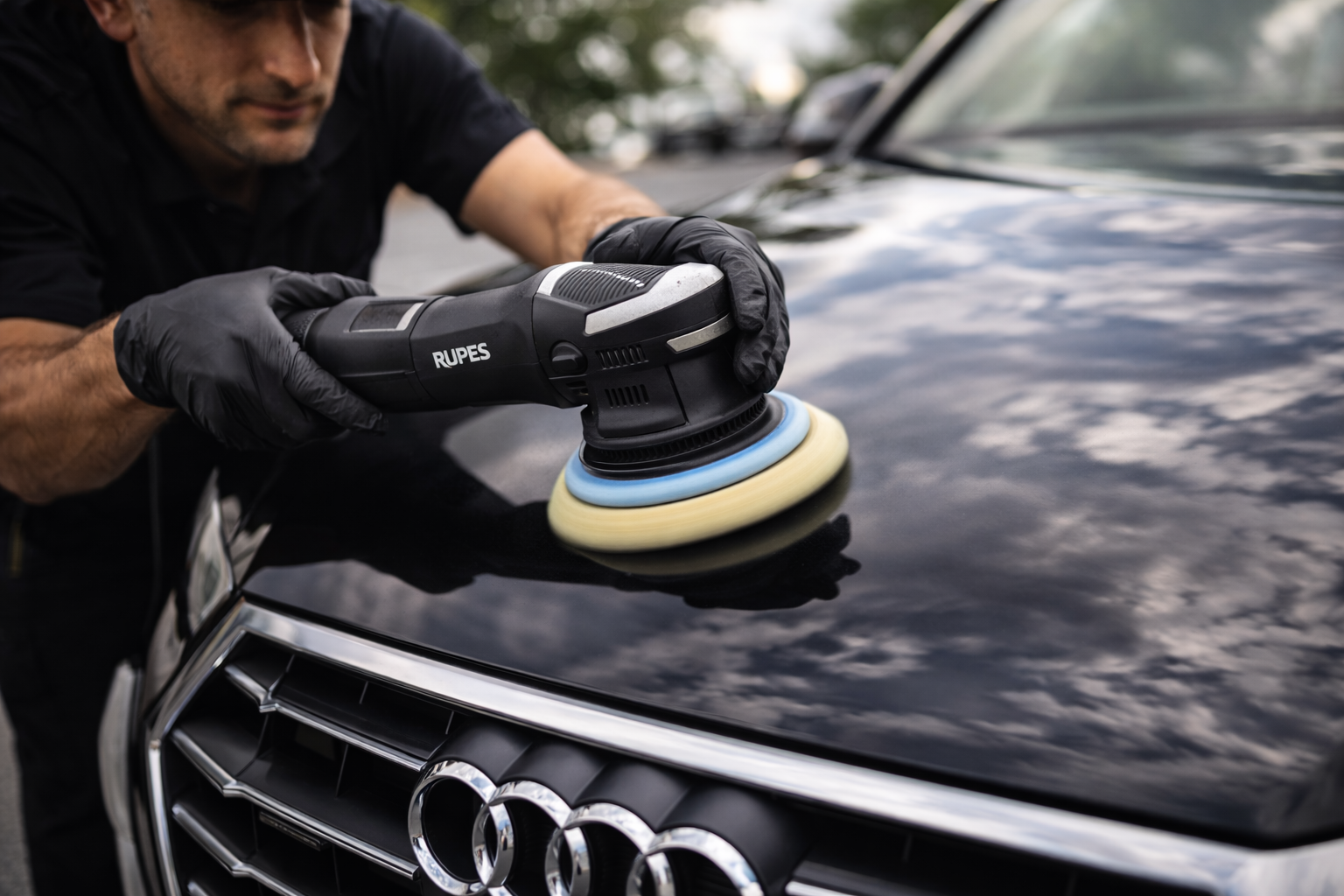
Your car's paint has multiple layers. The clear coat is the outermost transparent layer - the one that gives paint its gloss and takes all the abuse. Swirl marks, light scratches, oxidation haze, and water spot etching all live in that clear coat. Paint correction is machine polishing with a dual-action or rotary polisher, compound, and polish pads. We're removing a microscopic amount of the clear coat and leveling it until those defects fall below the surface or disappear entirely.
The result is a surface that reflects light in one direction instead of scattering it everywhere. That's the "wet look" you see on a freshly corrected car - not a product, just geometry.
Correction typically removes 80-95% of swirl marks and light scratches, depending on the paint's depth and how much clear coat is left to work with. If your paint is already showing burn-through, separation, or flaking, that's clear coat failure. Machine polishing won't fix structural damage - it'll make it worse.
What correction can't safely fix
Deep scratches you can catch with a fingernail (those reach the color coat or primer)
Clear coat failure, peeling, or cracking
Stone chips or paint chips that go through to bare metal
Severe etching that has eaten past the surface layer
If your paint has any of these, we correct what's correctable and protect the rest. Our paint correction service in San Diego includes a paint depth gauge reading before we touch anything - if your clear coat is already too thin to work safely, you'll know that before the job starts, not after.
Why Ceramic Coating Makes Defects Look Worse When You Skip Correction
Most shops don't explain this clearly. A ceramic coating doesn't hide anything. It's optically clear, and it adds gloss and depth to exactly the surface it bonds to - defects included.
Coatings amplify clarity, not perfection
Apply a coating over uneven, swirled paint and you're adding a high-gloss layer on top of a surface that's already scattering light in every direction. The coating sharpens the reflection, which means those swirls catch sunlight more visibly than they did before.
We've heard from customers who had their car coated elsewhere with no correction and thought the shop had scratched it. They hadn't. The coating just made what was already there impossible to ignore.
That's not a coating defect. It's physics.
Surface prep is what separates a 2-year coating from a 5-year coating
A ceramic coating bonds chemically to a clean, smooth, decontaminated surface. Oxidation, iron fallout, and surface irregularities all get in the way of that bond.
Proper prep means a decontamination wash, clay bar treatment, and polishing - followed by a panel wipe with IPA solution to pull any remaining polishing oils before the coating goes on. Do that right and a quality coating holds its hydrophobic properties for 3-5 years or longer. Rush it over contaminated paint and you're looking at failure inside 12-18 months.
The San Diego Factor: Why This Matters More Here Than Most Cities
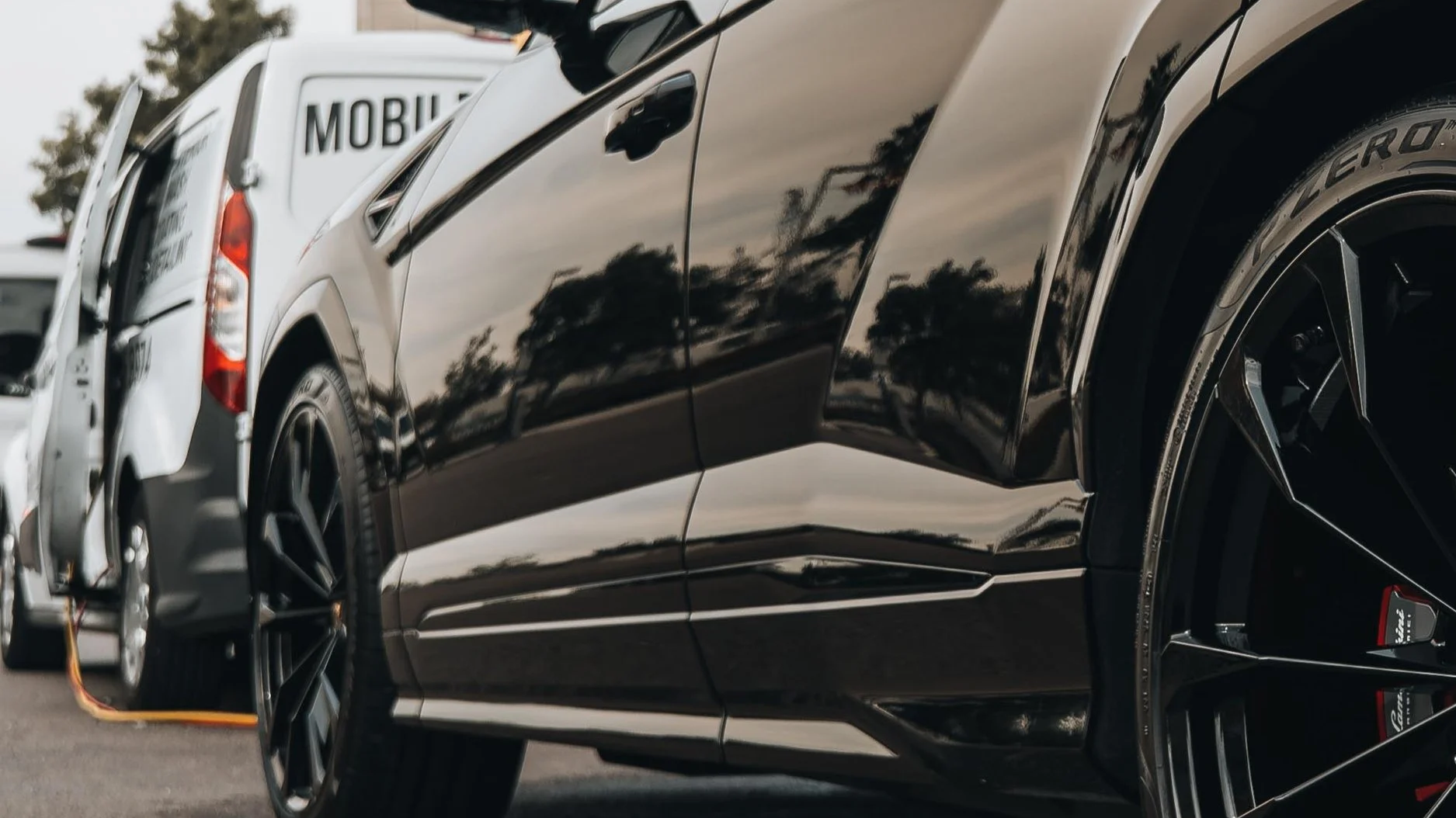
San Diego gets more than 266 sunny days a year, with a UV index that hits 8-11 during peak season. Layer in the Pacific marine layer, coastal salt air, and hard water above 300 ppm across most of the county, and you've got one of the harder paint-degradation environments in the country. The cars we see coming in from coastal neighborhoods are rarely in the same shape as identical vehicles from inland areas - even with similar mileage and age.
Marine layer: salt deposit, then bake
The marine layer rolls in overnight and settles across San Diego from Ocean Beach and Pacific Beach through La Jolla and Del Mar. That moisture carries dissolved salt and organic particles. By mid-morning, the sun burns the marine layer off and bakes what it left behind directly onto your clear coat. Vehicles parked outdoors in 92109, 92037, and 92118 deal with this cycle every single day. The water spotting and surface haze it creates shows up faster than most owners expect - especially on dark paint.
San Diego's sun doesn't give you a warning
Paint that looks clean in your garage or under overcast skies will show its condition immediately under direct sun or a proper LED inspection light. Oxidation and haze that seemed minor at 7 a.m. look completely different by noon in La Jolla. Before coating any vehicle, we do a full inspection under proper lighting. Not in a dim shop where problems stay hidden until the coating amplifies them.
Inland San Diego isn't off the hook either
Poway, Santee, El Cajon, and Escondido skip most of the marine layer mornings, but they deal with higher sustained UV and East County wind events that blast paint with abrasive grit. Coastal salt can also travel several miles inland on offshore breezes - so the degradation is different in pattern but not in result. And I-5, I-805, and I-8 corridors deposit heavy iron contamination on commuter vehicles near Hillcrest, Mission Valley, and North Park that has to come off before any coating goes on.
What Happens If You Coat Without Paint Correction

The three failures we see most often
1. Swirls locked in and more visible under sun The first time the owner parks in full sun, they see it. The coating's gloss makes the swirl pattern sharper than it was before coating. There's nothing to do at that point except strip the coating and start over.
2. Early bonding failure on contaminated or oxidized paint Iron particles, road grime, and oxidation sitting under a ceramic coating prevent uniform bonding. The hydrophobic effect fades early in some spots and holds in others. Water behavior goes inconsistent across the panel. A coating on properly prepped paint beads water evenly across the whole surface - that's what you're paying for.
3. Hard water spots and etch marks sealed in forever San Diego's hard water leaves behind calcium and magnesium deposits that etch into clear coat over time. If those spots aren't removed before coating, they go under the ceramic layer and stay there. Protected from new water spots going forward, yes. But the old ones are permanent.
The expensive fix: strip, correct, and start from scratch
Removing a ceramic coating means wet sanding (which burns more clear coat than the original correction would have), solvent strip work, or aggressive compound passes. Once the coating is off, the paint still needs correction. Then the whole application process runs again. That rework typically costs 2-3x what a correct first job would have run.
Cost Reality: Doing It Once vs Paying Twice
| Scenario | Upfront Cost | What You Get | Expected Duration | Risk |
|---|---|---|---|---|
| Correction + ceramic coating | $599-$1,499 depending on condition | Defect-free paint under a durable coating | 3-5+ years with maintenance | Low |
| Coating without correction | $300-$600 (coating only) | Defects amplified and locked in | 12-18 months before failure shows | High |
| Neither | $0 now | Paint keeps degrading | Accelerating oxidation and fade | Certain |
1-Step vs 2-Step Paint Correction for Ceramic Coating in San Diego
When 1-step correction is the right call
Single-stage correction runs one compound and pad combination to remove light defects and refine the surface in the same pass. It's the right move for newer paint, lighter-colored vehicles where swirls are less visually pronounced, or paint that's in solid overall shape with only minor surface marks. A 1-step correction typically improves clarity by 50-70%. For a lot of daily drivers, that's plenty before coating goes on.
When you actually need 2-step correction
Two-step correction runs a cutting compound first to pull out heavier defects, then a finishing polish to refine the surface. Most paint correction ceramic coating San Diego jobs involving black paint, dark metallics, and heavily swirled vehicles need this approach to reach a standard worth coating. Multi-stage work can bring swirl and scratch removal into the 85-95% range. Black cars in particular almost always need 2-step - the swirl patterns that are invisible on silver are a road map on black.
Paint depth: what we check before we start
We measure paint depth on every panel before any correction work. Clear coat on factory paint typically reads 80-150 microns; each polishing pass removes roughly 1-5 microns. If your clear coat is already thin from prior correction, body shop work, or previous polishing, we'll be conservative and stop before we get near a threshold that risks the paint. We'll tell you upfront what's achievable and what isn't - and we won't burn through your clear coat chasing the last 5% of improvement.
The Fresh Layer Process: What to Expect at Your San Diego Location
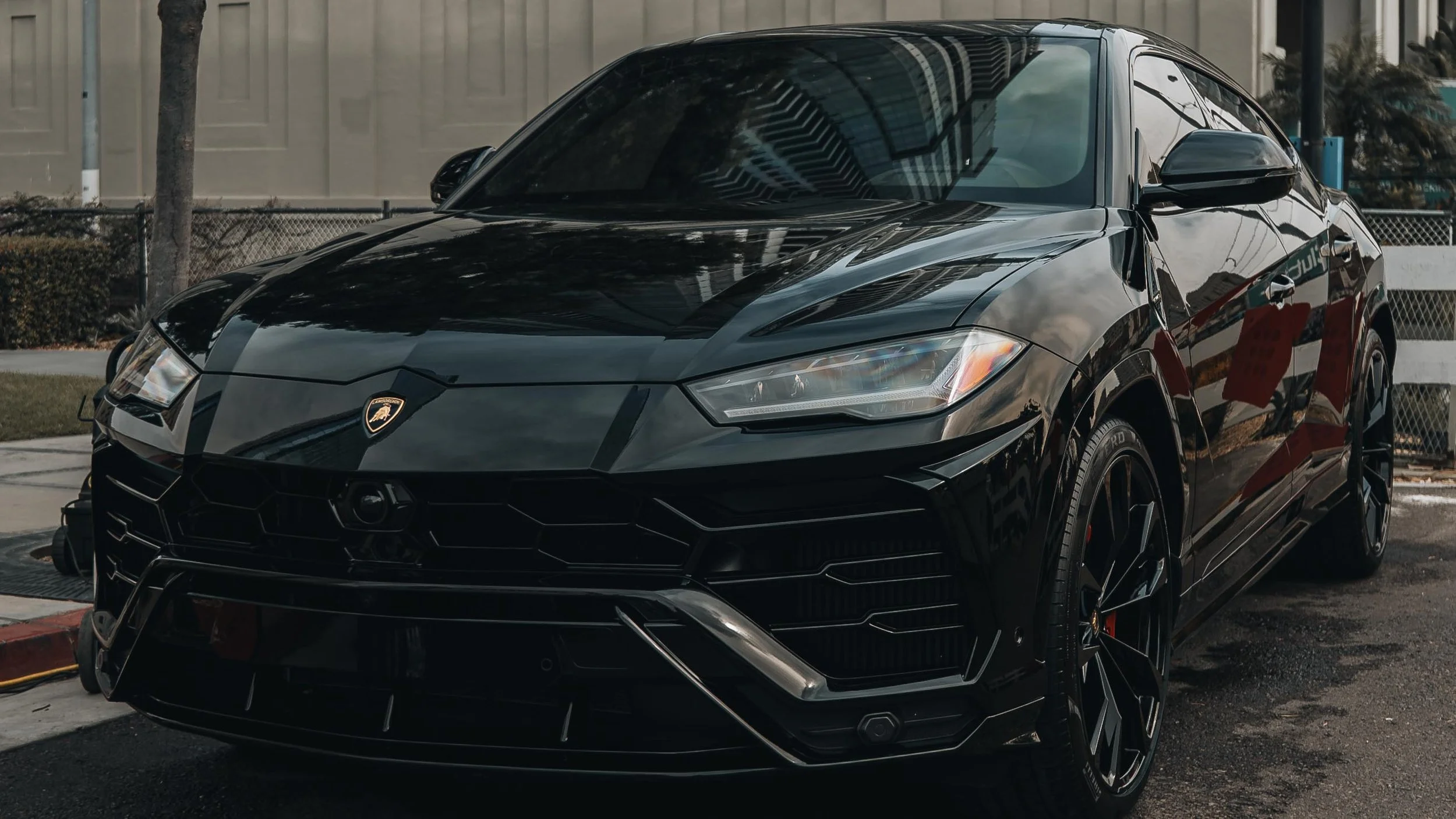
Our ceramic coating service in San Diego is fully mobile. We come to your driveway, apartment parking structure, or office lot anywhere in San Diego County. Here's exactly what happens:
Foam wash + chemical decontamination - brake dust, iron fallout, and organic contamination come off first
Clay bar treatment - pulls bonded surface contamination that washing won't touch
Paint depth measurement - every panel, before we pick up a polisher
Paint inspection under LED lighting - every defect gets identified, the correction plan gets locked in
Compound stage (2-step jobs) - heavy cutting with Rupes to remove scratches and oxidation
Polish stage - brings the surface to a high-gloss, defect-free finish
IPA panel wipe - strips polishing oils so the coating bonds to bare, clean clear coat
Ceramic coating application - applied in controlled sections, leveled before it flashes
Cure walkthrough - we explain exactly what to avoid for the first 7 days and why
We carry $2M in liability insurance on every job. Our technicians are IDA-certified and Gtechniq-certified. Pricing for paint correction varies by vehicle size and paint condition; ceramic coating packages run from $599 to $1,499. Contact us for a quote on your specific vehicle.
Mobile logistics: how we handle San Diego's conditions
Coating application requires shade. We plan arrival time and location with you in advance to lock in a covered or shaded working area. For coastal jobs in La Jolla, Pacific Beach, or Coronado, we schedule around marine layer timing so we're not fighting salt air moisture during application. For inland jobs in Poway or Santee, we watch for afternoon wind events that can carry grit onto wet coating. None of that is an excuse - it's what makes the difference between a job done right and a job redone.
Who Should NOT Pay for Full Paint Correction Before Coating
Not every car needs full correction before coating. We'll tell you that straight, including when it's going to cost us a sale.
Clear coat failure or peeling - Polishing over structural paint failure makes things worse, not better. If your clear coat is peeling or cracking, the answer is a repaint or paint protection film, not a correction and coating.
Work trucks and high-abuse daily drivers - If your truck gets door dings in job site parking every week and spends nights uncovered, spending $1,200 on paint correction before ceramic coating doesn't pencil out. A maintenance-level sealant or an entry-level ceramic on clean but uncorrected paint is the smarter move.
Budget-constrained situations - A light polish to improve surface clarity followed by a durable ceramic coating is a legitimate approach. You won't hit 90% defect removal, but you'll protect the paint from further degradation at a lower entry cost. We'll walk you through what that looks like and what to expect - or take a look at our detailing packages for other options.
If your car doesn't need full correction, we'll tell you that before you book.
Frequently Asked Questions
Do you need paint correction before ceramic coating?
Yes - if your paint has visible swirl marks, water spots, scratches, or oxidation haze. Ceramic coatings don't hide defects, they make them sharper. Coat over swirled paint and those swirls become a permanent feature. The exception is very new paint in clean, defect-free condition, where a decontamination prep alone may be enough before coating goes on.
What happens if you apply ceramic coating without paint correction?
The defects get locked in and become more visible - not less. The coating's added gloss sharpens the reflection, so swirls that were easy to overlook before become obvious in sunlight. If the paint is also oxidized or contaminated, the coating may not bond uniformly, and the hydrophobic effect starts failing in patches within a year. Fixing it means stripping the coating, doing the correction that should have happened first, and running the whole application process again.
How much longer does ceramic coating last with paint correction?
On properly corrected and prepped paint, a quality ceramic coating typically maintains hydrophobic performance for 3-5 years or more with basic maintenance washing. On uncorrected or contaminated paint, bonding issues can cause early failure at 12-18 months. The coating doesn't change - the surface it's bonding to is what determines how long it holds.
Is paint correction before ceramic coating worth it in San Diego?
Yes - and especially here. UV index 8-11 in summer, nightly marine layer salt deposits on coastal vehicles, hard water above 300 ppm that etches mineral spots into clear coat. San Diego accelerates paint degradation faster than most U.S. cities. Coat over uncorrected paint in this environment and those defects are protected from future damage, yes - but they're also visible forever.
How does the San Diego marine layer affect paint before coating?
The marine layer deposits dissolved salt and particles from the Pacific onto vehicle surfaces overnight. The morning sun bakes them in. Over time this creates water spot etching and surface haze, particularly on vehicles parked outdoors in Ocean Beach, Pacific Beach, Del Mar, and La Jolla. Those deposits need to be chemically and mechanically removed before a coating will bond correctly.
What's the difference between 1-step and 2-step paint correction?
Single-stage uses one compound and polish pass to handle light defects - right for lightly swirled paint or newer vehicles. Two-step runs a cutting compound first to pull deeper defects, then a finishing polish to refine the surface. Black paint, dark metallics, and heavily swirled vehicles almost always need 2-step to reach a level worth coating. The swirl pattern that's barely visible on silver is a road map on black.
Can ceramic coating hide scratches?
No. Coatings are optically clear and add reflectivity - they make scratches more visible, not less. Light scratches within the clear coat can be removed through correction before coating. Deep scratches that reach the color coat or primer layer can't be polished out; those need touch-up paint or scratch repair before correction and coating make sense.
How long does paint correction and ceramic coating take on a daily driver?
A full 2-step correction and ceramic coating on a mid-size sedan runs 8-12 hours. We block these as full-day appointments. Single-stage correction and coating takes 5-8 hours depending on vehicle size. We'll give you a specific estimate based on your paint condition when you contact us for a quote.
Can you do this at my apartment or office in San Diego?
Yes. We work apartment parking structures regularly - North Park, Hillcrest, Mission Valley, and downtown 92101 are all areas we're in often. We need access to a covered or shaded spot for the coating application phase. If you have an assigned covered space, that usually works. Send us your location and we'll confirm logistics before you book.
What maintenance keeps the finish looking best after coating?
Wash every 2-3 weeks with a pH-neutral soap and a clean microfiber mitt. Skip the automated car washes with spinning brushes - those are the primary source of swirl marks on coated vehicles. San Diego coastal drivers should rinse after high-salt marine layer mornings to slow mineral buildup. An annual SiO2 spray topper extends hydrophobic performance between full coating maintenance cycles.
About the Author
Alex Bratkov is the owner and lead detailer at Fresh Layer Mobile Detailing. IDA-certified and Gtechniq-certified, Alex has performed paint correction and ceramic coating on hundreds of vehicles across San Diego County - from daily drivers in North Park and Hillcrest to show cars in La Jolla and Coronado. Fresh Layer carries $2M liability insurance on every appointment.
Book Paint Correction and Ceramic Coating in San Diego
Fresh Layer Mobile Detailing comes to your San Diego location - home, office, apartment, wherever your car sits. No drop-off, no waiting. Call (619) 874-4115 or request a quote online and we'll assess your paint, tell you exactly what correction your car actually needs, and give you a straight number on pricing. View our ceramic coating packages to see what's included at each level.