How to Dry Out Your Wet Car: Professional Tips for Water Damage
To dry out a car interior fast, start with a wet/dry vacuum to pull standing water from carpets and seats, then run high-velocity fans for at least 6–8 hours. That's the core of how to dry out water damage in a car's interior before it turns permanent.
The reason most people end up with a mold problem isn't that they used the wrong tools — it's that they waited too long to start. At Fresh Layer Mobile Detailing, we've handled water damage from slow sunroof leaks to full flood restoration across San Diego, and the difference between a quick fix and a $1,200 carpet replacement almost always comes down to how fast you move.

power fan for interior
Why Speed Is Everything When Your Car Gets Wet
Knowing how to dry out car interior water damage fast matters because moisture doesn't stay on the surface. Within minutes, it soaks through carpet fibers into the padding underneath — and that padding holds water for days after the surface feels dry to the touch. Getting the water out of your car interior quickly is the only way to avoid a mold situation.
Mold spores begin colonizing in as little as 24–48 hours once carpet padding is wet. By the time you smell something musty, it's already established and spreading deeper into the foam. You can't kill it with Febreze or a quick vacuum pass — it needs enzyme treatment or physical removal.
Electronics are the other risk. If water reached your center console or dashboard area, every hour you wait without pulling the battery increases the chance of a short circuit. Speed matters there too.
How to Dry Out a Car Interior: Step-by-Step
This is the fastest, most effective sequence for getting water out of your car interior before damage sets in. Follow these steps in order — skipping ahead almost always means needing to come back.
Step 1: Stop the Source
Before anything else, figure out where the water came from. If it's a leaking sunroof drain, cracked windshield seal, or torn door weatherstripping, fix the source first — otherwise you're drying a car interior that's still filling back up.
Step 2: Extract Standing Water
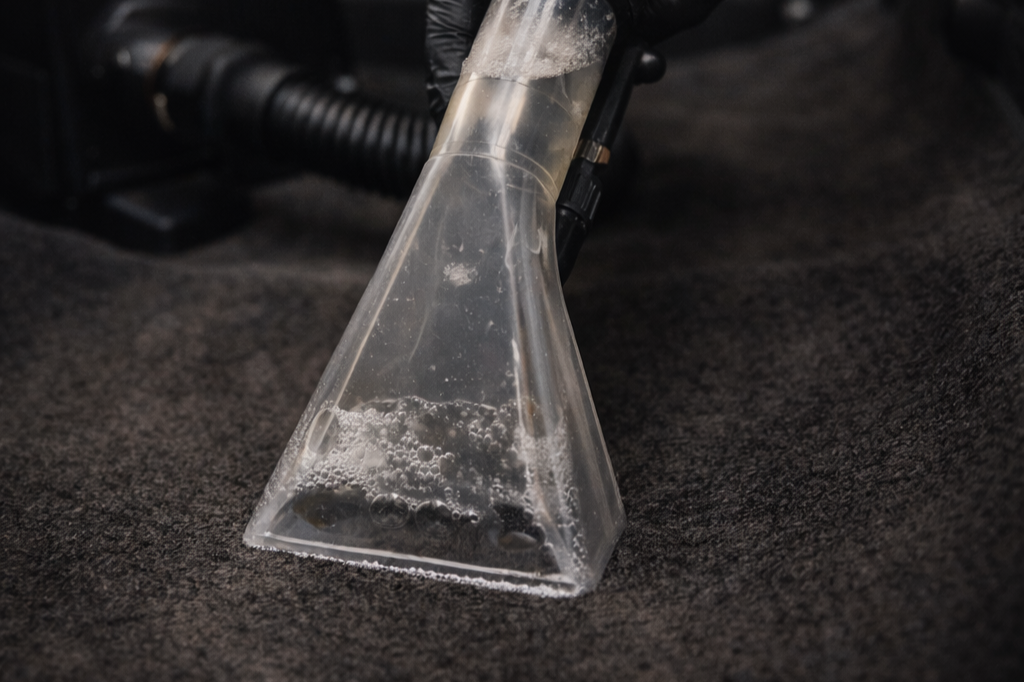
A wet/dry vacuum (shop vac) is the single most important tool for how to dry out car interior water. A regular household vacuum will burn out immediately — you need one rated for water, at least 5-gallon capacity. This is also how to get water out of car carpet padding that you can't reach any other way. Work in slow, overlapping passes and press the nozzle down firmly into the carpet. You're pulling water up from the padding, not just off the surface. Do 3–4 full passes per section. You'll see how much water keeps coming out on each pass.
This step removes roughly 80% of the water in 15–20 minutes.
Step 3: Blot with Microfiber Towels
After vacuuming, lay thick microfiber towels flat on wet carpet and press down with your full body weight to wick remaining moisture up into the towel. Flip to a dry section and repeat until the towel picks up almost nothing. Use high-GSM detailing towels — the cheap thin ones don't absorb enough to make a difference.
Step 4: Run High-Velocity Fans
Open all four doors. Position air movers or box fans directly at wet areas. Industrial air movers move significantly more air than box fans and cut drying time roughly in half. If you're in a closed garage, run a dehumidifier alongside the fans — otherwise you're just moving humid air in circles. Run fans continuously for at least 6–8 hours. For serious soaking, overnight is better.
Step 5: Confirm It's Actually Dry
Press your palm flat against the carpet with full weight. Any coolness or moisture transfer means it's still wet. A moisture meter (under $20 at hardware stores) gives you a precise reading. Don't close the car up until every area is confirmed dry — trapped humidity in a sealed interior is exactly what mold needs.
Tools You Need to Dry Out a Wet Car Interior

Having the right tools makes this process 10x easier. Here's what professional detailers use:
Essential Tools:
Wet/Dry Vacuum (Shop Vac)
This is your most important tool. A standard household vacuum won't work—you need one designed to handle water. Look for at least 5-gallon capacity and strong suction.High-Velocity Fans
Box fans work, but carpet dryers or air movers are better. These industrial fans move way more air and cut drying time in half.Absorbent Microfiber Towels
Get at least 4-6 large microfiber towels. The cheap thin ones don't absorb much—invest in thick, plush microfiber cloths designed for car detailing.Dehumidifier (Optional but Helpful)
If you're drying your car in a closed garage, a dehumidifier pulls moisture out of the air, preventing it from just sitting inside the car.
Helpful Extras:
Portable Heater: Only use this if it's cold outside and you're working in a garage. Never leave it unattended.
Extension Cords: You'll need power for fans and vacuums
Moisture Meter: Some professionals use these to confirm carpets are 100% dry
Work Lights: If you're working at night or in a garage
Moisture trapped inside the car creates the perfect environment for mold and mildew to grow. Beyond the unpleasant smell, mold can pose serious health risks.
How to Dry Each Part of Your Car Interior

Different surfaces need different approaches. Here's the professional method for each area.
Carpets and Floor Mats
Remove floor mats first and hang them vertically to drip-dry, then position a fan on them. Flat mats never dry properly. For the carpet, run the wet/dry vacuum in firm overlapping passes — at least 3–4 rounds per section, pressing down hard.
If the water was deep enough to saturate the padding, you need to pull the carpet back and dry the padding separately. This is the step most people skip when dealing with a wet car interior — and it's exactly why they end up with mold. Water damage in car carpet padding doesn't dry from the surface down; it has to be addressed directly. Most car carpets are held with clips along the edges — check YouTube for your specific model. If carpet smells musty after drying, the padding still has moisture in it. Surface drying won't solve that.
Car Seats: Fabric and Leather
Knowing how to dry car seats correctly depends on the material. For fabric seats, use the upholstery attachment on your wet/dry vacuum and work across the entire seat surface, focusing on seams and crevices where water pools. Follow with the pressing-towel method. A hairdryer on cool/low setting can help with stubborn wet spots — keep it moving, never stationary.
For leather seats, blot with a soft microfiber cloth and never apply heat. Leather cracks when dried with direct heat. Air-dry with fans only, then apply leather conditioner once fully dry to restore moisture.
Check under each seat with a flashlight — water collects in spots you can't see from above.
Dashboard and Electronics
Disconnect the battery if water reached the dashboard or center console. Use a dry microfiber cloth to remove water from electronic surfaces — not the wet/dry vacuum, which can cause static damage near displays. For air vents, blow cool air through them with a hairdryer on the lowest setting.
Warning signs that require professional inspection: dashboard warning lights after the water event, electronics that stop working, burning plastic smell, or a car that starts then dies immediately.
Trunk
Empty everything — spare tire, tools, storage bins. Vacuum standing water, then peel back the trunk liner to check the floor underneath. The spare tire well is the lowest point in the trunk and fills like a bowl — remove the spare and dry the well with towels. Leave DampRid or silica gel packets while fans run.
How to Get Rid of the Musty Smell and Prevent Mold

This is the part most people mess up. You can dry your car perfectly, but if you don't address the smell and mold potential, you'll be dealing with problems for months.
Why Your Car Smells After Getting Wet
That musty smell isn't just unpleasant—it's mildew starting to grow. Within 24-48 hours of getting wet, mold spores begin to multiply. Once they take hold, the smell is incredibly hard to remove.
The smell comes from bacteria and mold breaking down organic material (dirt, dust, skin cells) in your carpet and upholstery. Just drying the car won't kill these organisms—they'll keep producing that musty odor.
The Right Way to Remove the Smell
Don't Just Mask It
Air fresheners and Febreze only cover up the smell temporarily. You need to kill the bacteria and mold causing it.Use an Enzyme Cleaner
After your car is completely dry, spray the affected areas with an enzyme-based cleaner. These products break down the organic compounds causing the odor.
Popular options:
Nature's Miracle
Rocco & Roxie Odor Eliminator
Simple Green Bio Dog Stain & Odor Remover (works on car interiors too)
Spray liberally on carpets and seats. Let it sit for 10-15 minutes, then blot with towels. Don't vacuum it up right away—the enzymes need time to work.
Professional Option: Ozone Treatment
This is what professional detailers use for stubborn smells. An ozone generator produces ozone gas that kills bacteria, mold, and mildew at a molecular level.
We use this at Fresh Layer Mobile Detailing for cars with severe water damage or persistent smells. The treatment takes 30-60 minutes and completely eliminates odors—not just covers them up.
You can rent ozone generators, but follow instructions carefully. Ozone is harmful to breathe, so you need to ventilate the car thoroughly after treatment.
Preventing Mold Growth
The key to preventing mold is simple: get your car 100% dry within 24-48 hours.
Mold Prevention Checklist:
All visible water removed within 6 hours
Fans running for at least 8 hours
Carpets and seats completely dry when pressed hard
No musty smell when you sit in the car
Dehumidifier or moisture absorbers left in car for 24 hours after drying
Signs Mold is Growing:
Musty smell that gets worse over time
Visible dark spots on carpet, seats, or door panels
Allergic reactions (sneezing, itchy eyes) when in the car
Foggy windows even when the car is dry
If you see any of these signs, you need professional mold remediation. Surface cleaning won't fix it—mold grows deep in the padding and foam.
Special Case: Milk Spills
If you spilled milk, coffee with milk, or any dairy product, you need to act even faster. Dairy proteins rot quickly and create an incredibly strong smell that's nearly impossible to remove once it sets.
Immediate Steps:
Soak up all visible liquid with towels
Mix equal parts white vinegar and water
Spray the area heavily—really saturate it
Let sit for 15 minutes, then blot up
Follow with enzyme cleaner
Dry completely with fans
If the milk soaked into the carpet padding, you might need to pull the carpet back and clean the padding directly. Otherwise, the smell will come back every time the car heats up.
How to Dry Car Interior After Rain Damage
Rain leaks are often slow and ongoing — sometimes you don't notice until the carpet has been damp for days. Drying a car interior after rain damage follows the same core process, but there's a step that must come first.
Find the Leak Before You Dry
Drying a car that still has an active rain leak is a waste of time. The four most common sources of rain intrusion in San Diego vehicles:
Sunroof drain tubes — they clog with debris and back water up into the interior. Clear with compressed air or a flexible wire.
Windshield seal — hairline gaps in the urethane seal around the perimeter.
Door weatherstripping — rubber seals tear or shrink, especially on vehicles parked in direct sun.
Trunk seal — water enters the trunk and wicks forward into the rear cabin.
Have someone spray a hose on the car while you sit inside with everything closed. Start at the roof and work down. When water appears inside, you've found the source.
Drying After Rain Intrusion
Once the source is fixed, dry car interior after rain damage using the standard sequence: wet/dry vacuum extraction, towel blotting, fans for 6–8 hours minimum, followed by enzyme cleaner on any affected fabric. Rain leaks typically produce smaller water volumes than flooding, so drying is faster — unless the leak went unnoticed for weeks. If the padding is saturated, treat it the same as flood damage.
How to Dry Out a Flooded Car
Knowing how to dry out a flooded car is a different situation from a spill or rain leak. If your car was in standing water, the priority order changes.
Do not start the car if water reached the dashboard level or higher. Disconnect the battery immediately. Starting a flooded engine risks hydrolocking — the engine tries to compress water instead of air, which destroys internal components instantly.
Assessing the Damage Level
Water to the floor only: DIY drying is likely workable
Water that reached seat level: professional help strongly recommended
Water at dashboard level: call a professional — electrical system inspection required before the car is driven
For floor-level flooding, the carpet almost always needs to come out. Remove the seats for full access, pull the carpet back, dry the padding separately, and check the metal floor for rust while it's exposed. Check your air filter — if it's wet, water entered the intake. Check the oil dipstick — if the oil is milky or foamy, water contaminated the engine. Either means a mechanic visit before the car goes anywhere.
How to Dry Out a Car After Spilling Liquids
Spills are easier to deal with than flooding, but you still need to act fast.
Water Spills
Plain water is the easiest. Soak it up with towels, vacuum the area, and use fans to dry. Water doesn't stain and won't cause odors if you dry it quickly.
Coffee or Soda Spills
These can stain if you don't clean them properly.
Soak up as much liquid as possible with towels
Mix mild dish soap with water (1 tablespoon soap per cup of water)
Spray the area and agitate with a soft brush
Blot with clean towels
Rinse with plain water and blot again
Dry with fans
Milk or Dairy Spills
See the section above on milk spills. These require vinegar treatment and enzyme cleaners.
Alcohol or Juice Spills
These are sticky and can attract dirt. Clean with the soap and water method, then follow up with an interior detailing spray to remove any residue.
The 5-Minute Rule
If you spill something in your car, you have about 5 minutes before it starts soaking into the padding. Keep a microfiber towel in your car for emergencies—blot immediately, don't rub.
Preventative Measures: Stop Water Damage Before It Happens
Regular Seal Inspections
Every 6 months, check your door seals, windshield, and sunroof for cracks or gaps. Run your hand along the seals—you should feel smooth, continuous rubber with no tears.Clean Sunroof Drains
Most people don't know their sunroof has drain tubes. These run from the corners of the sunroof down through the car's body to drain water outside.Clear these drains once a year: Open your sunroof and look for small holes in each corner. Use compressed air or a flexible wire to clear any debris.
Use Weatherproof Floor Mats
Replace your fabric floor mats with all-weather rubber mats. These contain spills and are easy to pull out and dry if water gets in.Brands like WeatherTech and Husky Liners make custom-fit mats for every car model. They're worth the investment.
Apply Fabric Protectant
Spray your seats and carpets with a fabric protectant like Scotchgard. This creates a barrier that repels liquids, giving you more time to clean up spills before they soak in.
Park Smart
Don't park under trees during storms—falling branches can break windows
Avoid parking in low-lying areas that flood
If you know a storm is coming, park in a garage or move to higher ground
Keep Emergency Supplies
Keep these in your car:
2-3 microfiber towels
Small bottle of water (for diluting spills)
Plastic grocery bags (to contain wet items)
Paper towels
When to Call a Professional for Water Damage

When to Call a Professional Instead of DIY
Call a pro if any of these apply:
Water reached the seats or dashboard level
You still smell mold after 48 hours of drying
Dashboard warning lights appeared after the water event
You see visible mold — dark spots on carpet, seats, or door panels
You don't have access to a wet/dry vacuum and can't get one quickly
The professional water damage restoration process we use handles what DIY methods can't: industrial water extraction, antimicrobial treatment, padding removal, and ozone. When you can't dry out car interior damage fully on your own, these are the tools that actually solve it.
What to Expect from Professional Water Damage Restoration
At Fresh Layer Mobile Detailing, here's our process for water-damaged vehicles:
Assessment (15-20 minutes)
We inspect the car to determine how deep the water went and check for mold or electrical damage.
Water Extraction (30-60 minutes)
Using industrial wet/dry vacuums, we remove all standing water from carpets, seats, and door panels.
Carpet and Padding Treatment (1-2 hours)
For severe damage, we remove the carpet and dry the padding separately. We also check for rust on the metal floor.
Sanitization and Deodorization (30-45 minutes)
We apply antimicrobial treatment to prevent mold growth, then use enzyme cleaners on affected areas.
Drying Process (4-8 hours)
We use high-velocity air movers and commercial dehumidifiers. For severe cases, we might keep the car overnight.
Ozone Treatment (30-60 minutes)
If there's a persistent odor, we run an ozone generator to eliminate it at a molecular level.
Final Inspection
We check every area with a moisture meter to confirm it's 100% dry. We also check that all electronics are functioning.
Cost: Professional water damage restoration typically runs $200-600 depending on severity. Flood restoration with full carpet removal can be $600-1,200.
Frequently Asked Questions (FAQs)
-
Depending on the extent of the water damage, it can take anywhere from a few hours to several days to completely dry out a car interior.
-
Minor water damage can often be fixed without replacement, but severe cases might require new carpets, seat padding, or electronics.
-
Driving a flooded car can be dangerous due to potential electrical issues. It’s best to have it inspected by a professional before driving again.
-
Thorough drying, dehumidifiers, and immediate action can prevent mold growth.
-
A professional deodorizing treatment can eliminate musty odors caused by trapped moisture.
Final Thoughts: Don't Wait When Your Car Gets Wet
Water damage is one of those problems that gets exponentially worse the longer you wait. A wet carpet on Monday becomes a moldy, smelly disaster by Friday.
The difference between a $50 DIY fix and a $2,000 professional restoration usually comes down to how fast you act. If you remove the water and dry everything within 24 hours, you'll almost always be fine. Wait three days, and you're looking at mold remediation, carpet replacement, and possible electrical damage.
The Fast Action Plan:
Remove water immediately (wet/dry vacuum)
Blot with towels to absorb remaining moisture
Run fans for at least 8 hours
Use dehumidifiers or moisture absorbers
Confirm 100% dryness before closing it up
When to Call Professionals:
Water reached the seats or dashboard
Electrical problems appeared
Mold is visible or the smell won't go away
You don't have the time or tools to do it properly
At Fresh Layer Mobile Detailing, we've handled everything from minor spills to full flood restoration. We come to you with industrial-grade equipment, handle the entire drying and restoration process, and guarantee your car is 100% dry and odor-free.
Don't let water damage ruin your car. Contact us today for a free assessment or to schedule professional water damage restoration. We serve the greater San Diego area and can usually get to you within 24 hours.
Get a Free Quote | Book Water Damage Restoration
About Fresh Layer Mobile Detailing
We're a professional mobile detailing service based in San Diego, California. We specialize in interior restoration, water damage repair, mold remediation, and complete vehicle detailing. With years of experience and hundreds of satisfied customers, we deliver professional results at your location.
Water Damage Services:
Emergency water extraction
Carpet and upholstery drying
Mold remediation and odor removal
Ozone treatment
Full interior restoration
Mobile service (we come to you)
Contact us today to learn more or schedule your appointment. When your car gets wet, we respond fast.