Ceramic Coating for Motorcycles, RVs, and Boats: Special Considerations for Different Surfaces, Saltwater, and UV Protection
Your $40,000 boat is sitting in the marina, and you just noticed the gelcoat starting to chalk. Your RV's fiberglass looks dull after a summer of road trips. Your motorcycle's paint has lost that showroom shine after just one season.
Sound familiar?
Here's what most owners don't realize: standard wax and sealants weren't designed for the punishment that motorcycles, RVs, and boats endure. Between saltwater exposure, relentless UV rays, and constant environmental abuse, these vehicles need something stronger.
That's where ceramic coating for motorcycles, RVs, and boats comes in. This isn't your typical car protection. We're talking about nano-ceramic technology that bonds to different surfaces—from motorcycle paint and chrome to RV fiberglass and boat gelcoat—creating a shield against the elements that can last for years.
At Fresh Layer, we've applied ceramic coatings to hundreds of motorcycles, RVs, and boats across San Diego County. We've seen firsthand how the right coating prevents oxidation on boat gelcoat, stops RV fiberglass from chalking, and keeps motorcycle chrome looking new. More importantly, we've learned that not all coatings work the same way on different surfaces.
This guide breaks down everything you need to know about protecting your motorcycle, RV, or boat with ceramic coating, including the special considerations that most detailers won't tell you about.
What Is Ceramic Coating and How Does It Work?
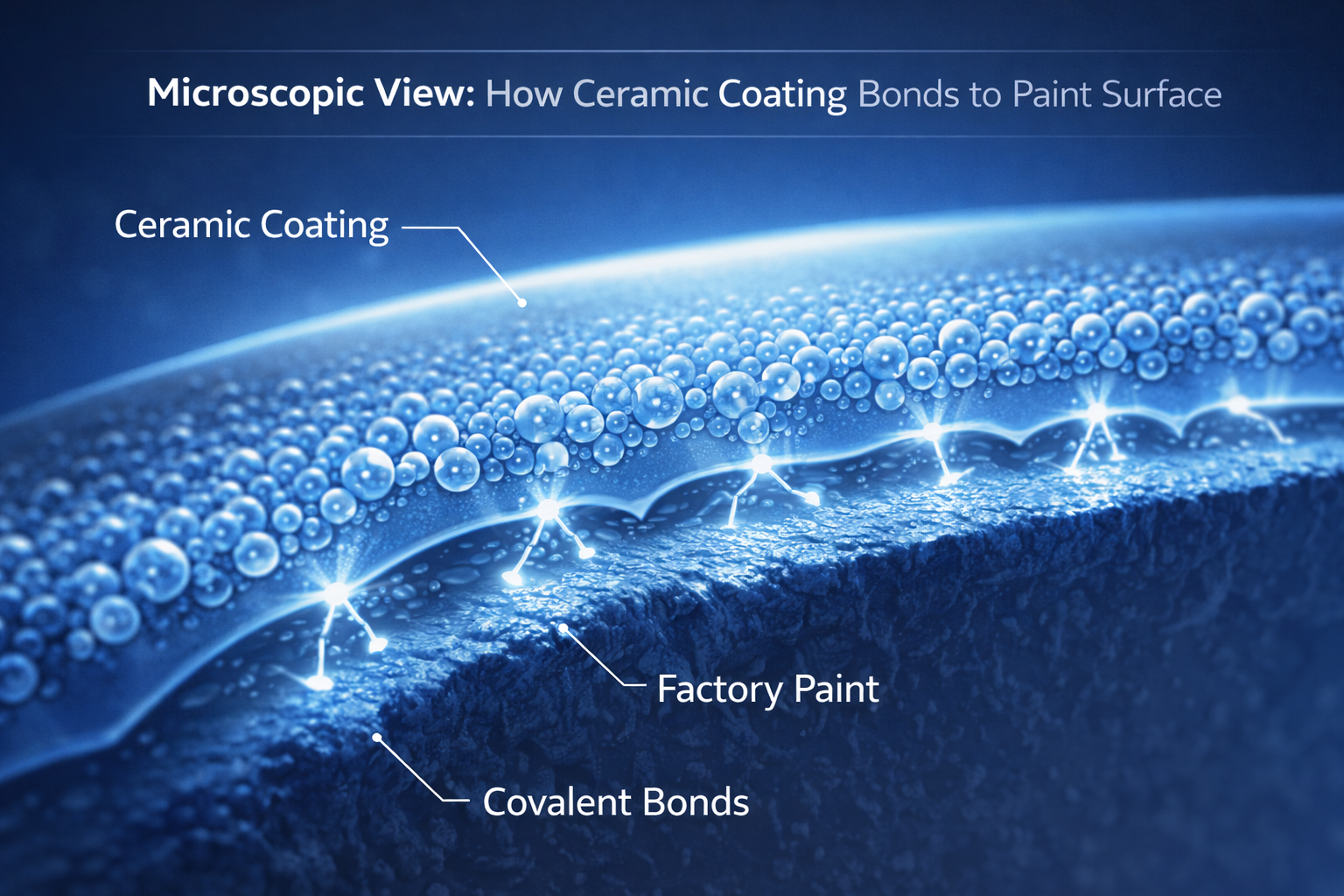
Ceramic coating is a liquid polymer containing silicon dioxide (SiO2) that chemically bonds to your vehicle's surface at the molecular level. Once cured, it creates a permanent protective layer that's significantly harder and more durable than traditional wax or sealants.
Think of it as a second clear coat that repels water, resists chemicals, and blocks UV rays.
Here's what makes nano-ceramic coating different:
Chemical bonding instead of sitting on top of the surface
Hydrophobic properties that cause water to bead and sheet off
9H hardness rating that resists scratches and swirl marks
UV blocking that prevents oxidation and fading
Chemical resistance against acids, salts, and environmental contaminants
The "nano" part refers to the microscopic particles in the formula that fill in surface imperfections, creating an incredibly smooth, glass-like finish.
For motorcycles, RVs, and boats, this technology is particularly valuable because these vehicles face environmental challenges that cars rarely encounter.
Why Motorcycles, RVs, and Boats Need Different Protection Than Cars
Your car sits in a parking lot. Your motorcycle, RV, and boat live completely different lives.
Motorcycles face:
Direct road debris impact with no body protection
Chrome and aluminum surfaces that corrode faster than paint
Constant exposure to bugs, rain, and temperature extremes
Higher speeds that increase environmental damage
RVs deal with:
Massive surface area exposed to sun for months
Fiberglass and gelcoat that oxidize faster than automotive paint
Storage outdoors in all weather conditions
Trees, birds, and industrial fallout during travel
Boats endure:
Saltwater immersion and spray
Constant moisture and humidity
Intense UV reflection off water
Marine growth and organic contamination
Gelcoat degradation unique to watercraft
Standard automotive wax lasts maybe 6-8 weeks on a car. On a boat in saltwater? You're lucky to get 2 weeks. On an RV parked in the desert sun? The wax will literally bake off within days.
This is why ceramic coating for motorcycles, RVs, and boats isn't just beneficial—it's essential for anyone who wants to protect their investment long-term.
Ceramic Coating Benefits for Motorcycles
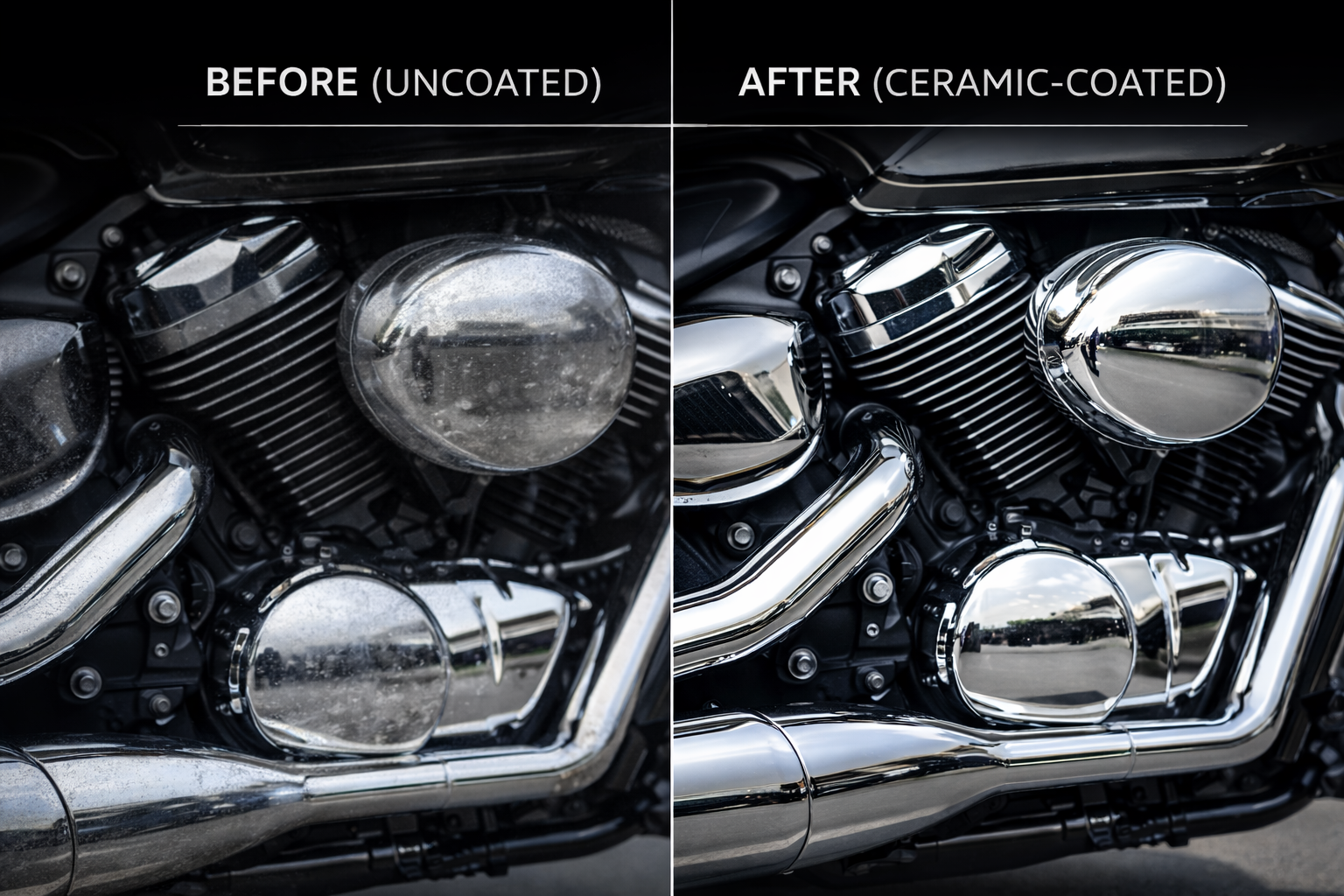
Motorcycle ceramic coating delivers protection that standard products simply can't match.
Paint Protection That Actually Lasts
Your motorcycle's paint takes a beating. Every ride throws rocks, bugs, and road grime directly at exposed surfaces. Ceramic coating creates a sacrificial layer that absorbs this abuse instead of your paint.
The hydrophobic properties mean bugs and tar slide off easier during washing. No more scrubbing to remove baked-on insects from your fairings.
Chrome and Metal Surface Protection
Here's what most riders don't know: ceramic coating works on chrome, aluminum, and polished metal surfaces too.
Chrome exhaust pipes, engine cases, and wheels develop oxidation and pitting from road salt and moisture. A nano-ceramic coating prevents this by creating a barrier against corrosive elements.
We've seen chrome pipes on coastal bikes stay spotless for 2+ years with proper coating, while untreated chrome showed rust within 6 months.
Benefits for Riders
Easier cleaning - dirt and grime wipe off with minimal effort
Enhanced appearance - deeper gloss and color depth
Reduced oxidation on all metal surfaces
Better resale value - protected bikes command higher prices
Less frequent detailing required
For motorcycles stored outside or ridden in harsh conditions, ceramic coating can extend your bike's pristine appearance by years.
Ceramic Coating Benefits for RVs
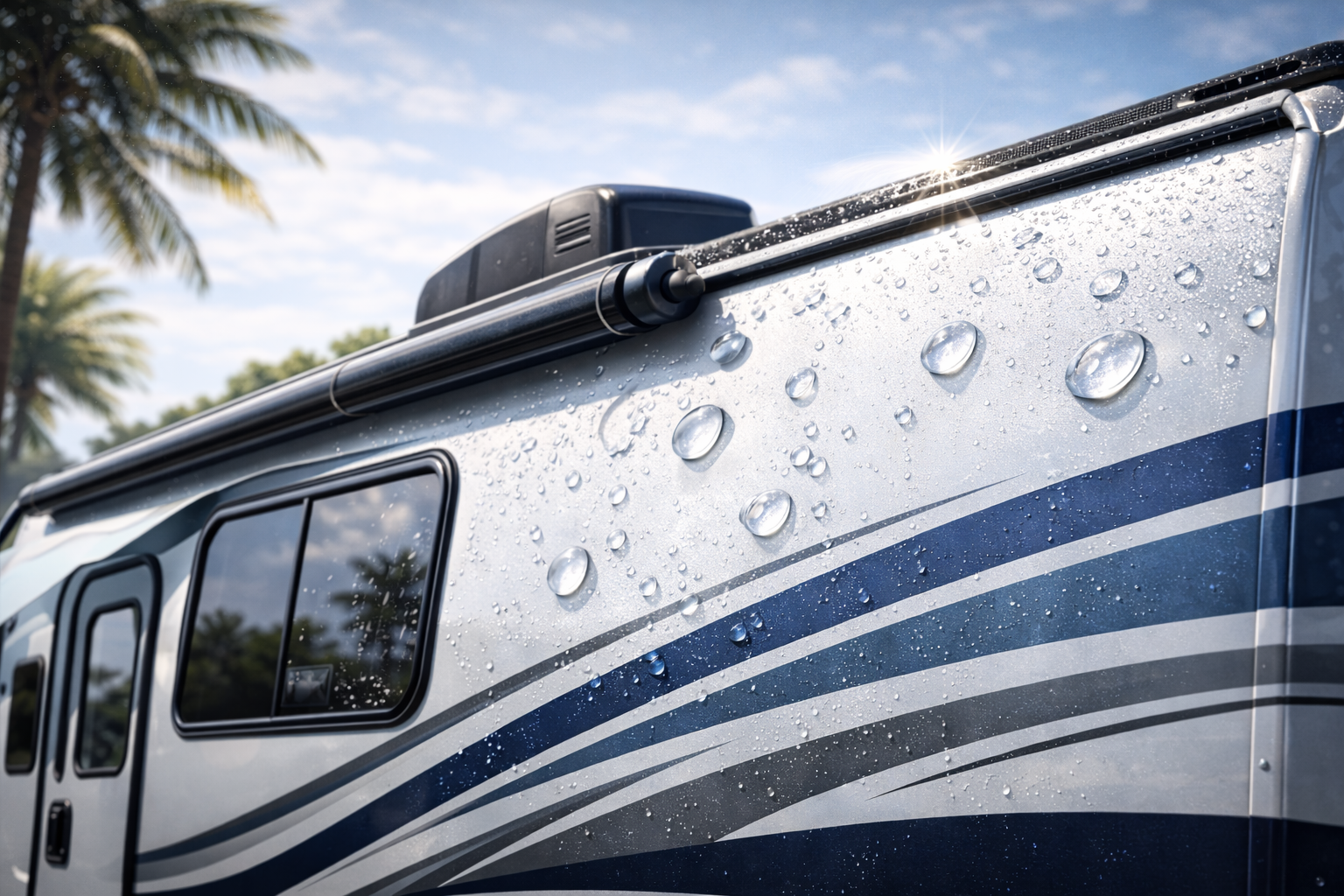
RVs present unique challenges that make ceramic coating especially valuable.
Fiberglass and Gelcoat Protection
Most RV exteriors are fiberglass with a gelcoat finish, not automotive paint. Gelcoat oxidizes and chalks much faster than paint, especially in high-UV environments.
That chalky, dull appearance you see on older RVs? That's oxidation eating away at the gelcoat surface. Once it starts, it accelerates. Ceramic coating prevents this oxidation from beginning in the first place.
Massive Surface Area Advantage
An RV might have 800-1,200 square feet of exterior surface. Imagine waxing that by hand every 6 weeks. You won't.
RV ceramic coating lasts 2-5 years depending on the product and conditions. That's one application instead of 20-40 wax sessions over the same period.
Storage Protection
RVs often sit unused for months. During storage, UV rays, tree sap, bird droppings, and industrial fallout attack the surface 24/7.
A properly applied ceramic coating protects your RV during storage better than any cover can. The hydrophobic layer prevents water from sitting on seams and seals, reducing moisture intrusion and potential water damage.
Real-World RV Benefits
Prevents chalking and oxidation on fiberglass and gelcoat
Reduces cleaning time by 60-70% compared to uncoated surfaces
Protects graphics and decals from fading
Maintains resale value significantly better than untreated RVs
Works on rubber roofs with specialized formulations
We've seen 10-year-old RVs with ceramic coating look better than 3-year-old untreated units.
Ceramic Coating Benefits for Boats
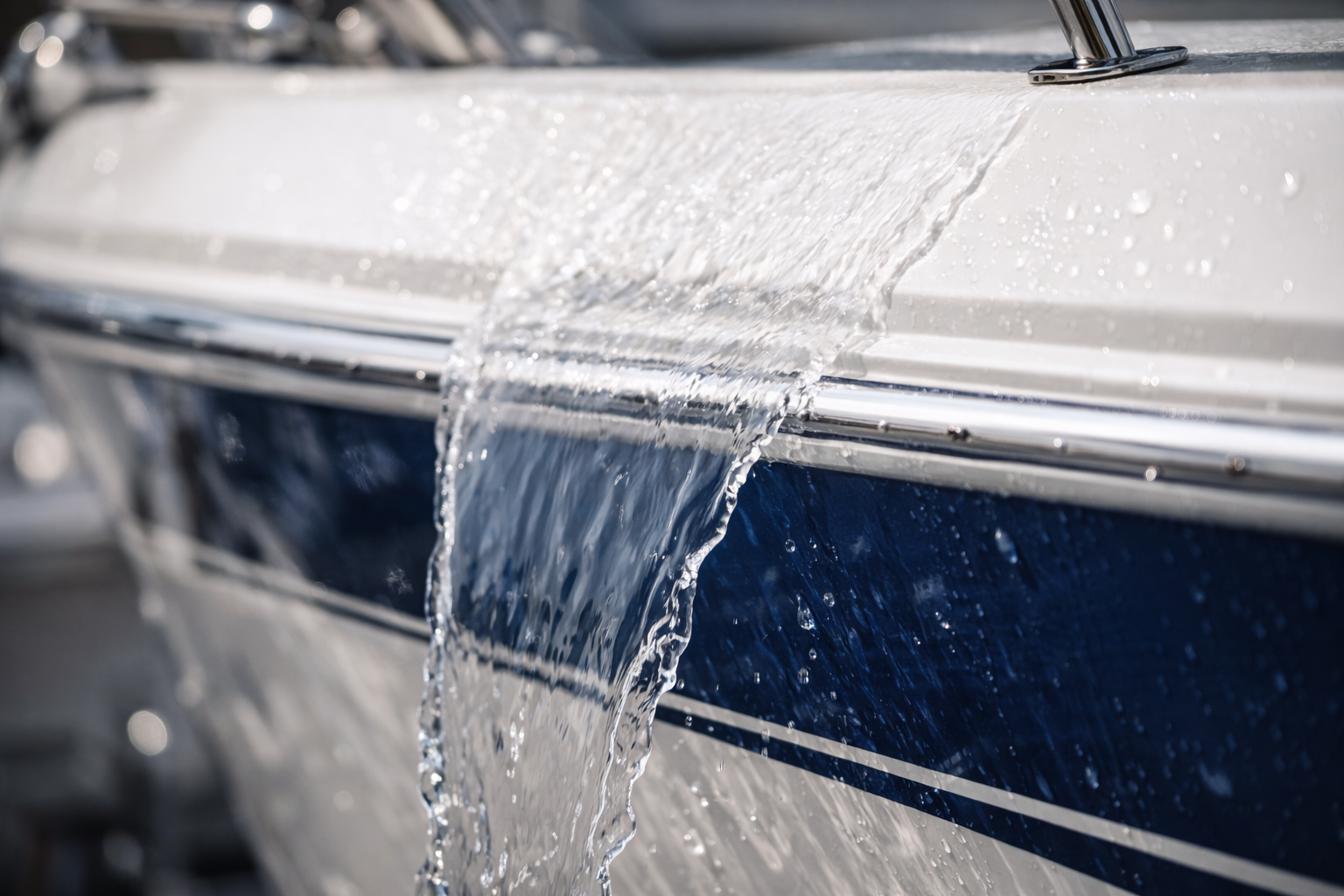
If there's one application where ceramic coating proves its worth, it's marine ceramic coating for boats.
The Saltwater Challenge
Saltwater is the most corrosive environment your vehicle will ever face. Salt accelerates oxidation, eats through wax in days, and causes permanent damage to unprotected gelcoat and marine paint.
Boat ceramic coating creates a chemical barrier that saltwater can't penetrate. The coating resists the corrosive effects of salt while preventing organic growth from bonding to the hull.
Gelcoat Preservation
Here's the critical part boat owners need to understand: gelcoat degradation is permanent. Once oxidation starts, you can't reverse it without aggressive compounding that removes material.
Marine-grade ceramic coating stops oxidation before it begins by:
Blocking UV rays that break down gelcoat resins
Preventing moisture intrusion into the gelcoat matrix
Creating a barrier against chemical contamination
Reducing thermal stress from sun exposure
A coated boat hull maintains its factory gloss for years instead of months.
Marine Paint Protection
Boats with painted hulls face similar challenges. Marine paint contains different compounds than automotive paint to handle water immersion. Ceramic coating compatible with marine paint provides:
Superior UV protection against sun reflecting off water
Chemical resistance to fuel, oil, and cleaning products
Reduced bio-fouling and organic growth
Easier bottom cleaning and maintenance
Boat-Specific Benefits
Massive cleaning time reduction - slime and scum wipe off easily
Reduced fuel consumption - smoother hull reduces drag
Less frequent waxing - coating lasts 2-3 years vs wax every 2-4 weeks
Better color retention on colored gelcoat and paint
Prevents waterline staining that's nearly impossible to remove
For boats in saltwater or heavily used freshwater environments, ceramic coating isn't optional if you want to maintain your investment.
Special Surface Considerations: Paint, Chrome, Fiberglass, and Gelcoat

Not all ceramic coatings work the same on different surfaces. This is where professional knowledge becomes critical.
Motorcycle Paint vs Automotive Paint
Motorcycle paint is typically thinner and more delicate than car paint. The prep work must be gentler to avoid burning through paint on curved surfaces and edges.
Chrome and polished aluminum require specific primers or coating formulations designed for non-porous surfaces. Standard ceramic coating won't bond properly to bare metal without proper preparation.
RV Fiberglass and Gelcoat
Fiberglass surfaces are porous compared to paint. The coating needs to fill these pores while bonding to the gelcoat top layer.
Older RVs with oxidized gelcoat require paint correction first. You can't coat over chalky, oxidized surfaces and expect good results. The oxidation must be removed, which reveals fresh gelcoat that accepts coating properly.
Some RV manufacturers use TPO (thermoplastic polyolefin) panels instead of fiberglass. TPO requires different coating chemistry because it's a plastic, not gelcoat.
Boat Gelcoat Specifics
Marine gelcoat is formulated differently than RV gelcoat. It's designed to handle water immersion, which makes it less porous but also more sensitive to improper coating application.
Boat gelcoat considerations:
Must be completely clean and salt-free before coating
Requires specialized prep to remove wax, salt deposits, and oxidation
Benefits from multi-layer coating application for maximum protection
Needs UV-stable coating rated for constant water contact
Marine Paint on Boat Hulls
Bottom paint and topside marine paint have anti-fouling agents and different binders than automotive paint. Not all ceramic coatings are compatible with these specialized paints.
Professional marine ceramic coating products are formulated specifically for compatibility with marine paint systems. Using automotive ceramic coating on a boat with marine paint can cause adhesion failures.
Key Surface Rules
Match coating chemistry to surface type
Never coat over oxidation or contamination
Use metal-specific primers for chrome and aluminum
Verify compatibility with marine paint before application
Consider porosity differences between surfaces
This is why DIY ceramic coating on boats and RVs has such a high failure rate. Surface identification and proper product selection require expertise.
How Saltwater Destroys Unprotected Surfaces (And How Coating Prevents It)

Saltwater doesn't just sit on surfaces—it actively attacks them at the molecular level.
The Science of Salt Corrosion
Salt (sodium chloride) is hygroscopic, meaning it attracts and retains moisture. When salt spray lands on your boat or coastal RV, it creates a constant wet environment even when the surface looks dry.
This trapped moisture causes:
Oxidation acceleration - salt acts as a catalyst for rust and corrosion
Gelcoat matrix breakdown - moisture penetrates into the gelcoat resin
Paint delamination - salt works under paint layers causing bubbling
Metal corrosion - aluminum and chrome pit and corrode rapidly
You'll see this as white chalking on gelcoat, bubbling paint, rust streaks from metal hardware, and eventually structural damage.
How Ceramic Coating Blocks Salt Damage
Marine-grade ceramic coating creates a completely hydrophobic, chemically inert barrier between saltwater and your surface.
Here's what happens:
Saltwater can't penetrate the coating's molecular structure
Water beads and sheets off instead of sitting on the surface
Salt crystals don't bond to the slick coating surface
Moisture can't reach the underlying gelcoat or paint
Corrosion stops before it starts
We've tracked boats with ceramic coating in San Diego's saltwater environment. After 18 months, coated boats showed zero oxidation or salt damage while untreated boats in the same marina showed significant degradation.
Coastal RVs and Motorcycles
If you live near the coast, your RV and motorcycle face the same saltwater challenges. Salt air carries miles inland, especially in areas with consistent ocean breezes.
Coastal motorcycle chrome will pit and corrode within a year without protection. RVs stored near the beach show accelerated gelcoat chalking and metal hardware corrosion.
Ceramic coating provides the same saltwater resistance for these vehicles as it does for boats.
Protection Longevity in Saltwater
Standard wax in saltwater: 2-3 weeks Polymer sealant in saltwater: 1-2 months Professional ceramic coating in saltwater: 2-3 years
The difference is dramatic. One coating application protects longer than 50+ wax applications.
UV Protection: Why It Matters More for RVs and Boats
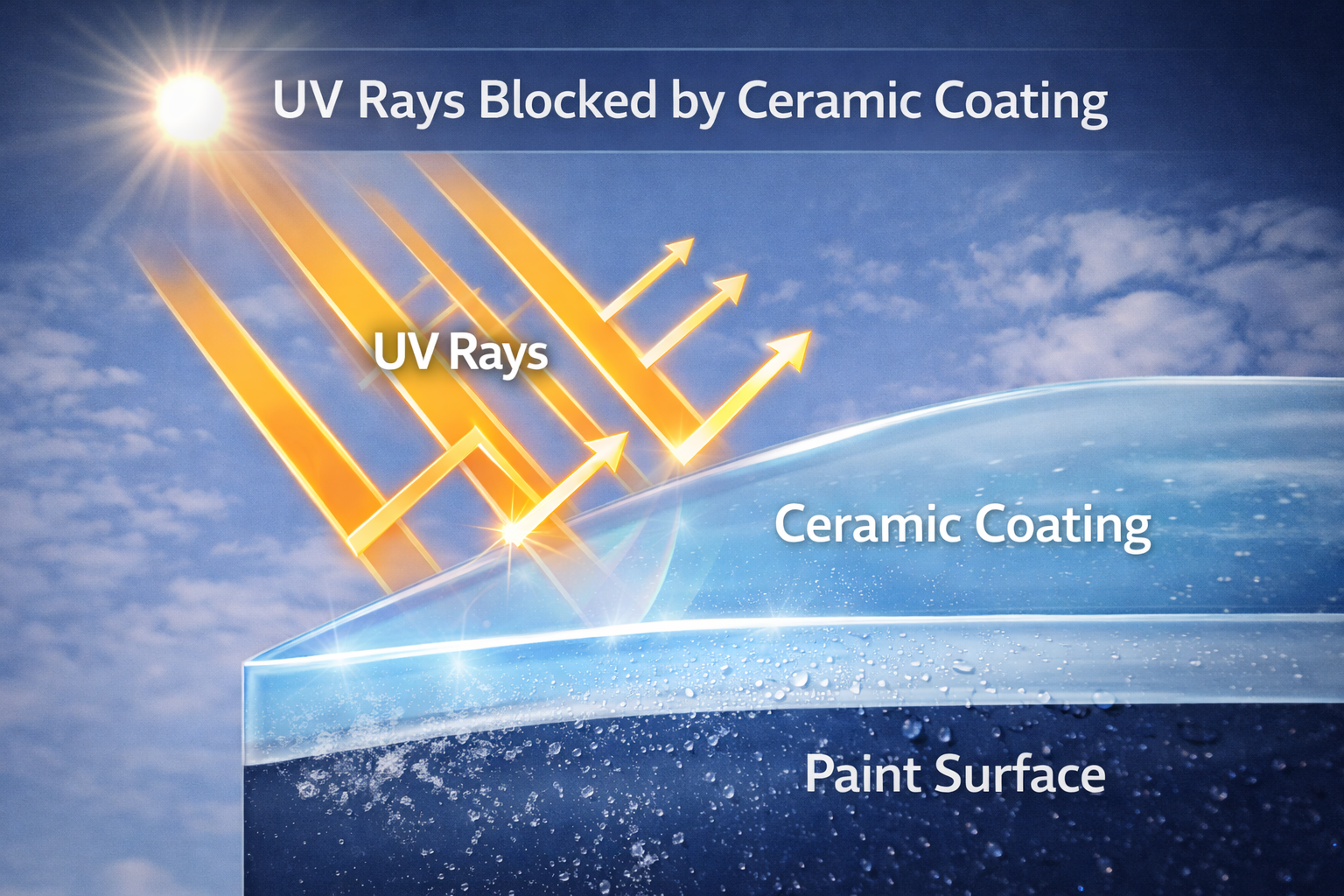
UV radiation is the silent killer of vehicle surfaces, and RVs and boats get hammered worse than cars.
Why RVs and Boats Face Extreme UV
Cars typically park under shade, in garages, or move frequently. RVs sit in storage lots, driveways, and campgrounds with full sun exposure for months. Boats float in open water where UV reflects off the surface, essentially doubling exposure.
In coastal areas like San Diego, the UV index regularly hits 9-11 (very high to extreme) during summer. That's enough to cause visible damage within weeks on unprotected surfaces.
What UV Does to Different Surfaces
On gelcoat:
Breaks down resin binders causing chalking
Fades colors to pale, washed-out versions
Creates micro-cracks that allow moisture penetration
Accelerates oxidation that dulls the finish
On marine and RV paint:
Causes clear coat failure and peeling
Fades pigments, especially reds and blacks
Creates a dull, lifeless appearance
Makes paint brittle and prone to cracking
On motorcycle paint and chrome:
Fades paint colors rapidly on exposed surfaces
Causes chrome to yellow and lose luster
Damages plastic components like windscreens
Degrades rubber and vinyl trim
How Ceramic Coating Blocks UV Damage
Quality ceramic coating acts as a UV-blocking shield between sunlight and your surface.
The SiO2 formula in ceramic coating has natural UV-blocking properties. Professional marine and RV formulations include additional UV inhibitors that block 99%+ of harmful UV rays.
This protection prevents:
Color fading and pigment breakdown
Resin degradation in gelcoat
Clear coat oxidation and failure
Chalking and surface deterioration
Real-World UV Protection Results
We've tested this extensively in San Diego's high-UV environment:
Coated RVs maintained factory color and gloss after 3 years
Uncoated RVs showed visible fading after 18 months
Coated boats had zero chalking after 2 seasons
Uncoated boats needed compounding within 1 year
The difference is visible and measurable.
UV Protection for Stored Vehicles
If your RV sits in storage or your boat lives on a trailer, UV protection becomes even more critical. These vehicles can't hide from the sun.
Ceramic coating provides 24/7 UV protection that never needs reapplication for years. Compare that to wax or sealant that breaks down within weeks under constant sun exposure.
How Ceramic Coating Extends Gelcoat and Marine Paint Life

This is where ceramic coating proves its real value for boats and RVs.
Understanding Gelcoat Degradation
Gelcoat is a polyester resin surface that's applied over fiberglass. It's designed to be sacrificial—meaning it slowly wears away over time to protect the underlying fiberglass.
The problem: once gelcoat degrades past a certain point, it can't be restored. You're looking at expensive fiberglass repair or complete gelcoat replacement.
The Three Stages of Gelcoat Failure
Stage 1: Surface oxidation (reversible)
Dull appearance and slight chalking
Can be corrected with compounding
This is your warning to protect the surface
Stage 2: Deep oxidation (partially reversible)
Heavy chalking and color fading
Requires aggressive compounding (removes material)
Approaching irreversible damage
Stage 3: Gelcoat failure (irreversible)
Visible cracking and crazing
Water intrusion into fiberglass
Requires complete gelcoat replacement
Ceramic coating prevents stages 1-3 from ever starting.
How Coating Stops the Degradation Process
Gelcoat degrades through four primary mechanisms:
1. UV breakdown - coating blocks 99%+ of UV rays
2. Oxidation - coating prevents oxygen contact with gelcoat surface
3. Chemical attack - coating resists acids, salts, and pollutants
4. Moisture intrusion - hydrophobic barrier keeps water out
By blocking these four attack vectors, ceramic coating essentially freezes gelcoat aging.
Properly coated gelcoat can last 15-20 years looking nearly new. Unprotected gelcoat shows significant degradation within 3-5 years.
Marine Paint Protection Works Similarly
Marine paint on boat hulls faces the same challenges as gelcoat, plus additional stress from water immersion and mechanical cleaning.
Ceramic coating on marine paint:
Prevents oxidation that causes paint to fade and chalk
Blocks chemical attack from fuel, oil, and cleaning products
Reduces bio-fouling adhesion that requires aggressive scrubbing
Maintains color saturation and gloss for years
Prevents waterline staining that etches into unprotected paint
Cost Comparison: Protection vs Replacement
Average gelcoat restoration: $3,000-$8,000 for a mid-size boat
Average RV gelcoat repair: $2,000-$5,000 for significant oxidation
Professional ceramic coating: $800-$2,000 for boats/RVs
The coating costs less than one restoration and prevents the need for any restoration for 3-5+ years.
If ceramic coating extends your gelcoat life by even 5 years, you've saved thousands in restoration costs and avoided the depreciation that comes with visible surface damage.
Application Process: What's Different for Each Vehicle Type

Ceramic coating application follows the same basic steps, but each vehicle type has specific requirements.
Universal Preparation Steps
Thorough decontamination - remove all dirt, grime, wax, and sealants
Clay bar treatment - remove bonded contaminants
Paint/surface correction - remove scratches, oxidation, swirl marks
Final wipe down - ensure completely clean, residue-free surface
Coating application - apply in controlled environment
Curing time - allow proper bonding before exposure
The devil is in the details for each vehicle type.
Motorcycle-Specific Application
Challenges:
Small, intricate surfaces require precision
Multiple surface types (paint, chrome, plastic, rubber)
Hard-to-reach areas behind fairings and components
Key differences:
Use smaller application pads for tight spaces
Tape off rubber and non-coated surfaces carefully
Apply lighter coats on thin motorcycle paint
Use metal-specific primers on chrome and aluminum
Extra care around emblems, badges, and graphics
Application time: 4-8 hours for full motorcycle depending on size and condition.
RV-Specific Application
Challenges:
Massive surface area (500-1,200 sq ft)
Height requires ladders and lifts
Multiple surface types (gelcoat, aluminum, rubber roof)
Often stored outdoors with heavy contamination
Key differences:
Work in sections to prevent coating from curing before buffing
Use extension poles for high areas
Different products for gelcoat vs rubber roofing
More aggressive paint correction often needed on older RVs
Climate control critical—can't coat in direct sun
Application time: 2-4 days for full RV with proper prep.
Boat-Specific Application
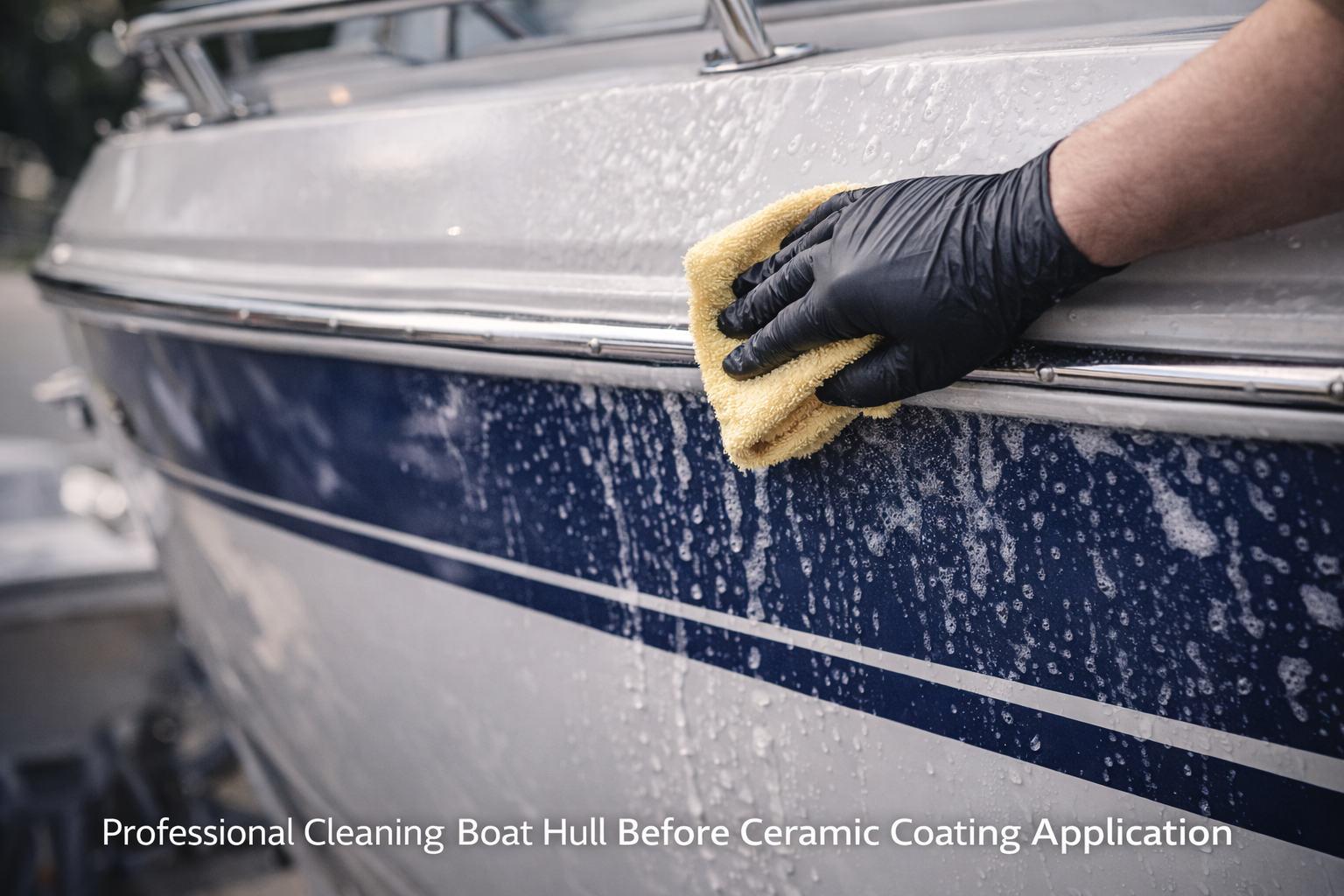
Challenges:
Salt contamination must be completely removed
Gelcoat porosity requires more product
Bottom paint can't be coated with topside products
Often needs to be done while boat is in water
Key differences:
Acid wash may be needed to remove heavy salt deposits
Marine-grade coating specifically formulated for water contact
Multiple coats standard for maximum protection
Must address waterline staining before coating
Temperature and humidity control more critical
Application time: 1-3 days depending on boat size and condition.
Climate and Environment Considerations
Temperature: Ideal application is 60-80°F
Humidity: Below 60% relative humidity
Sun exposure: Never coat in direct sunlight
Wind: Indoor or sheltered application only
These requirements are why mobile coating services often struggle with quality results, especially for RVs and boats.
Professional vs DIY: What Works and What Doesn't
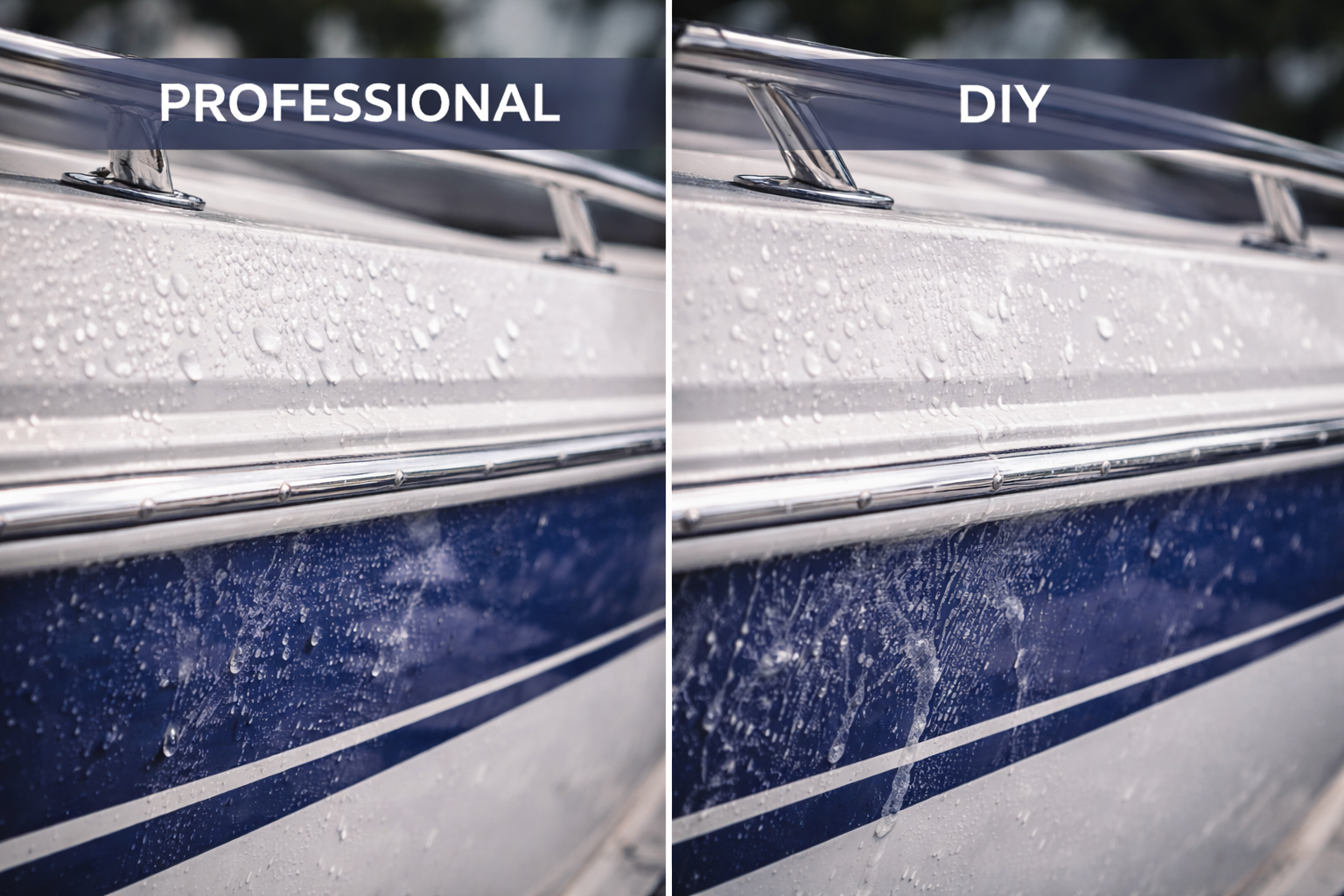
The truth about DIY ceramic coating: it's possible, but the failure rate is high, especially on boats and RVs.
Why DIY Often Fails
Common DIY mistakes:
Inadequate surface preparation (causes poor bonding)
Wrong product for surface type (coating fails or doesn't bond)
Incorrect application technique (high spots, streaking)
Poor environmental control (humidity, temperature, dust)
Insufficient curing time (coating washes off prematurely)
We've corrected dozens of failed DIY coatings. The removal and reapplication costs more than professional installation would have cost initially.
When DIY Makes Sense
Good candidates for DIY:
Motorcycles with simple painted surfaces
Small boats (under 20 feet) with good gelcoat condition
Someone with detailing experience
Controlled indoor workspace available
Quality consumer-grade coating products
Required skills:
Paint correction experience
Understanding of surface preparation
Patience for multi-day process
Attention to detail
Proper tools and equipment
When Professional Application is Worth It
Go professional for:
Large RVs (over 25 feet)
Boats over 25 feet
Vehicles with oxidized or damaged surfaces
High-value vehicles ($30,000+)
Motorcycles with custom paint or chrome
Anyone without detailing experience
What Professionals Offer
Professional advantages:
Surface correction expertise - remove oxidation, scratches, swirls
Proper product selection - right coating for specific surfaces
Commercial-grade products - longer lasting than consumer versions
Controlled environment - indoor facilities with climate control
Warranty coverage - guaranteed results and longevity
Insurance protection - covered if something goes wrong
DIY Product Recommendations
If you're determined to DIY, use these quality consumer products:
Ceramic Pro DIY - good for motorcycles and small boats
CarPro Cquartz UK 3.0 - versatile for multiple surfaces
Gtechniq Crystal Serum Light - user-friendly application
Adams Ceramic Coating - budget-friendly option
Avoid cheap Amazon coatings under $30—they're often SiO2 sprays, not true ceramic coating.
Cost Comparison
DIY costs:
Coating kit: $50-$150
Prep materials: $50-$100
Tools (if needed): $100-$200
Time investment: 15-30 hours
Total: $200-$450 plus significant time
Professional costs:
Motorcycle: $400-$800
RV: $800-$2,500
Boat: $800-$3,000
Total: Guaranteed results with warranty
The professional cost includes prep, correction, quality products, and expertise. For most people, it's worth the difference.
Cost Breakdown: What to Expect
Understanding ceramic coating costs helps you budget and avoid overpaying.
Motorcycle Ceramic Coating Costs
Basic package (paint only): $400-$600
Tank, fairings, fenders
Single layer coating
Basic prep and correction
Premium package (full protection): $600-$1,000
All painted surfaces
Chrome and metal surfaces
Multi-layer coating
Paint correction included
Show/concours level: $1,000-$2,000
Complete surface correction
Premium coating products
Multiple coating layers
Extended warranty
RV Ceramic Coating Costs
Small RVs (Class B, under 25ft): $800-$1,500
Exterior gelcoat coating
Basic paint correction
Single or dual layer coating
Mid-size RVs (25-35ft): $1,500-$2,500
Full exterior coating
Moderate paint correction
Dual layer coating
Rubber roof treatment optional
Large RVs (35ft+, Class A): $2,500-$4,000
Complete exterior protection
Extensive paint correction
Multi-layer coating
Slide-outs and awnings included
Boat Ceramic Coating Costs
Small boats (under 20ft): $800-$1,500
Hull gelcoat coating
Topside surfaces
Basic oxidation removal
Mid-size boats (20-30ft): $1,500-$2,500
Complete hull and deck coating
Paint correction as needed
Multi-layer marine coating
Large boats (30ft+): $2,500-$5,000+
Full vessel coating
Extensive prep and correction
Premium marine-grade products
Multiple coating layers
Factors That Affect Cost
Surface condition:
Good condition: Base price
Light oxidation: +20-30%
Heavy oxidation: +50-100%
Size:
Price typically per square foot
Larger vehicles = higher cost
Surface types:
Single surface (paint only): Lower cost
Multiple surfaces (paint, chrome, plastic): Higher cost
Coating layers:
Single layer: Base price
Dual layer: +30-40%
Triple layer: +50-70%
Location:
Mobile service: May cost more
Shop service: More controlled, often better value
Coastal markets: Higher prices due to demand
Return on Investment
Protection value over 3 years:
Unprotected maintenance:
Wax every 2 months: $50-100 per session = $900-$1,800
One gelcoat restoration: $2,000-$4,000
Total: $2,900-$5,800
Ceramic coating:
One-time application: $800-$2,500
Minimal maintenance: $200-$400 over 3 years
Total: $1,000-$2,900
Savings: $1,900-$2,900 over 3 years, plus preserved resale value.
Maintenance Requirements
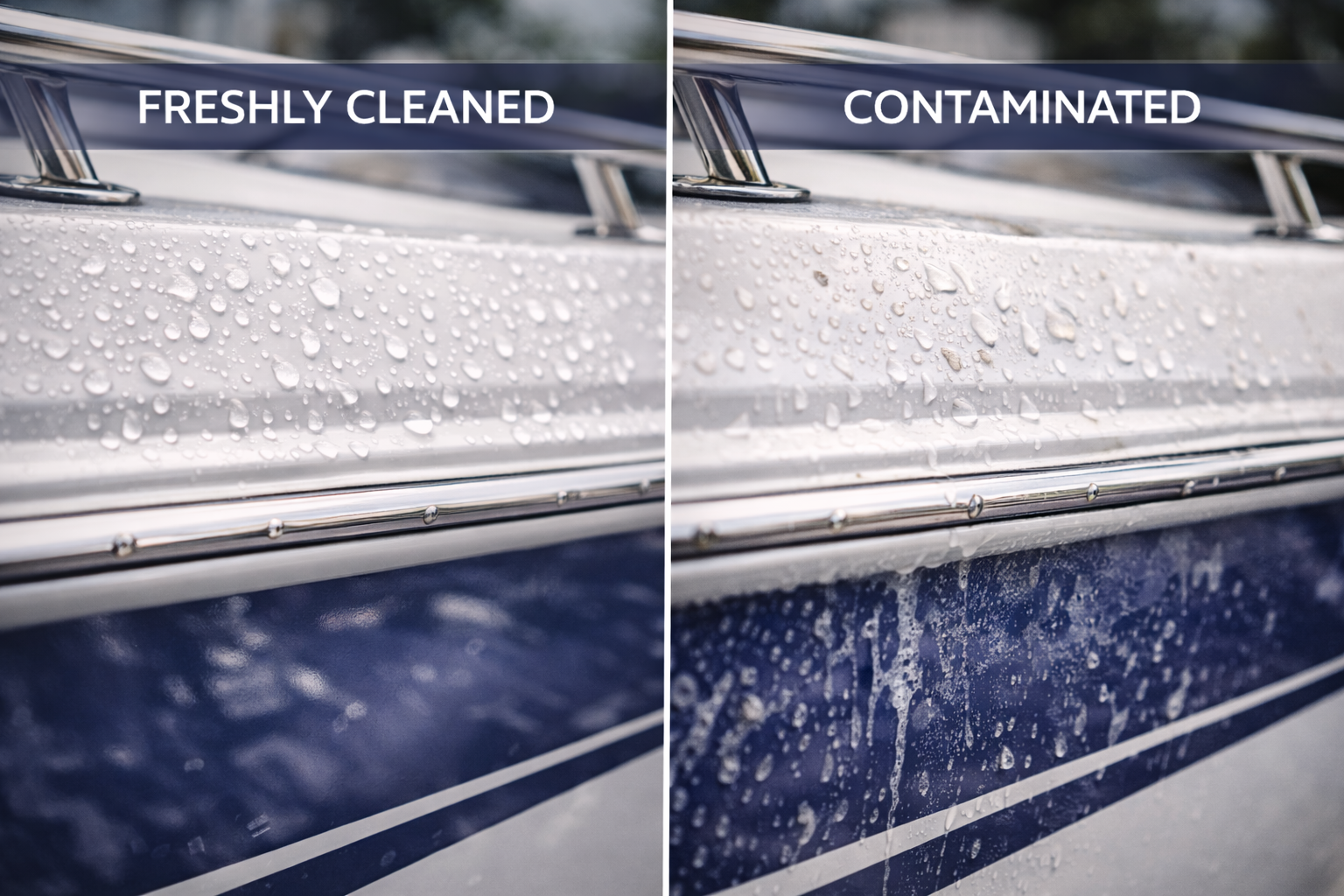
Ceramic coating isn't maintenance-free, but it's dramatically easier than wax or sealant.
Regular Washing
Frequency: Every 1-2 weeks for boats, 2-4 weeks for motorcycles and RVs
Proper technique:
Rinse thoroughly to remove loose dirt
Use pH-neutral car shampoo (not dish soap)
Wash with microfiber mitt, two-bucket method
Rinse completely
Dry with microfiber towels or air blower
Never:
Use automatic car washes on coated vehicles
Apply traditional wax or sealant over coating
Use harsh chemicals or degreasers
Pressure wash too close (keep 12+ inches away)
Decontamination
Every 3-6 months:
Clay bar treatment to remove bonded contaminants
Iron remover for rust particles
Tar and bug remover for organic deposits
This restores the coating's hydrophobic properties and maintains maximum protection.
Spray Boosters
Optional but recommended every 2-3 months:
Ceramic spray boosters refresh the top layer and add sacrificial protection. Products like:
Gtechniq C2v3
CarPro Reload
Ceramic Pro Silica Spray
These cost $15-$25 and take 15 minutes to apply. They significantly extend coating life.
Boat-Specific Maintenance
After every saltwater use:
Rinse with fresh water thoroughly
Remove any organic growth immediately
Check for bonded salt deposits
Monthly for saltwater boats:
Thorough wash with marine-safe shampoo
Inspect coating for damage or wear
Apply ceramic spray booster
Bottom cleaning:
Continue normal bottom cleaning schedule
Coating on hull makes cleaning easier
Reduces frequency of haul-outs needed
What Reduces Coating Life
Avoid these:
Harsh chemical cleaners (bleach, acetone, strong solvents)
Abrasive scrubbing pads or brushes
Automatic car washes with brushes
Leaving bird droppings or tree sap for days
Using wax, sealant, or tire shine on coated surfaces
Warranty Maintenance Requirements
Most professional coatings come with 2-5 year warranties that require:
Documented washing every 2-4 weeks
Annual inspection by installer
Use of approved maintenance products
Immediate reporting of damage or defects
Failure to maintain properly voids the warranty, so follow the requirements.
Key Takeaways
Essential points about ceramic coating for motorcycles, RVs, and boats:
Ceramic coating provides superior protection compared to wax or sealant, lasting 2-5 years instead of weeks
Different surfaces require different approaches - motorcycle paint, chrome, RV fiberglass, and boat gelcoat all need specific prep and products
Saltwater protection is critical for boats and coastal vehicles - ceramic coating blocks salt corrosion that destroys unprotected surfaces within months
UV protection extends gelcoat and paint life significantly - coating blocks 99%+ of UV rays that cause fading, chalking, and oxidation
Marine ceramic coating prevents gelcoat degradation - stops oxidation before irreversible damage occurs, saving thousands in restoration costs
Professional application is worth it for boats and RVs - high failure rate for DIY on large or complex vehicles
Proper maintenance is required - regular washing and decontamination every 3-6 months maintains coating effectiveness
ROI is excellent - one coating costs less than 2-3 years of regular waxing, plus prevents expensive restoration work
Not all coatings are the same - marine-grade and RV-specific formulations outperform automotive products on boats and RVs
Surface correction must come first - coating over oxidation or damage doesn't work; surfaces must be restored before coating
Frequently Asked Questions
Can I use the same ceramic coating on my motorcycle, RV, and boat?
Not recommended. While some coatings work across multiple surfaces, marine-grade coating is specifically formulated for saltwater and constant moisture exposure. RV fiberglass and motorcycle paint are better served by formulations designed for those surfaces. Using automotive coating on a boat typically results in shorter lifespan and reduced protection. Professional installers match coating chemistry to surface type for best results.
How long does ceramic coating last on boats in saltwater?
Quality marine ceramic coating lasts 2-3 years in saltwater with proper maintenance. This assumes regular freshwater rinsing after use and periodic decontamination. Unprotected boats need waxing every 2-4 weeks, so ceramic coating provides dramatically longer protection. Coating longevity depends on factors like sun exposure, water quality, how often the boat is used, and maintenance consistency.
Will ceramic coating prevent my RV gelcoat from oxidizing and chalking?
Yes, ceramic coating is extremely effective at preventing gelcoat oxidation. The coating blocks UV rays and prevents oxygen contact with the gelcoat surface, stopping the oxidation process that causes chalking. Existing oxidation must be removed through paint correction before coating. Once coated, gelcoat maintains its factory gloss and color for years instead of showing visible degradation within months.
Can I apply ceramic coating myself or should I hire a professional?
For motorcycles, experienced DIYers can get good results. For RVs and boats, professional application is strongly recommended. The large surface area, multiple surface types, and critical prep requirements make DIY challenging. Professional ceramic coating failure rate is under 5%, while DIY failure rate exceeds 40% on boats and RVs. Consider your experience level, available workspace, and vehicle value when deciding.
Does ceramic coating work on chrome motorcycle parts and exhaust pipes?
Yes, but chrome requires metal-specific primers or coating formulations. Chrome is non-porous, so standard ceramic coating won't bond properly without special prep. Professional installers use primers or chrome-specific coatings that create proper adhesion. Once applied correctly, ceramic coating prevents chrome oxidation, pitting, and discoloration better than any traditional chrome polish.
How much does it cost to ceramic coat a 35-foot RV?
Expect to pay $2,500-$4,000 for a 35-foot RV depending on surface condition and coating package. This includes paint correction, multi-layer coating application, and typically covers the exterior gelcoat surfaces. Heavy oxidation requiring extensive correction can increase costs by 50-100%. Additional costs may apply for rubber roof coating, slide-out protection, or premium multi-year coating products.
What's the difference between marine ceramic coating and automotive ceramic coating?
Marine ceramic coating is formulated for water immersion and saltwater exposure that automotive coating isn't designed to handle. Marine formulations include additional chemical resistance, stronger hydrophobic properties, and UV inhibitors specific to water environments. Using automotive coating on boats often results in premature failure, especially below the waterline or in saltwater. The price difference is typically 20-30% higher for true marine-grade products.
Can ceramic coating be applied over existing wax or sealant?
No, all wax, sealant, and previous coatings must be completely removed before ceramic coating application. Coating over these products prevents proper bonding to the surface, resulting in coating failure within weeks or months. Professional preparation includes chemical stripping, clay bar decontamination, and surface prep to ensure nothing interferes with coating adhesion. This is one of the most common causes of DIY coating failure.
Will ceramic coating prevent rock chips on my motorcycle or RV?
Ceramic coating provides limited rock chip protection—it's not a substitute for paint protection film (PPF). The coating hardens the surface and can prevent very minor impacts from chipping paint, but direct rock strikes at highway speeds will still cause chips. For maximum protection on motorcycles and RV front caps, combine ceramic coating with PPF on high-impact areas. The coating goes over PPF for easier maintenance and added protection.
Protecting Your Investment the Right Way
Ceramic coating for motorcycles, RVs, and boats isn't just about making your vehicle look good—it's about preventing thousands of dollars in damage from UV rays, saltwater, oxidation, and environmental contamination.
Whether you're protecting a $15,000 motorcycle, a $100,000 RV, or a $50,000 boat, the investment in ceramic coating pays for itself by preserving your vehicle's condition and resale value.
The key is understanding that different vehicles need different approaches. Motorcycle paint requires different prep than RV fiberglass. Boat gelcoat needs marine-grade protection that automotive products can't provide. Chrome and metal surfaces need specialized formulations.
Professional installation ensures you get the right products applied correctly with proper surface preparation. The coating will last years instead of failing within months like most DIY attempts.
If you're serious about protecting your motorcycle, RV, or boat from the elements, ceramic coating is the single best investment you can make.
Ready to protect your vehicle with professional ceramic coating? Contact Fresh Layer for a free consultation and quote. We specialize in surface-specific ceramic coating for motorcycles, RVs, and boats throughout San Diego County, with proven results in harsh coastal and high-UV environments. Our marine-grade coatings are formulated specifically for saltwater exposure and desert sun, providing protection that lasts years, not weeks.
With over 336 five-star reviews from satisfied San Diego vehicle owners, we've proven that proper ceramic coating makes the difference between surfaces that stay protected and those that deteriorate within months. Let us show you how professional ceramic coating can preserve your investment.