


Best Car Drying Towel 2026: What Professional Detailers Actually Use
When it comes to car detailing best car drying towel for most vehicles is a plush microfiber rated 600 GSM or higher: soft enough to protect your clear coat, absorbent enough to pull water off without dragging.
The specific model matters less than getting the GSM, fiber type, and technique right. At Fresh Layer Mobile Detailing, we dry dozens of San Diego cars every week, and this guide covers the best drying towel for cars at every price point, what we actually use on client vehicles, and why it matters for your paint.
What Makes a Good Car Drying Towel?
Finding the best car drying towel starts with understanding three core specs: GSM, fiber type, and weave. Not all microfiber is equal.
GSM (grams per square meter) measures how dense the fiber pile is. For drying car paint, 600–1200 GSM is the practical range. Higher GSM means more fiber contact, more water absorption per pass, and a softer cushion between the towel and your clear coat. Anything below 400 GSM belongs on glass and trim, not body panels.
Fiber type matters almost as much. The best car drying towels use a 70/30 polyester-to-polyamide blend. The polyamide (nylon) component makes the fiber split during manufacturing, creating tiny channels that draw water in rather than pushing it around. A towel without polyamide is just dragging water sideways.
Weave pattern determines how the towel handles water flow. Plush and twist-loop weaves trap water deep in the pile, which reduces how much pressure you need to apply. Waffle weave patterns move water fast but require more controlled technique to avoid dragging.
Size is often underrated when choosing a best car drying towel. A larger towel means fewer passes, which means less contact time on the paint. For full-size SUVs and trucks, a 20x30" towel will get you off the panel faster than a 16x24" one.
Why Drying Matters More in San Diego
San Diego's water supply runs 300–400 ppm total dissolved solids in most parts of the county. That's significantly harder than the national average. When water sits on warm paint and evaporates, those minerals don't go with it. They bond to the clear coat and leave white, chalky water spots that can require polishing to remove if left too long.
The UV index in San Diego hits 10 or above throughout summer, and even in spring and fall it rarely drops below 6. Warm paint dries water faster. In July in Chula Vista or Eastlake, you can get water spots in under 90 seconds if you're washing in direct sun.
The marine layer in coastal areas like La Jolla and Coronado adds a different problem: overnight humidity deposits a thin film of salt-laden moisture on vehicles parked outside, which means cars that look dry in the morning often aren't clean.
This is why technique and towel quality are non-negotiable here in ways they might not be in milder climates. The right best car drying towel and proper blotting technique can mean the difference between a clean panel and one that needs a clay bar treatment to remove water deposits.
The Top 5 Best Drying Towels for Car Detailing in 2026 We Tested


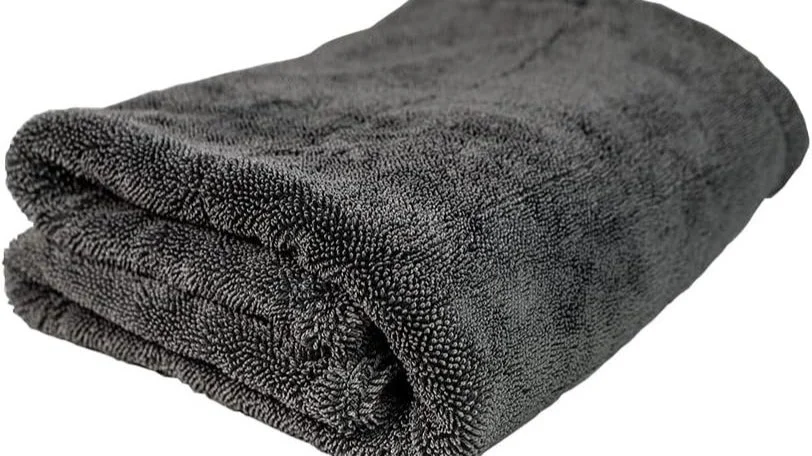
Real Review From Our Detailing Experience For Drying Towels
The Rag Company - The Gauntlet Drying Towel
The Gauntlet is a dual-pile drying towel with a high-pile side for absorption and a shorter pile on the other for a final pass buffing out any remaining moisture. It's the towel we reach for most on dark vehicles where any contact marks show immediately.
At 70/30 blend and approximately 900 GSM, it holds a serious amount of water before needing to be wrung out. One 36x25" Gauntlet can handle most mid-size sedans and crossovers without needing a second towel. The main drawback is price. You're paying for quality here, and it shows in how the towel handles after 30+ wash cycles.
Best for: Dark paint, luxury vehicles, any car where swirl marks are a concern. If you're buying a single best car drying towel to cover most situations, this is it.
Benefits:
Its high absorbency rate makes it highly effective on all car surfaces, enhancing drying efficiency while being gentle on the paint.
User Experience:
Many users have praised its ease of use and the quality of drying it provides, noting a significant reduction in drying time without any streaks.
| Pros | Cons |
|---|---|
| Highly absorbent, dual-sided, gentle on surfaces | Higher price point |

The Liquid8r is a different kind of best car drying towel. It's designed as a pure absorption tool, not a finisher. The twist-loop fiber construction draws water in fast, and the towel can hold a remarkable volume before it starts transferring moisture back to the paint surface.
It's bulkier than the Gauntlet and less suited for tight areas like door jambs and mirrors, but for quickly clearing water off large panels like roofs, hoods, and trunk lids. It's very efficient. We use it on larger vehicles like full-size trucks and SUVs where speed matters.
Best for: Large vehicles, high-volume drying, any wash where you want to minimize the number of passes.
Benefits:
It significantly reduces drying time and helps prevent the formation of water spots, making it a reliable choice for meticulous detailers.
User Experience:
Users report that it outperforms other towels, particularly in its ability to dry without leaving residue or marks.
| Pros | Cons |
|---|---|
| Ultra-absorbent, reduces drying time, minimizes water spots | May be too bulky for smaller tasks |
The Maxshine is a solid mid-range option and an honest answer when someone asks for the best drying towel for cars on a tighter budget. The fiber quality holds up over multiple washes, it doesn't shed lint in the early washes the way some cheaper towels do, and the 400–500 GSM rating makes it a reasonable best car drying towel option for daily drivers.
It doesn't have the same plush feel as the Gauntlet, so we wouldn't use it as a first choice on dark or freshly corrected paint. But for everyday use on silver, white, or lighter-colored vehicles where surface sensitivity is lower, it performs well.
Best for: Budget-conscious buyers, lighter paint colors, regular maintenance washes.
Benefits:
Its versatility extends beyond drying to include polishing and buffing, providing excellent utility.
User Experience:
Feedback highlights its durability and consistent performance even after multiple washes.
| Pros | Cons |
|---|---|
| Versatile use, durable, consistent performance | Less plush compared to other premium towels |
The Exoforma Mega is a large-format 1200 GSM towel designed for coverage. It's large enough that you unfold and it covers most of a hood. That means fewer passes and less cumulative contact time on the paint.
The tradeoff is weight when wet. A soaked 1200 GSM towel at that size gets heavy, and if you're not careful about your technique, the weight can cause you to drag rather than blot. It's most effective for detailers who've already developed good drying habits.
Best for: Large vehicles, anyone who values speed and minimal panel passes.
Benefits:
It excels in covering large areas swiftly, ensuring no streaks, scratches, or water spots are left behind.
User Experience:
Users appreciate its size and effectiveness on various vehicle finishes, emphasizing its quality in maintaining a spotless finish.
| Pros | Cons |
|---|---|
| Large size, high-quality microfiber, effective on large vehicles | Bulkiness may be difficult to manage; higher cost |
Best Towel to Dry Car Without Scratching
The best towel to dry car without scratching has deep pile, high polyamide content, and enough GSM to keep the fiber tips cushioned above the paint surface. Scratches from drying almost always come from one of three causes: a dirty towel, too much lateral pressure, or a towel with fibers too coarse for automotive paint.
The safest drying towel for car paint is a high-pile plush microfiber at 600 GSM or above with a polyamide blend. The deep pile keeps the fiber tips (the actual contact surface) far from the paint. You're blotting into soft material, not dragging a flat surface across clear coat.
Beyond towel choice, technique is the bigger variable. These are the habits that prevent scratching:
Blot, don't wipe. Set the towel on the panel and let it absorb. Avoid lateral sweeping motions under pressure.
Pre-wet the towel. A slightly damp microfiber drying towel glides more freely and triggers faster water absorption than a bone-dry one.
Work top to bottom. Gravity runs water down. Starting at the roof prevents drips from re-wetting dried panels.
Use a drying aid. A quick detailer or drying spray reduces the surface tension of water, letting your towel glide with almost no applied pressure. This single step reduces swirl risk significantly.
Never pick a towel up off the ground. One drop on pavement and you've picked up grit that will scratch everything it touches.
If you're choosing the best car drying towel for a dark or freshly detailed vehicle, prioritize GSM and pile depth over brand name. The fiber quality matters more than the label.
If you're dealing with a vehicle that already has swirl marks from previous incorrect drying, our paint correction service can remove those defects before they get worse.
Best Car Drying Towel for Ceramic Coated Cars
Ceramic coated paint needs the gentlest treatment. The coating changes how water behaves on the surface. It beads aggressively, which looks impressive but means you're moving concentrated droplets around rather than a thin film. The wrong towel can leave micro-marring on ceramic coatings even when applied lightly.
For coated cars, use the softest towel available. Look for:
70/30 polyester/polyamide blend (polyamide is critical, because pure polyester is too rough for coated surfaces)
600 GSM minimum, 900–1200 GSM preferred
Twist-loop or waffle pattern, not flat-weave
Clean towels every wash, since coated paint shows towel contamination immediately
Pair the towel with a spray detailer or coat-specific drying aid. Apply one or two sprays per panel, then blot. The product reduces contact friction to near zero, which is what you want on a high-gloss, coated surface.
We include proper drying guidance with every ceramic coating in San Diego we apply. A $599–$1,499 coating investment shouldn't be compromised by a $15 bath towel.
Microfiber vs. Waffle Weave vs. Chamois
Microfiber Towels
Microfiber (polyester/polyamide blend) is the best choice for most vehicles and most skill levels. A quality microfiber drying towel lifts water rather than pushing it, thanks to the fiber split that creates a large effective surface area. It's machine washable, durable over dozens of washes, and forgiving if your technique isn't perfect.
Features: Microfiber towels are made from a blend of polyester and polyamide, which allows them to be both absorbent and soft. The fibers in these towels are split during production to increase their surface area, enabling them to absorb more water and trap dirt effectively.
Benefits: The main advantage of microfiber towels is their gentle touch on car surfaces, which reduces the risk of scratches and swirl marks. They are also highly durable, easy to wash, and reusable, making them cost-effective and eco-friendly. Additionally, microfiber towels dry quickly and can be used on both wet and dry surfaces, making them extremely versatile for car detailing.
Waffle Weave Towels
Waffle weave towels move water efficiently across large, flat surfaces. The textured pattern creates channels that channel water into the towel body. They're fast on glass and metal but require more deliberate technique on paint. The texture that makes them efficient on flat surfaces creates more friction on curved panels. A waffle weave drying towel is a good secondary tool, not a primary one for paint.
Features: Waffle weave towels feature a distinctive textured pattern that resembles a waffle. This pattern creates pockets that help in trapping water more efficiently than flat weaves.
Benefits: Waffle weave towels are particularly effective for streak-free drying. The design allows for more surface area to come in contact with water, which it then quickly absorbs, reducing the time and effort needed to dry a car thoroughly. Their texture also helps in minimizing streaks and spots on the paintwork, ensuring a flawless finish after washing.
Chamois

Chamois (traditional leather or synthetic PVA) were the standard before microfiber existed. They absorb a lot of water and can be wrung out mid-drying. The problem is they have almost no pile. It's a flat surface against paint with no cushion. Modern synthetic chamois are better, but most experienced detailers have moved on. If you do use one, make sure it's thoroughly wet before it touches paint.
Features: Traditionally made from leather, chamois towels are known for their softness and absorbency. Modern chamois are often synthetic, made from materials like PVA (polyvinyl alcohol), which mimic the properties of genuine leather chamois.
Benefits: Chamois towels are excellent for drying because they absorb a large amount of water and can be wrung out and reused several times during the drying process. They are very soft, which minimizes the risk of scratching the car’s surface. Additionally, chamois are durable and can last for many years if properly maintained. However, they do require more careful handling and cleaning than microfiber or waffle weave towels to prevent degradation.
For most people reading this, the best car drying towel is a quality microfiber in the 600–1000 GSM range. It's the best drying towel for cars across the widest range of vehicles and skill levels. The performance gap between a good microfiber and a chamois or waffle weave is meaningful on daily-driven vehicles.
How to Dry Your Car Properly
Final rinse first. Do a low-pressure rinse from the top down before you start drying. This removes soap residue and re-floats any loose particles that settled during the wash.
Apply drying aid to one panel at a time. Spray, don't flood. Two to three sprays per panel is enough. This slows the water down and reduces the contact pressure you need to remove it.
Pre-wet your towel. Run it under water and wring it firmly. A slightly damp best car drying towel absorbs faster than a bone-dry one.
Fold into quarters. This gives you eight usable surfaces (flip and refold) before you need to rinse the towel.
Blot and lift, not wipe and slide. Lower the towel onto the panel, apply light pressure, and lift. Move to the next section. Avoid long horizontal strokes under pressure.
Rinse the towel every 1–2 panels. In San Diego's warm weather, water in a towel that's been sitting starts to concentrate those hard-water minerals. Rinsing resets it.
Use a separate towel for glass. Paint towels pick up wax, sealant residue, and detailing products. Those transfer to glass and leave streaks.
How to Wash and Store Your Drying Towels
Wash microfiber drying towels separately from anything with cotton fibers. Cotton sheds lint that embeds in microfiber pile and never fully comes out, eventually making a smooth towel feel like sandpaper.
Use a liquid detergent with no added fabric softener and no bleach. Fabric softener coats the fiber split and shuts down absorbency permanently. The towel feels soft but it stops picking up water and starts just pushing it around.
Wash in cold or warm water, not hot. High heat can melt the polyamide component of the fiber, which is what gives the towel its water-lifting ability.
Air dry when possible. If you use a dryer, low heat only, no dryer sheets.
Store completely dry. Damp microfiber sitting in a bag or bin grows mildew fast, and the smell doesn't fully wash out once it sets.
FAQs on Drying Towels for Car Detailing
-
The best type of drying towel often depends on your specific needs and preferences. Microfiber towels are generally recommended due to their high absorbency, softness, and safety on paint. Waffle weave towels are excellent for streak-free drying, and chamois can be ideal for quickly drying large areas. Consider what aspect of drying is most important to you, such as speed, finish, or ease of use, and choose accordingly.
-
It's advisable to have at least two to three drying towels on hand when detailing your car. This allows you to use one for the initial drying and others for touch-ups or to handle different areas of the car, such as glass and wheels, separately to avoid cross-contamination.
-
Yes, you can use regular laundry detergent to wash microfiber towels, but it should be mild and free of additives like fabric softeners or bleach. These additives can coat the fibers and decrease the towels' effectiveness. It's also best to choose a liquid detergent over a powder to avoid residue.
-
Drying towels should be washed after each use to remove any dirt, debris, and chemicals that could degrade the microfiber and potentially harm your car’s paint in subsequent uses. Regular washing helps maintain the towel's performance and longevity.
-
Streaks can be caused by several factors, including towels not being clean enough, the use of fabric softeners which leave a residue, or the towels being too old and losing their absorbency. Ensure your towels are well-maintained and replace them when they no longer perform effectively.
-
Store your drying towels in a clean, dry place away from direct sunlight and heat. A sealed container or closed cabinet is ideal to prevent dust accumulation and potential contamination from other sources.
How Fresh Layer Uses Drying Towels on San Diego Cars
At Fresh Layer Mobile Detailing, every wash and detail package includes a full hand dry with the best car drying towels we've found: clean, dedicated microfiber, never recycled shop rags. We use the Rag Company Gauntlet and Liquid8r depending on vehicle size and paint type. Dark, single-stage, or freshly corrected paint gets the Gauntlet. Larger vehicles get the Liquid8r for faster coverage.
For vehicles we've applied ceramic coating in San Diego to, we follow a specific drying protocol: drying aid applied panel by panel, blot technique only, and a separate clean towel for each major section. The coating is only as good as the maintenance habits behind it.
We also stock fresh towels for every appointment. Nothing goes back on a vehicle after touching a contaminated surface. It's one of those details that matters more than it sounds. A single contaminated towel pass on a freshly corrected hood can undo hours of machine polishing.
If you want to see the difference proper drying technique makes as part of a complete service, check out our interior detailing service or full detail. We bring everything to your San Diego location, no drop-off needed.
Ready to skip the guesswork?
Fresh Layer Mobile Detailing handles your vehicle from wash to dry using professional-grade products, including the best car drying towels available, at your San Diego home, office, or anywhere you park. Call (619) 874-4115 or book a full detail online for a free quote.
Author Bio

Alex Bratkov is the founder and lead detailer at Fresh Layer Mobile Detailing, bringing over five years of hands-on experience detailing cars across San Diego County. He holds dual certifications from the International Detailing Association (IDA) and Gtechniq, and personally tests every product and technique covered on this blog. When he's not detailing, he's probably arguing about GSM ratings.


