


How to Clean Your Tesla Interior (Pro Tips from a San Diego Detailer)
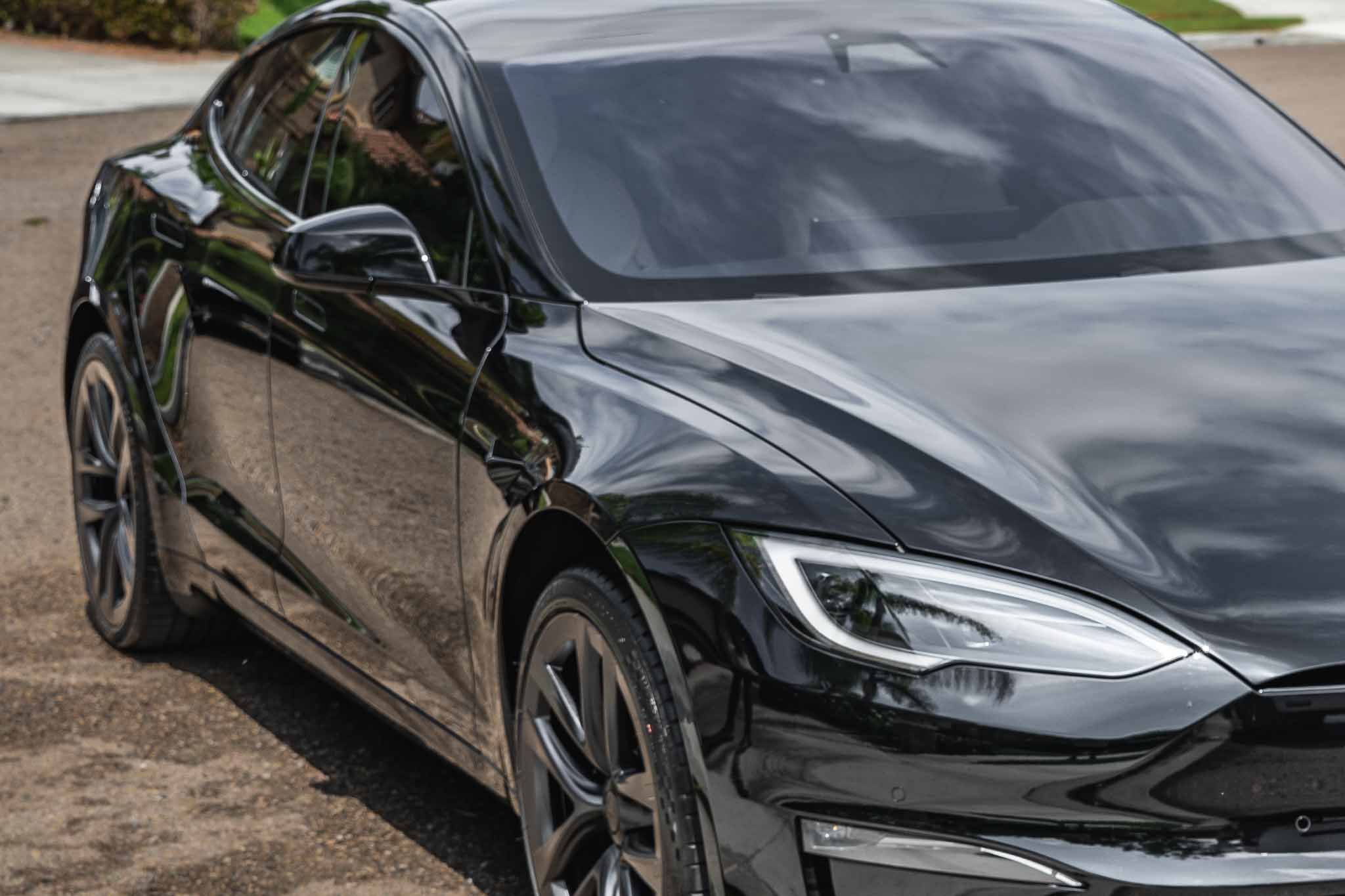
Cleaning a Tesla interior requires different products and techniques than a standard car. The vegan leather seats, large glass roof, and sensitive touchscreen all have specific requirements that most general car care products will damage or degrade over time.
This guide covers exactly how to clean tesla interior the right way, from daily maintenance to deep cleaning, with real product guidance and the common mistakes Tesla owners make that professionals see constantly.
What Makes Tesla Interiors Different to Clean
Most Teslas use a synthetic vegan leather for their seats, not genuine leather, not cloth. It looks and feels like premium leather, but reacts very differently to cleaning products.
Alcohol, bleach, and solvent-based cleaners that work fine on traditional leather will break down the coating on vegan leather over time, leading to cracking, peeling, and dye fading.
The interior layout compounds the challenge. Tesla's massive touchscreen controls everything from climate to navigation, which means you're touching it constantly, and it needs regular cleaning without damaging the oleophobic coating. The large glass roof lets in significantly more UV than a standard metal roof, accelerating interior fading if materials aren't properly maintained.
Depending on your model, you may also have Alcantara on the headliner (Model S/X), matte trim pieces that cannot be waxed or polished, and a dual-pane glass roof that shouldn't be exposed to direct steam.
Understanding the materials in your specific Tesla and what each one can and cannot tolerate is the starting point for cleaning it correctly.
Vegan Leather vs. Alcantara vs. White Interior

Standard Tesla vegan leather: pH-neutral cleaner, microfiber cloth, no alcohol.
White Tesla vegan leather: Same approach, but white seats are highly prone to dye transfer from dark clothing — especially raw denim. A white microfiber cloth is essential here. Colored cloths can transfer their own dye onto the light material.
Alcantara (headliner on some Model S/X): Do not use water-based cleaners. Use a dry microfiber cloth for routine dust removal. For deeper cleaning, an Alcantara-specific cleaner applied sparingly and brushed gently in one direction is the right approach.
Matte trim: No polish, no wax, no dressing. A simple wipe with a damp microfiber cloth is all it needs.
Best Practices for Leather Care:
Use Gentle Cleaners: Opt for pH-balanced leather cleaners Like P&S Express Detailer that are strong enough to clean but gentle enough to preserve the leather's integrity.
Conditioning: Regular conditioning helps in keeping the leather supple, preventing cracks and wear over time.
Avoid Direct Sunlight: Prolonged exposure to sunlight can cause leather to fade. Park in shaded areas or use sunshades to protect the interior.
Why San Diego Tesla Owners Need to Clean More Often

San Diego's interior conditions are better than most cities no road salt, no freezing temperatures, no extreme humidity. But there are a few local factors that affect Tesla interiors specifically.
The UV index in San Diego runs 8–11+ throughout most of the year. Tesla's panoramic glass roof lets in more UV than a standard metal roof. Over time, that UV exposure dries out vegan leather faster than in lower-UV markets. Regular conditioning every 3–4 months with a synthetic-leather conditioner helps prevent the material from stiffening or cracking prematurely.
The marine layer along the coast, La Jolla, Mission Beach, Coronado, Pacific Beach, deposits a thin layer of salt moisture on parked vehicles overnight. This doesn't affect the interior much if the car is kept closed, but if you drive with windows down along the coast and park outside, that salt-laden air does gradually find its way into the cabin and onto surfaces.
San Diego's canyon areas also produce fine dust from brush and dry soil, especially in summer.
If you park near undeveloped land in areas like Scripps Ranch, Rancho Bernardo, or Santee, interior dust accumulates faster than it does in fully urban environments. A quick wipe-down every 1–2 weeks keeps that from building into a bigger cleaning job
What to Use to Clean Tesla Interior
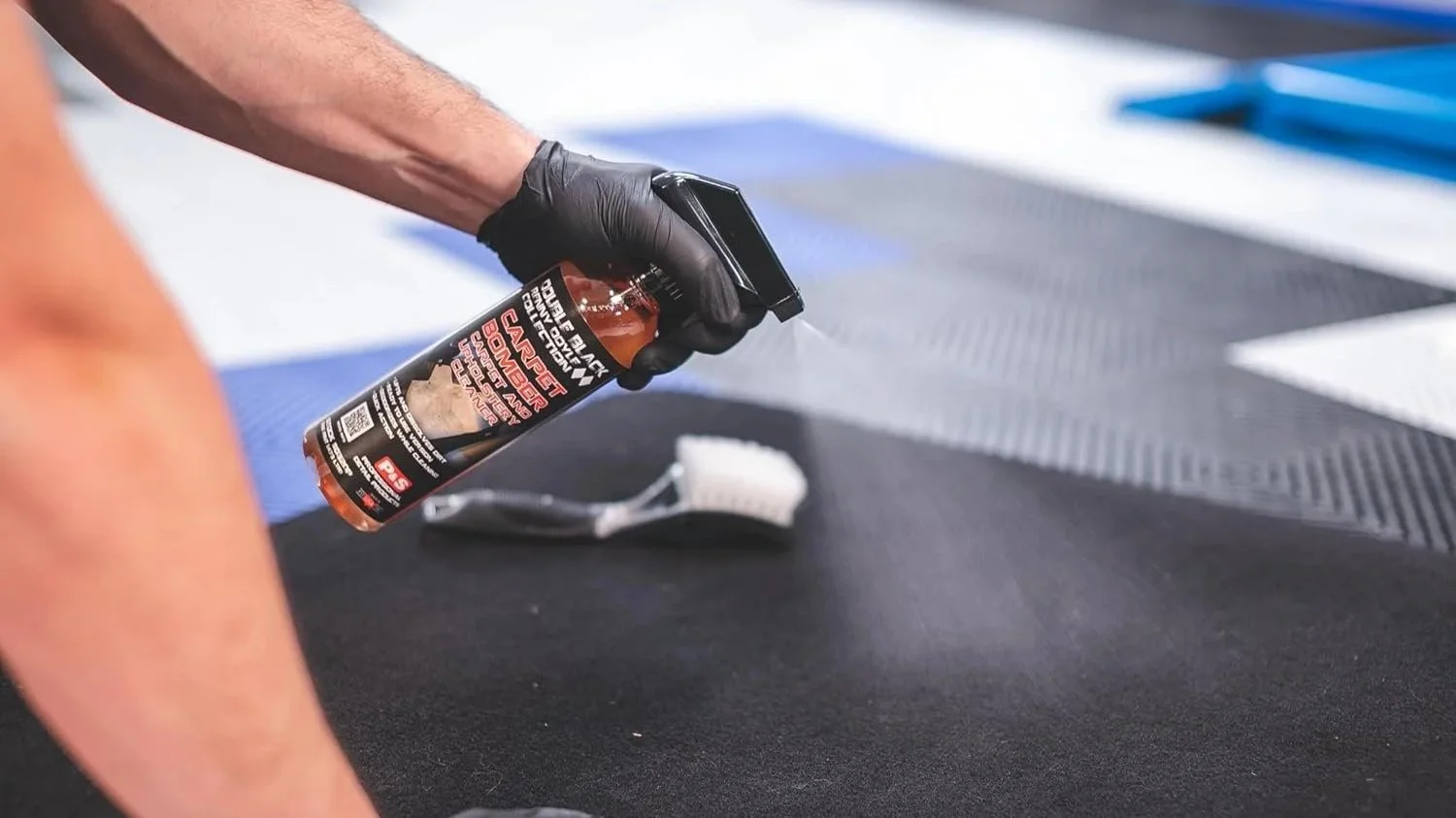
Choosing the right tesla interior cleaner is where most owners go wrong. The wrong product used once may not cause visible damage immediately, but repeated use breaks down the vegan leather coating and the screen's protective layer faster than normal wear.
The best tesla interior cleaner for vegan leather is one that's pH-neutral and specifically formulated for synthetic materials. Here's what actually works across each surface:
Gather Your Tools and Products
To clean your Tesla effectively, you’ll need the right tools. Here’s a list of essentials:
Microfiber cloths: For lint-free and scratch-free cleaning.
Vegan leather cleaner: Tesla’s seats are made of synthetic leather, so avoid harsh chemicals.
Glass cleaner: Ammonia-free is best for streak-free windows.
Interior cleaner: A pH-neutral option works well for plastics and dashboards.
Vacuum with attachments: Helps reach tight spaces.
Soft-bristle brush: For dusting air vents.
Screen-safe cleaner: Designed for touchscreens.
For vegan leather seats: A pH-neutral interior cleaner or a dedicated synthetic leather cleaner. Chemical Guys SPI_109 Total Interior Cleaner, 303 Automotive Interior Cleaner, and Gyeon Q²M Interior all work well on Tesla vegan leather when used with a clean microfiber cloth. Dilute as directed; these don't need to be applied full-strength. As a Tesla seat cleaner, any of these outperforms general-purpose sprays that weren't designed for synthetic materials.
For the touchscreen: Distilled water on a microfiber cloth is the safest option. If you want something stronger, use a screen-safe electronics cleaner, not an automotive product, and not anything with isopropyl alcohol, which degrades the anti-reflective coating.
For the dashboard and trim: The same pH-neutral Tesla interior cleaner used on the seats works fine for plastic and trim surfaces.
For glass (windows and the roof): Ammonia-free glass cleaner. The standard Windex formula contains ammonia use the Windex Vinegar formula or a dedicated automotive glass cleaner instead. Apply to the cloth first, not directly to the glass.
What to avoid entirely: Armor All (leaves residue on the touchscreen), anything with bleach, products containing alcohol or petroleum distillates on any surface that touches the skin, and steam directed directly at the screen or instrument cluster.
Getting the Most Out of Your Tesla Seat Cleaner
The application method matters as much as the product. Spray your Tesla seat cleaner onto a microfiber cloth, not directly onto the seat. Work in sections roughly the size of your hand. Light pressure, circular or straight strokes, depending on the material texture. Immediately buff with a dry second cloth.
For stubborn marks or dye transfer on white seats, a second pass with slightly more product and a soft-bristle brush (like a horsehair detailing brush) can lift embedded staining. Do not scrub hard, you're agitating the cleaner into the material, not abrading the surface.
How to Clean Tesla Interior Step by Step
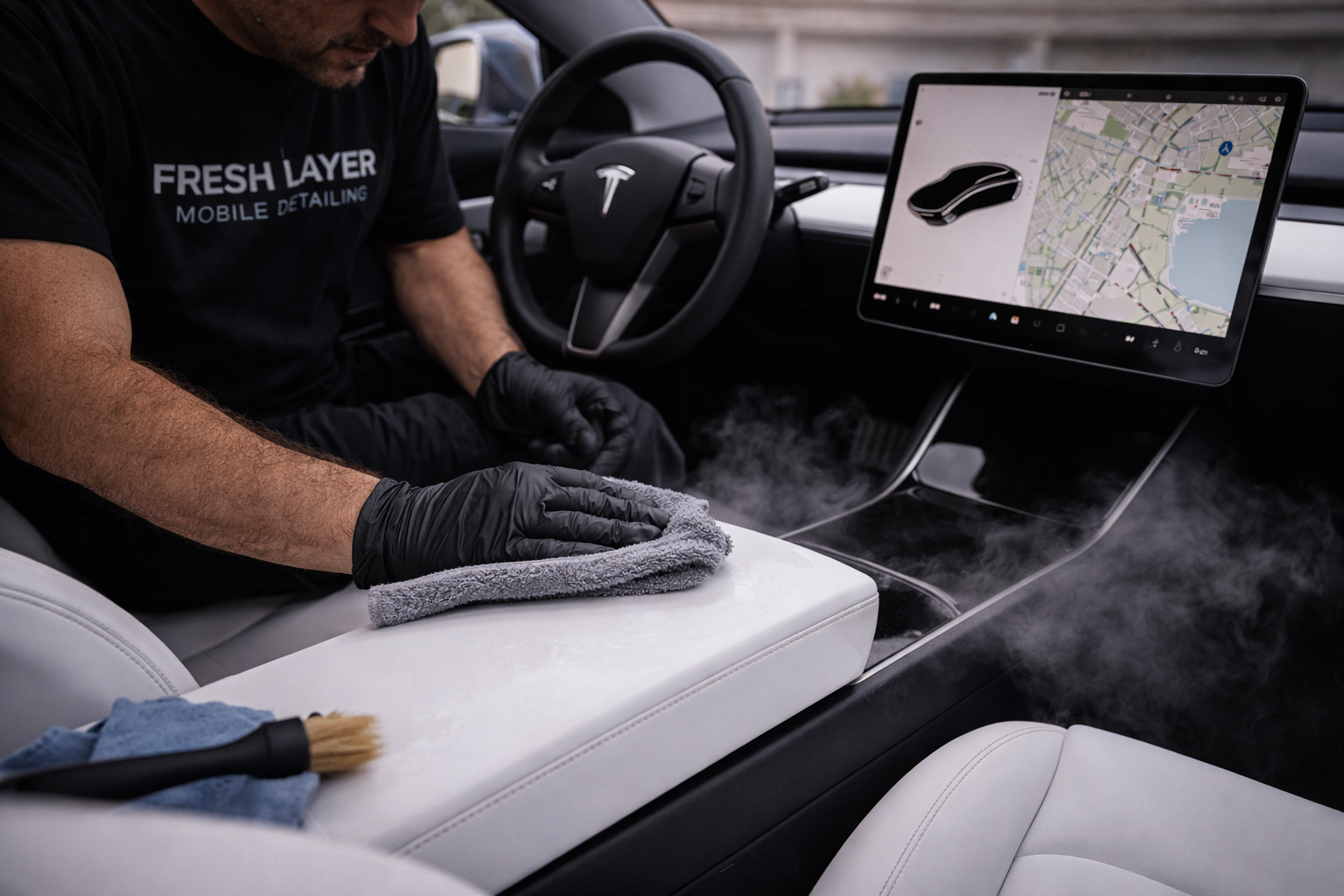
This is the sequence professional detailers use. Order matters when cleaning wet surfaces on a dusty dashboard, just moves the mess around.
Step 1: Remove and vacuum floor mats first. Take the mats out completely. Vacuum them separately and set them aside. Vacuum the carpet underneath before any liquid gets applied to anything else. Use a crevice tool for the gaps between the seat rails and the carpet edge.
Step 2: Dry dust all surfaces. Before any cleaner touches the interior, go over the dashboard, center console, door panels, and trim with a clean, dry microfiber to remove loose dust. A soft detailing brush works well in the vents and around the buttons.
Step 3: Clean the seats. Here's how to clean tesla seats without damaging the vegan leather coating: spray your pH-neutral cleaner onto a microfiber cloth, not the seat itself. Work section by section, front seats first, then rear. Let the cleaner dwell for 15–20 seconds before buffing dry. If you have white vegan-leather seats, use a clean white microfiber for this step only.
Step 4: Clean the touchscreen. Before wiping the screen, activate Tesla's screen cleaning mode (covered in the next section). Use a dry or lightly dampened screen-safe microfiber cloth. Never press hard on the screen.
Step 5: Clean the dashboard, console, and trim. pH-neutral interior cleaner on a microfiber. Pay extra attention to the areas around the steering wheel, the door handles, and the center console lid, which are the highest-touch surfaces and accumulate the most grime.
Step 6: Windows and glass roof. Ammonia-free glass cleaner on a clean microfiber. For the glass roof interior surface, reach across rather than leaning on the headliner. Wipe in straight lines to avoid streaking.
Step 7: Vacuum carpets and replace floor mats. Final vacuum of the carpet before the clean mats go back in.
For tougher stains, a mixture of baking soda and water can not be a safe and effective treatment, best practice to use proper cleaning with professional chemicals or get a professional interior detailing.
Cleaning Tesla Carpet
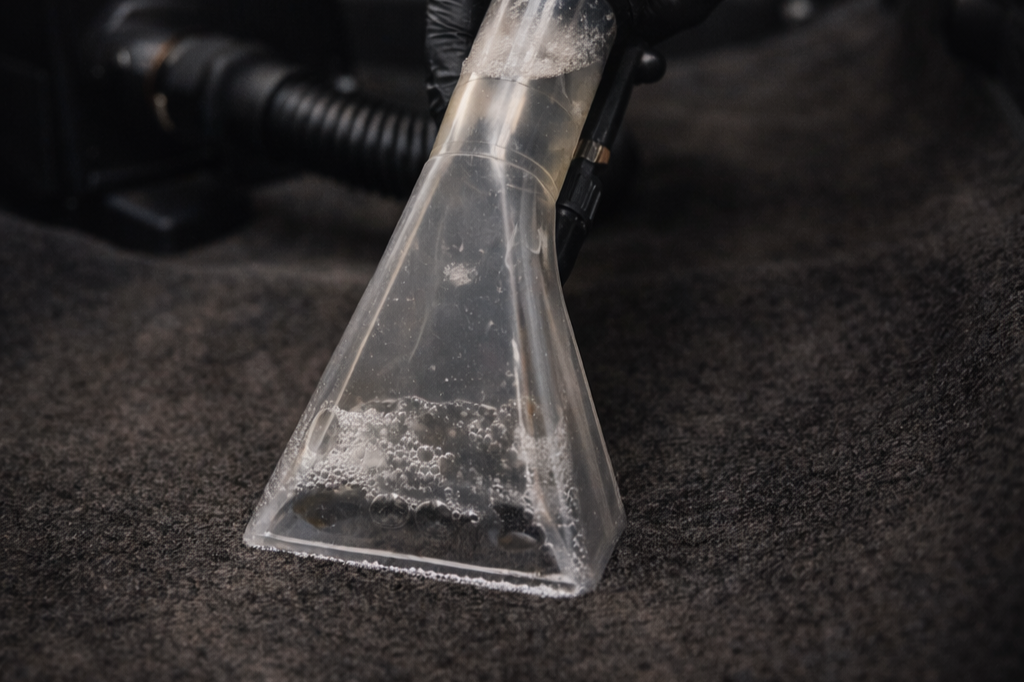
Tesla carpet is standard automotive nylon the same basic material as most other vehicles. For routine cleaning, vacuuming is enough. For embedded dirt or stains, a diluted all-purpose cleaner (1:10 ratio with water) applied with a soft brush and extracted with a wet-dry vac or blotted with a microfiber is the standard approach.
For stain removal: blot, don't rub. Rubbing spreads the stain and drives it deeper into the fibers. Blot from the outside edge of the stain toward the center. Repeat rather than scrubbing harder.
Investing In All Weather Tesla Floor Matts
The Importance of Choosing the Right Floor Mats
Tesla vehicles, known for their cutting-edge technology and luxurious interiors, deserve the best protection against everyday wear and tear.
One crucial aspect of this protection is the choice of floor mats. This article emphasizes the importance of investing in all-weather floor mats specifically designed for Tesla models, exploring their benefits and how they contribute to maintaining the vehicle's interior in pristine condition.
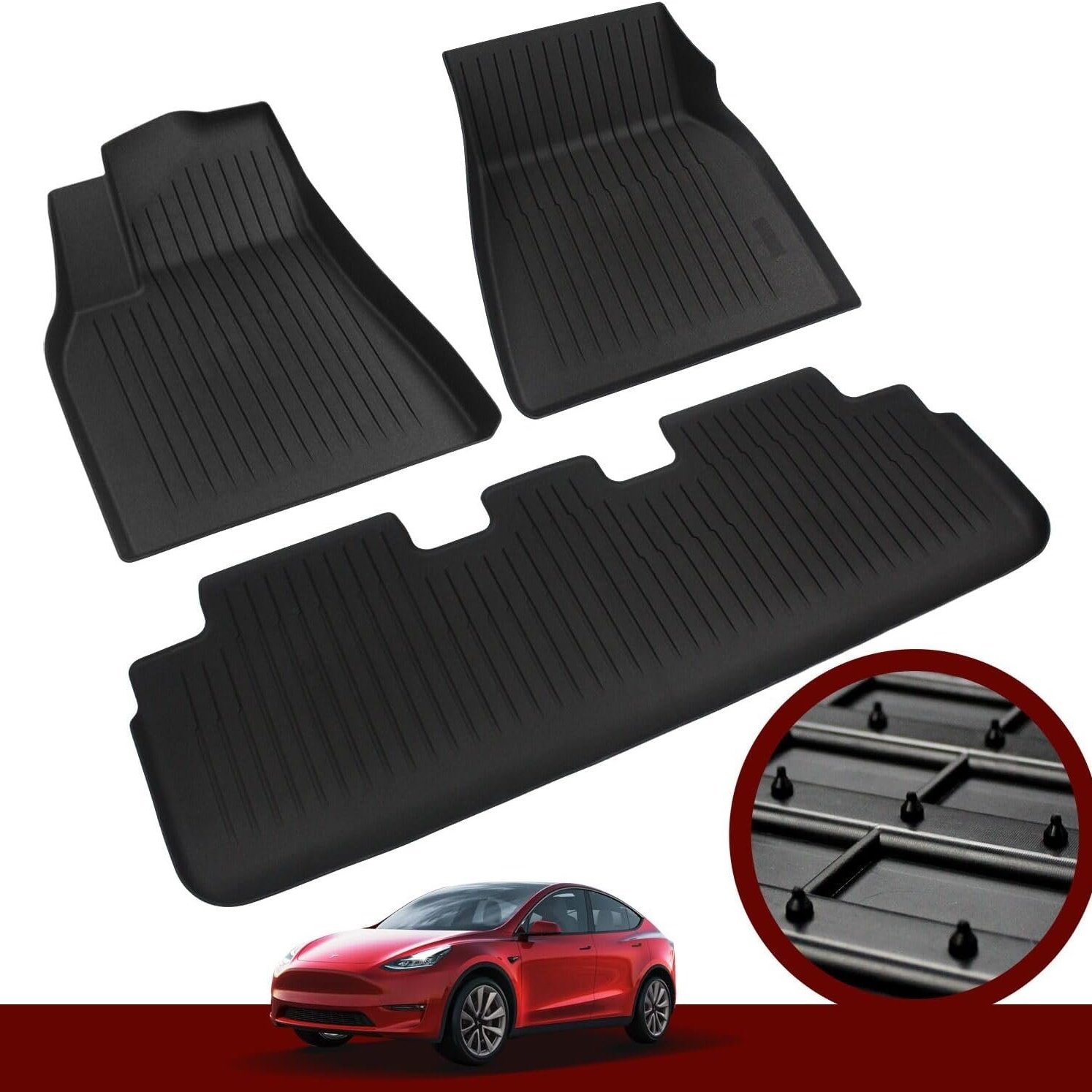
Best Tesla All Weather Floor Matts
Tesla's Screen Cleaning Mode — The Step Most People Skip
This is the feature that separates people who actually own a Tesla from generic cleaning guides. Tesla's screen cleaning mode locks the touchscreen so it doesn't respond to inputs while you clean it. Without it, wiping the screen will trigger random menu selections, adjust your steering wheel position, and probably recalibrate your mirrors.
To activate it: Controls → Display → Screen Clean Mode.
The screen goes dark and input is disabled. Clean it, then tap anywhere to exit the mode.
Use a dry microfiber cloth or one very lightly dampened with distilled water. Wipe in straight lines not circular motions to minimize streaking. Apply zero pressure. You're removing fingerprints and smudges, not scrubbing grime.
Never use paper towels, even soft ones. The microscopic wood fibers in paper products are abrasive enough to leave micro-scratches in the screen coating over time. Never spray anything directly onto the screen.
The instrument cluster (the display behind the steering wheel) is a separate screen with the same care requirements screen cleaning mode doesn't disable it, so wipe quickly and lightly.
FAQ Section: How to Clean Tesla Interior
-
Activate Tesla's screen cleaning mode first — Controls → Display → Screen Clean Mode. This disables the screen's input detection so you can wipe it without triggering anything. Use a clean, dry microfiber cloth or one very lightly dampened with distilled water. Never use paper towels, ammonia-based cleaners, or alcohol. Those break down the oleophobic coating that makes the screen easy to clean in the first place. Once it's gone, fingerprints become permanent smears.
-
Most standard car interior cleaners are too harsh. Avoid anything with alcohol, bleach, ammonia, or solvent bases. These work fine on genuine leather but degrade synthetic vegan leather over time, initially causing surface dullness, then eventually cracking and peeling. A pH-neutral interior cleaner or one specifically labeled safe for synthetic leather is the right choice. When in doubt, test in a hidden area (under the seat or inside a door pocket) before applying to visible surfaces.
-
For most San Diego drivers, a thorough interior clean every 3–4 months is enough to stay ahead of buildup. A quick vacuum and surface wipe every 2–3 weeks handles day-to-day maintenance. If you have dogs, kids, or eat in the car regularly, once every 6–8 weeks for a more thorough clean is more realistic. The large glass roof means UV hits the interior harder than in most vehicles, so conditioning the vegan leather twice a year is worth adding to the schedule.
-
Fresh Layer Mobile Detailing's interior detailing starts at $249 for most Tesla models. A full detail — exterior wash, interior deep clean, and window treatment starts at $349. Ceramic coating for interior surfaces is also available for drivers who want longer-lasting protection between cleanings. We come to your location anywhere in San Diego County. Call (619) 874-4115 or book online for a free quote based on your specific model and condition.
-
The main cause of yellowing on white Tesla vegan leather is dye transfer from dark clothing, particularly raw or unwashed denim. The fix starts with prevention: condition the seats regularly with a synthetic leather conditioner, which creates a light barrier against dye transfer. For existing discoloration, use a dedicated vegan leather cleaner with a white or light-colored microfiber cloth (never a dark cloth, which can transfer dye in the opposite direction). Work gently multiple light passes are safer than one aggressive scrub.
-
Yes, with limits. A low-moisture steam cleaner works well on carpet, floor mats, door jambs, and hard trim surfaces. Keep steam away from the touchscreen, instrument cluster, and all exposed electronics. For vegan leather seats, brief low-pressure steam followed by immediate drying with a microfiber is acceptable sustained heat or moisture forced into the seams is not. Professional detailers use steam at controlled distance and pressure. Without that control, it's easy to push moisture into areas that take a long time to dry and can cause mildew under the carpet padding.
-
Screen cleaning mode disables the touchscreen's input detection so it registers as a passive display rather than an interactive surface while you clean it. To activate: Controls (the car icon at the bottom of the main screen) → Display → Screen Clean Mode. The display goes dark. Wipe the screen, then tap anywhere on it to exit the mode. The instrument cluster behind the steering wheel doesn't have the same mode, so wipe that quickly and lightly. Both screens respond to the same care approach soft microfiber, minimal moisture, no pressure, no alcohol.
-
Act quickly the longer a stain sits in automotive carpet, the deeper it sets. Blot immediately with a clean, dry cloth to absorb as much liquid as possible. Never rub a fresh stain; that spreads it and drives it into the fibers. Once the excess is absorbed, apply a diluted automotive carpet cleaner or an enzyme-based stain remover (enzyme cleaners are especially effective on organic stains like food and pet accidents). Work a soft brush gently into the stain, then blot again. For set stains, a wet-dry vac or carpet extractor after cleaning removes the cleaning solution and lifted grime more effectively than blotting alone.
When to Call a Professional Tesla Interior Detailer in San Diego
DIY cleaning handles maintenance. It doesn't handle restoration.
If your Tesla's interior has odors embedded in the carpet and seats, dog smell, food, mildew from a wet umbrella left on the floor, surface cleaning won't fix it. Odor removal requires either ozone treatment, enzyme-based cleaning agents, or extraction equipment that gets below the surface of the carpet and seat foam. None of those are realistic for home use.
If the vegan leather has visible staining that hasn't responded to standard cleaning, or if the white seats have yellowing that a dedicated cleaner hasn't shifted, professional Tesla interior detailing with the right extraction tools is more likely to get results without risking the material.
If the glass roof interior has developed haze or contamination that an ammonia-free glass cleaner isn't cutting, a detailer can address it without risking the headliner or Alcantara.
These are the situations where the cost of professional service is less than the cost of damaging a material by pushing it past what DIY products can safely handle.
How Fresh Layer Handles Tesla Interior Detailing in San Diego
Fresh Layer Mobile Detailing works with Tesla owners in La Jolla, Chula Vista, North Park, Mission Hills, and across San Diego County — Models 3, Y, S, and X, standard and white interior, with and without Alcantara.
Our process for how to clean tesla interior at a professional level includes:
Full vacuum of all carpets, seats, and storage areas
pH-neutral vegan leather cleaning on all seat surfaces
Dashboard, door panels, console, and trim wipe-down with appropriate interior cleaner
Touchscreen and instrument cluster cleaning using screen-safe microfiber
Glass roof interior and all window surfaces with ammonia-free glass cleaner
Odor treatment for vehicles with embedded smells (ozone or enzyme-based depending on the source)
Extraction cleaning for carpet and upholstered surfaces when needed
Interior detailing starts at $249. A full detailing that includes exterior work starts at $349. All services are mobile car detailing; we come to your location, you don't bring the car anywhere.
Ready to have your Tesla properly cleaned without moving it? Fresh Layer Mobile Detailing covers all of San Diego County — home, office, or wherever you park. Call (619) 874-4115 or book your Tesla interior detailing in San Diego online for a free quote.
Alex Bratkov is the founder and lead detailer at Fresh Layer Mobile Detailing, bringing over five years of hands-on experience detailing cars across San Diego County. He holds dual certifications from the International Detailing Association (IDA) and Gtechniq, and personally tests every product and technique covered on this blog.


