


Why Car Interiors Get Sticky (And How to Fix It)
Sticky car interior surfaces — tacky dashboards, gummy buttons, armrests that grab your sleeve — are caused by one thing: the soft-touch polymer coating your car's manufacturer applied to those surfaces has started breaking down. It's not dirt. It's not spillage. It's a chemical process happening inside the material itself, and it gets worse every time the sun hits your car. Fresh Layer Mobile Detailing sees this on vehicles all across San Diego, and the good news is it's fixable without replacing anything.
If your luxury car's dashboard feels tacky or sticky, you're not alone. Nearly 70% of high-end vehicles develop sticky interior parts within 5-7 years, with luxury cars brands like BMW, Mercedes-Benz, and Lexus particularly affected.
This sticky interior in high-end cars isn't just annoying—it can reduce your vehicle's resale value by 15-20% if left untreated. The culprit? Degrading soft-touch coatings that break down from heat, UV exposure, and humidity.
The good news? Professional restoration can completely reverse this problem and protect your investment. Here's everything you need to know about why it happens and how to fix it properly.
Why Soft-Touch Plastic Gets Sticky Over Time
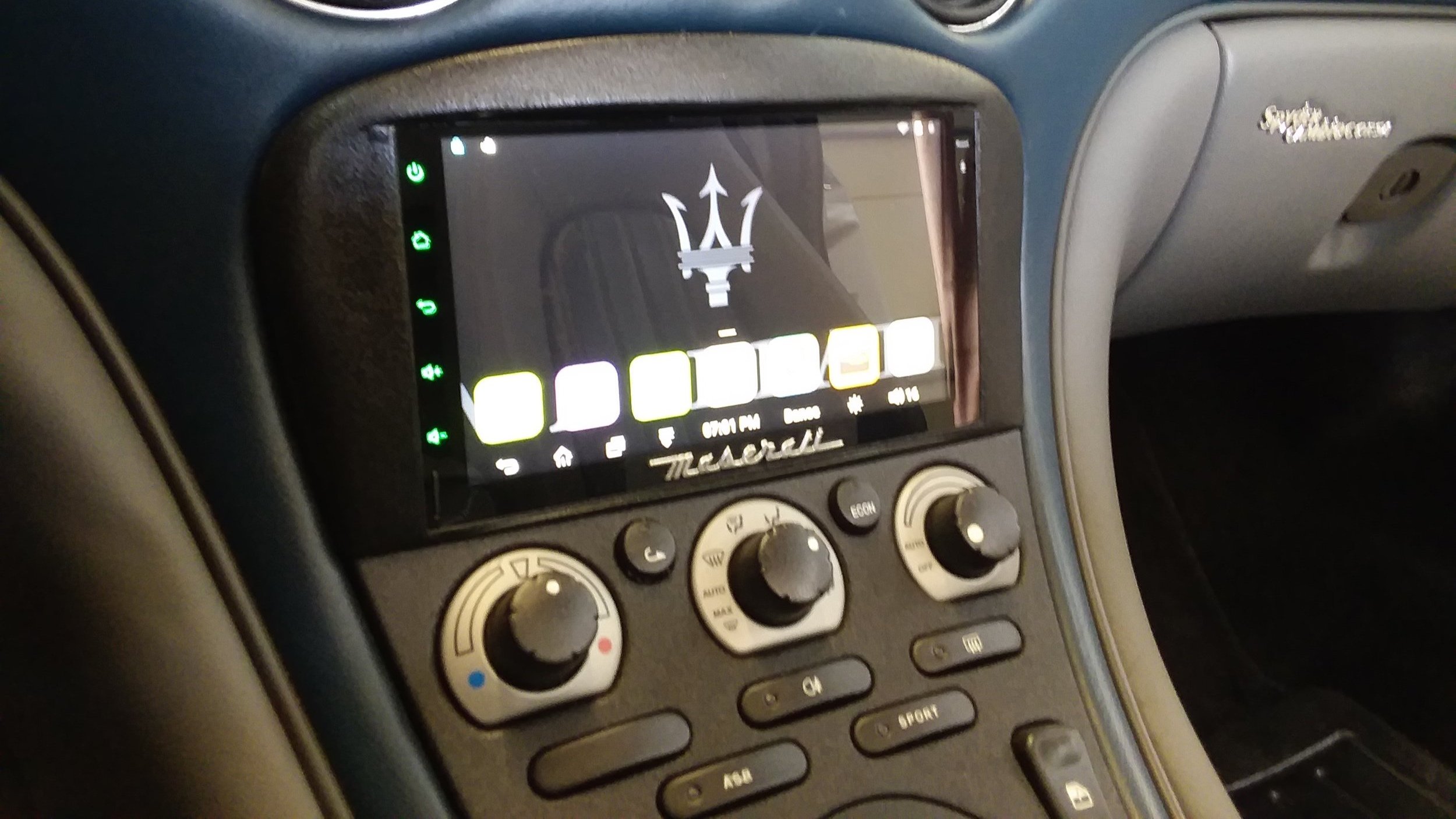
Manufacturers coat plastic interior surfaces with a specialized polymer to create that warm, slightly grippy feel that makes a car interior feel premium.
That coating contains plasticizers — chemical compounds that keep the material soft and flexible. The problem is that plasticizers aren't permanently bonded to the surface. Given enough heat, UV radiation, or humidity, they migrate outward and sit on top of the plastic as a sticky residue.
Dashboard surfaces in a parked car regularly hit 160–180°F on a hot day. UV rays pass through your windshield and break down the molecular bonds in soft-touch coatings.
Humidity causes the plasticizers to absorb moisture, weakening the coating structure. All three of these forces work together — and once the breakdown starts, each heat cycle pushes more plasticizer to the surface, accelerating the process.
Vehicles manufactured roughly between 2004 and 2015 are particularly vulnerable because of the specific coating formulations widely used during that period. It's not a defect in the traditional sense — the coatings performed as designed initially. They just weren't built to last 10–15 years of regular sun and heat exposure.
According to automotive materials research from the Society of Automotive Engineers, soft-touch coating formulations used between 2004-2013 proved particularly susceptible to this degradation process, which explains why so many luxury cars from that era experience this issue.
Why Luxury Cars Are More Affected Than Economy Vehicles
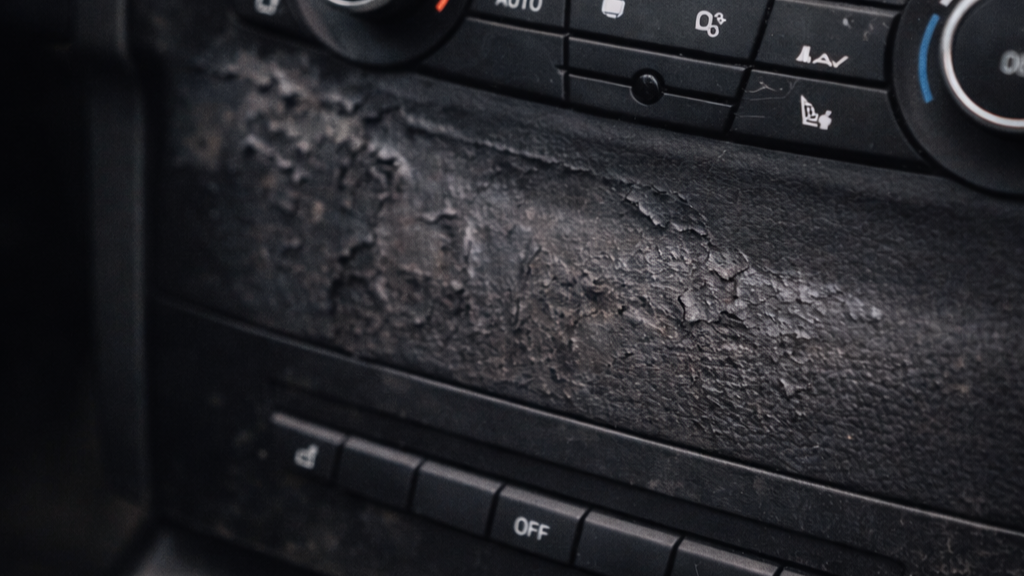
A typical economy car uses hard plastic for 80–90% of its interior surfaces. Luxury brands use soft-touch coatings on 60–70% of touchpoints — dashboards, center stacks, door panels, steering wheel trim, button housings, armrests. More premium coating coverage means more surface area that can degrade. The feature that makes a luxury interior feel expensive becomes its main weakness over time.
BMW door handles, Maserati control buttons, Lexus dashboards, and Toyota Camry dash panels from the 2007–2011 model years are among the most commonly reported problem areas. The issue spans makes and price points — it's the coating chemistry, not the brand.
San Diego Makes Sticky Car Interiors Worse — Here's Why
San Diego's UV index regularly hits 10 or above throughout summer, and stays elevated year-round compared to most of the country. That sustained UV exposure is harder on soft-touch coatings than the seasonal highs you'd see in northern climates — there's no real "off season" for dashboard degradation here.
The coastal marine layer adds another variable. Overnight, salt-laden moisture settles on and into vehicles parked outside. That moisture is absorbed by soft-touch coatings, weakening the structure and making the plasticizer migration happen faster. Vehicles parked in La Jolla, Ocean Beach, and Coronado deal with this consistently. Inland areas like El Cajon and Santee get less marine layer but hit higher peak temperatures, which compounds the heat side of the equation.
Most San Diego car owners don't have access to a garage. Street parking means unshielded sun exposure every single day. A vehicle that spends its life in an uncovered spot in North Park or Hillcrest ages its interior coating two to three times faster than one garaged overnight. If you've noticed that friends with the same car model have less interior stickiness, parking situation is usually the difference.
Which Parts of Your Car Interior Go Sticky First
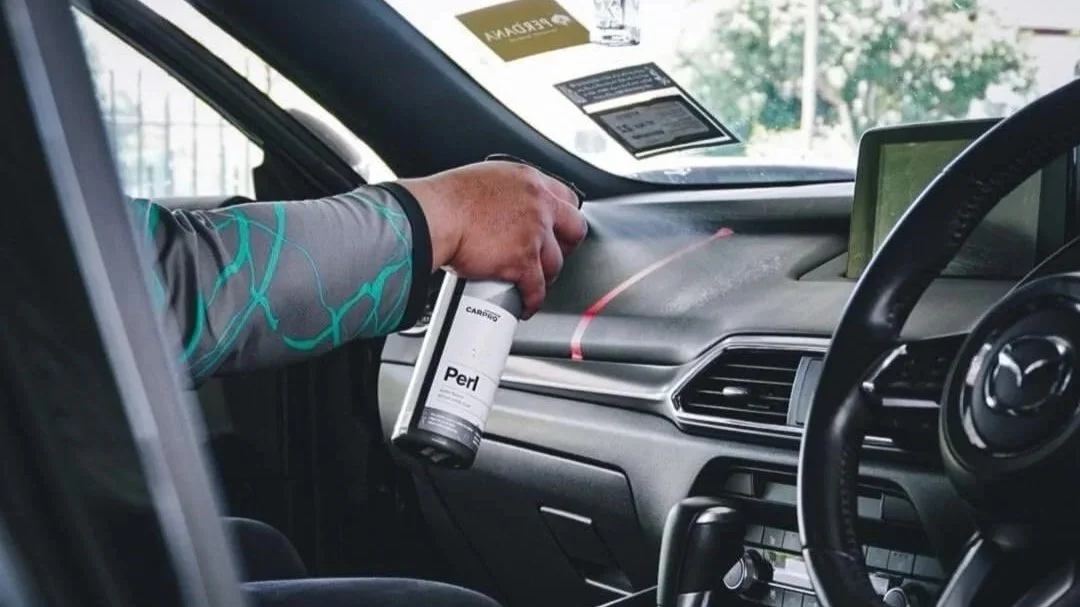
The sticky car interior problem almost always starts in the areas that get the most UV exposure and heat, then spreads from there as the coating continues to degrade.
Dashboard and Center Stack
The upper dashboard sits directly in line with the windshield and takes the most direct UV radiation. The center stack — the panel housing your climate controls, audio controls, and screen surround — tends to go tacky next because it's a high-touch zone that also catches reflected heat from the windshield. Air vent surrounds and gauge cluster hoods are typically close behind.
Steering Wheel, Control Buttons, and Sticky Buttons in Car
Multifunction buttons on the steering wheel, cruise control switches, and audio controls often develop sticky interior plastic at the button housing level. Sticky buttons in car interiors are one of the most commonly searched complaints — and they're almost always the soft-touch coating on the housing surrounding the button, not the button mechanism itself. The button may press fine while the rubberized coating around it is fully tacky. This is common on BMW, Mercedes-Benz, and Jaguar steering assemblies.
Door Panels and Armrests
Door armrests are high-contact surfaces that combine hand oils with heat — a combination that accelerates coating breakdown. Window switch panels, door handle surrounds, and storage pocket edges frequently develop stickiness on the same timeline as the dashboard. Once you notice it in one area, check all of these.
Early warning signs to watch for: a shiny or glossy appearance where the surface used to be matte, dust and lint sticking more readily than before, or a surface that feels slightly grippy rather than smooth. Checking after a few hours in direct sun makes these signs more obvious because heat pushes the plasticizer to the surface faster.
Can a Sticky Dashboard Damage the Surface Underneath?
Yes — and this is something most people don't realize until it's too late. When a sticky car dashboard is left untreated, the degrading coating continues to break down and bonds more aggressively to the base plastic underneath. Early-stage stickiness is relatively easy to remove. Late-stage stickiness, where the coating has essentially fused with the substrate, requires more aggressive treatment and may not come off cleanly.
Extended UV and heat exposure also weakens the base plastic itself over time. If the coating is degrading because of UV penetration, the same UV is affecting the plastic beneath it. Left long enough, the plastic can become brittle or discolored in a way that no surface treatment can reverse.
There's also the resale value angle. A sticky car interior doesn't just feel unpleasant — it signals to buyers that the vehicle hasn't been maintained. Trade-in appraisers factor interior condition into offers, and sticky surfaces are one of the more visible condition flags. Getting it treated early costs significantly less than replacement panels.
The takeaway: don't wait until it's worse. Light tackiness is straightforward for a professional to address. Advanced breakdown can require panel replacement.
How to Clean a Sticky Car Interior

There's a big difference between cleaning a sticky car dashboard and actually fixing the underlying problem. Cleaning removes surface contamination. Fixing addresses the degraded coating itself. Here's how to approach both — and where to draw the line on DIY.
What Actually Works for Light Tackiness
For early-stage stickiness — surfaces that feel slightly grippy rather than fully tacky — a pH-neutral automotive interior cleaner applied with a clean microfiber towel can temporarily improve the feel. Products like 303 Automotive Interior Cleaner or P&S Xpress Interior Cleaner are designed for this. Spray onto the towel first, never directly on the surface. Wipe gently and dry immediately.
This won't reverse the chemical breakdown, but it removes surface contamination that compounds the stickiness. Done regularly (monthly, not weekly — overcleaning accelerates wear), it can slow visible progression.
If cleaning doesn't resolve the stickiness, the coating has degraded past the point where surface cleaning helps — that's when professional restoration is the correct next step.
What Makes Sticky Car Interiors Worse
A few common products actively damage the coating further and should never be used on soft-touch plastic:
Rubbing alcohol or acetone — dissolves the degraded coating but also attacks the base plastic, causing permanent discoloration and rough texture
WD-40 — temporarily masks stickiness by covering it with oil, but traps heat, attracts dust, and accelerates further breakdown within days
Armor All or oil-based protectants — creates a greasy appearance and blocks proper bonding of any protective coating applied afterward
Household glass cleaners — the ammonia content reacts with soft-touch coatings and breaks them down faster
Magic erasers — abrasive enough to remove factory texture, leaving shiny patches that can't be reversed without panel refinishing
DIY attempts on advanced degradation tend to either fail or damage the base material, turning a $300–$500 problem into a $1,000+ replacement.
Professional Methods to Fix Sticky Interior Parts
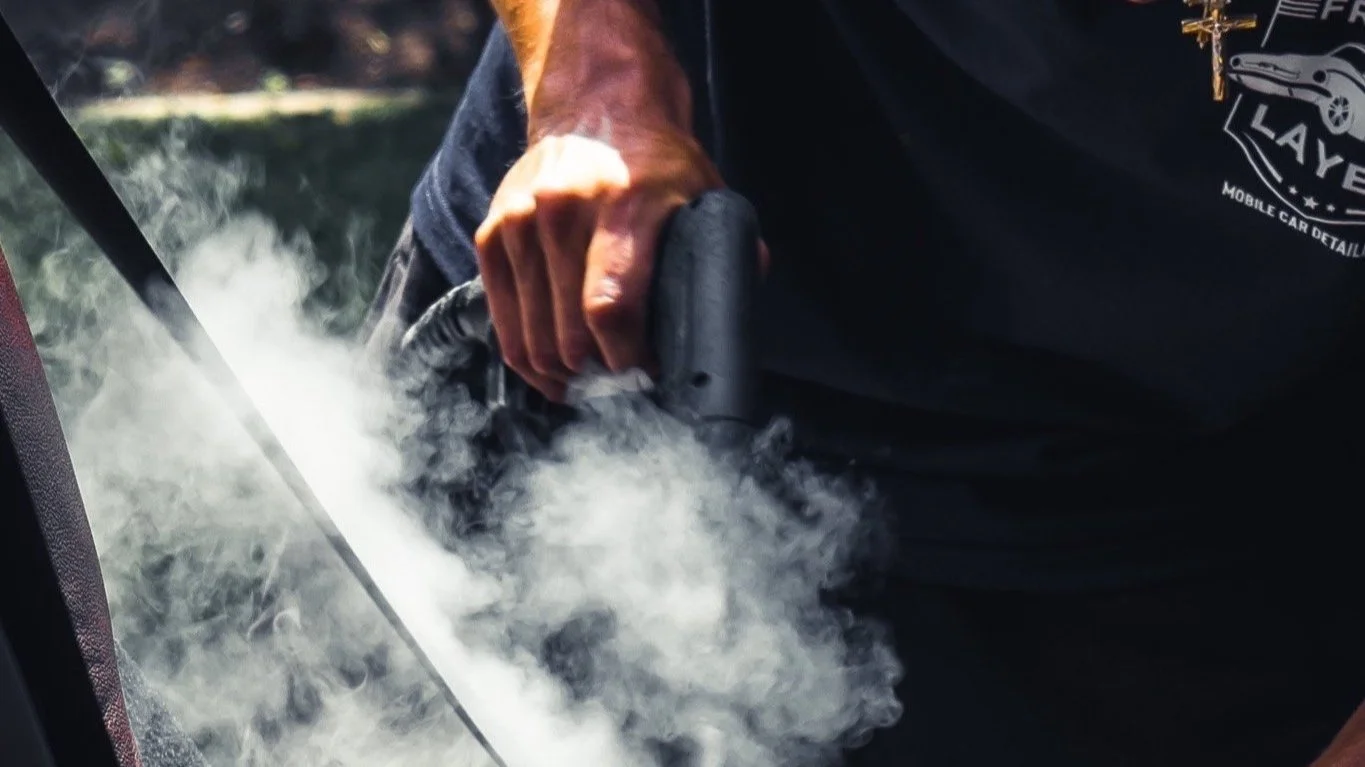
Professional detailing restoration of sticky interiors involves a precise four-step process that safely removes degraded coatings and protects surfaces from future problems. Here's exactly how we do it.
Step 1: Comprehensive Damage Assessment
Every restoration begins with thorough evaluation to determine the appropriate treatment approach.
What We Examine:
Severity Level: Light tackiness vs. heavy residue buildup
Affected Surface Area: Isolated spots vs. widespread degradation
Base Material Condition: Whether underlying plastic is intact or damaged
Coating Adhesion: How firmly degraded coating adheres to surface
Customer Priorities: Which areas bother them most
This assessment typically takes 15-30 minutes and is usually complimentary. It allows us to provide accurate pricing and realistic timeline expectations.
Step 2: Selecting Professional-Grade Products
Unlike consumer products, professional detailers use pH-balanced, surface-specific compounds designed for luxury vehicle interiors.
Our Product Selection Criteria:
Material Compatibility: Products must work safely on soft-touch plastics without causing discoloration
Efficacy: Must completely dissolve plasticizer residue without excessive scrubbing
Safety: Non-toxic, low-VOC formulations that won't harm other interior materials
Protection: Include UV inhibitors and anti-static properties
We avoid harsh solvents like acetone or alcohol-based cleaners that can damage base plastics. Instead, we use specialized surfactant-based cleaners formulated specifically for automotive soft-touch surfaces.
Products We Typically Use:
P&S Xpress Interior Cleaner (pH-neutral formula)
303 Aerospace Protectant (UV inhibitor)
Gtechniq I1 Smart Fabric (advanced polymer coating)
CarPro Inside (deep-cleaning formula)
Step 3: Safe Sticky Residue Removal
The actual removal process requires patience and proper technique to avoid damaging the base plastic.
Our Removal Process:
Stage 1 - Steam Treatment: We use commercial-grade steam cleaners (200-230°F) to soften and lift the degraded coating. Steam penetrates without chemicals, making it the safest first approach.
Stage 2 - Solvent Application: Specialized mild solvents dissolve remaining plasticizer residue. We apply with microfiber applicators, working in small sections to maintain control.
Stage 3 - Mechanical Removal: Soft-bristle detailing brushes gently agitate loosened residue without scratching. We avoid abrasive pads that could damage the base plastic texture.
Stage 4 - Complete Cleaning: Multiple passes with clean microfiber towels ensure all residue is removed. Surface should feel completely clean and non-tacky before proceeding.
Time Required: 30-90 minutes depending on severity and affected area.
Step 4: Surface Restoration and Protection
The final stage restores appearance and prevents recurrence of stickiness.
Restoration Process:
Surface Preparation: Thorough cleaning with isopropyl alcohol (70%) removes any remaining oils and ensures proper bonding of protective coatings.
Appearance Restoration: Application of color-matched restorers brings back the original matte or satin finish. This step is crucial for maintaining the factory appearance.
UV Protection Application: High-quality UV protectants create a barrier against sun damage. These products contain benzophenone or benzotriazole compounds that absorb UV radiation before it reaches the base material.
Ceramic Coating (Optional): For maximum longevity, we offer ceramic interior coatings that create a harder, more durable protective layer. These last 12-24 months vs. 3-6 months for standard protectants.
Final Inspection: We verify even coverage, proper appearance, and complete resolution of stickiness across all treated areas.
Benefits of Professional Detailing Services
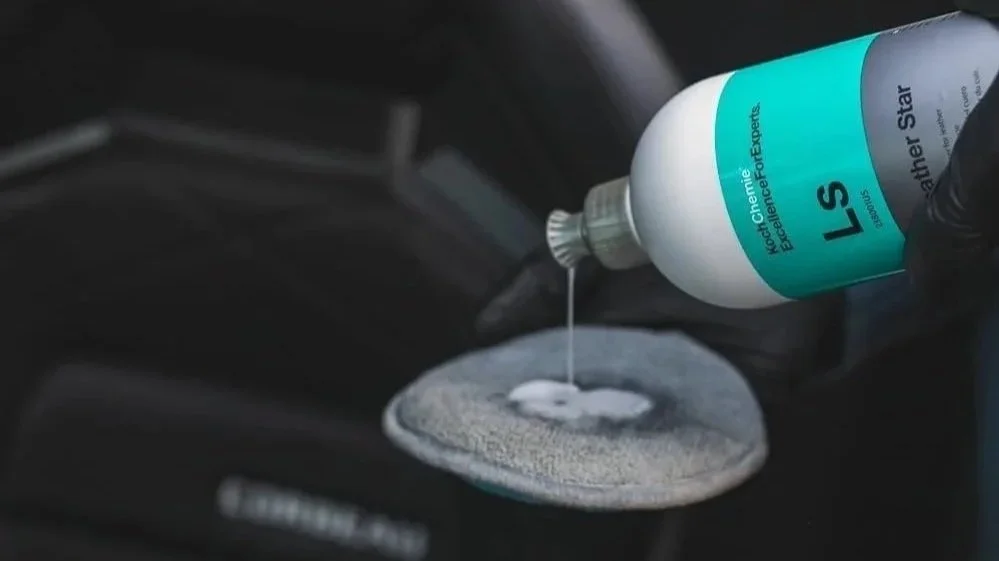
Beyond just fixing the immediate sticky problem, professional restoration offers several advantages that DIY approaches simply can't match.
Expert Knowledge and Experience
Professional interior detailers understand the chemistry behind soft-touch coating degradation. We know which products work on specific materials, optimal application techniques, and how to avoid damaging delicate surfaces.
With over 800 luxury vehicle interiors restored, I've encountered virtually every type of stickiness problem and developed specialized solutions for each scenario.
Specialized Tools and Products
We use equipment unavailable to consumers:
Commercial Steam Cleaners: 200-230°F consistent temperature with precise control—far superior to consumer steamers.
Professional-Grade Chemicals: pH-balanced formulations specifically designed for automotive soft-touch plastics. These products aren't sold in retail stores.
Precision Applicators: Specialized brushes, pads, and towels designed for delicate surface work without causing scratches or swirls.
Environmental Controls: Controlled temperature and humidity during application ensures optimal product performance and curing.
Long-Term Protection
Professional restoration doesn't just clean—it protects. Our UV-resistant sealants and ceramic coatings prevent the problem from recurring by:
Blocking UV radiation before it reaches base materials
Repelling dust and contaminants that accelerate degradation
Creating a moisture barrier that prevents plasticizer migration
Maintaining factory appearance and texture for years
Standard professional treatments last 12-18 months with normal use. Premium ceramic coatings extend protection to 24-36 months.
Insurance and Guarantees
Professional services come with important protections:
Liability Insurance: If we somehow damage your vehicle during service, our commercial insurance covers repairs—typically $2-5 million in coverage.
Satisfaction Guarantees: Most professional detailers (including our shop) offer 30-90 day guarantees. If stickiness returns during the warranty period, we retreat at no additional cost.
Clear Documentation: You receive detailed before/after documentation and maintenance instructions for long-term success.
Time Savings and Convenience
While you'd spend 8-12 hours researching, shopping, testing, and applying DIY solutions (often with mediocre results), professional restoration takes 2-6 hours of our time—not yours.
Many shops offer mobile service, coming to your home or office. You schedule an appointment, hand over the keys, and return to a fully restored interior.
Value Preservation
Perhaps most importantly, professional restoration protects your investment. Sticky interiors significantly impact resale value:
Trade-in offers typically decrease $2,000-$3,000 for sticky interior issues
Private party sales are harder with obvious interior problems
Auction values drop substantially on vehicles with degraded interiors
Professional restoration for $300-$800 prevents these losses while making your vehicle more enjoyable to drive and more attractive to future buyers.
DIY vs. Professional Sticky Dashboard Repair

For light, early-stage stickiness on a single area, a careful DIY approach with the right products can buy time. For anything more than that, the math generally works against you.
The most common DIY outcome isn't failure to fix the stickiness — it's making the problem more expensive. Rubbing alcohol on a BMW dashboard that turned gray afterward.
An abrasive pad that removed factory texture from door panels, leaving mismatched shiny patches.
Armor All applied over a sticky center stack that now needs to be professionally stripped before any protective coating will adhere. In each case, the DIY attempt increased the total cost beyond what professional restoration would have been from the start.
If you're going to attempt any DIY cleaning on sticky interior plastic, use only pH-neutral automotive interior cleaners, only microfiber towels (no abrasive materials), and test on a hidden area first.
Stop immediately if the surface color changes or the texture looks different after wiping. Those are signs you've hit the base plastic and need professional help before going further.
Beyond the risk of damage, there's the question of protection. A professional service removes the degraded coating and applies UV-resistant protection that prevents the problem from returning on the same timeline. DIY cleaning removes surface contamination but does nothing to stop the underlying plasticizer migration from continuing.
How Fresh Layer Mobile Detailing Fixes Sticky Car Interiors in San Diego
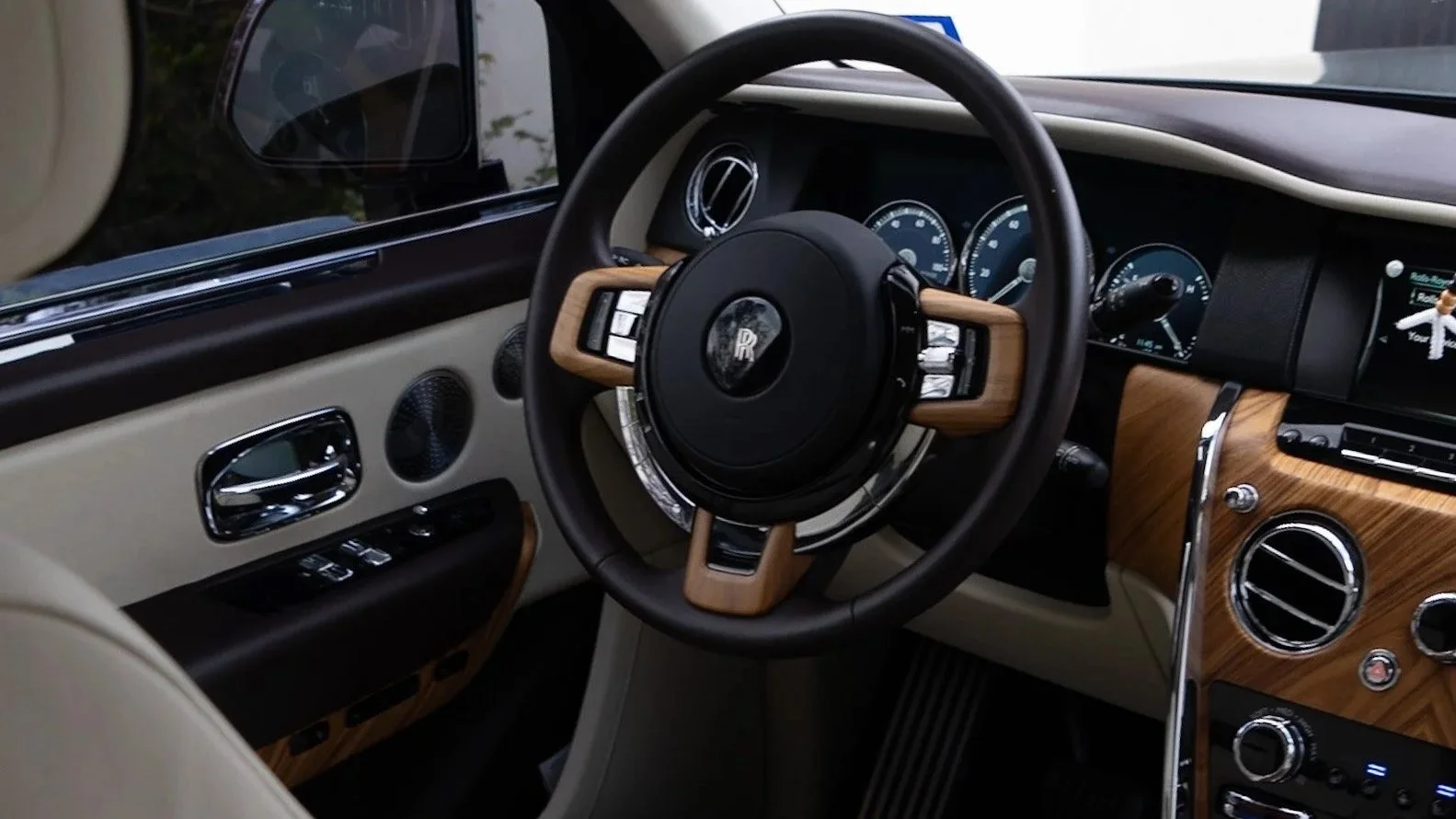
Fresh Layer handles sticky car interior restoration as a standalone service or as part of a full interior car detailing in San Diego. We come to your location — home, office, or anywhere you park — so there's no drop-off, no waiting room, and no leaving your vehicle at a shop for a day.
The process follows the four-stage approach outlined above: assessment, steam treatment, solvent removal, and UV-protective sealant. We use commercial-grade steam equipment, P&S Xpress Interior Cleaner, and 303 Aerospace Protectant as our standard protection layer. For customers who want longer-lasting results, we offer Gtechniq I1 ceramic interior coating, which provides 12–24 months of UV barrier protection.
Professional sticky interior restoration typically ranges from $150 to $800 depending on the number of affected areas and whether ceramic coating is added. Severely degraded surfaces or full-cabin treatment fall toward the higher end. We provide a free assessment and written quote before any work begins — no surprises.
And if anything were to go wrong during service, you're covered — Fresh Layer carries $2 million in commercial liability insurance. That protection doesn't come with a DIY attempt.
Choosing the Right Professional Detailing Service

Not all detailing services are created equal. Here's how to select a provider who'll properly fix your sticky interior problem.
Experience with Luxury Vehicles
Look for detailers who specialize in high-end cars. General car wash chains often lack the expertise and products needed for luxury interiors.
Questions to Ask:
"How many luxury vehicle interiors have you restored?"
"Do you have experience with my specific make and model?"
"Can you show me before/after photos of sticky interior restorations?"
Red Flags:
Claim they can fix any problem with universal products
Can't explain their process in detail
No photos or references available
Primarily focus on economy vehicles
Green Flags:
Specialize in European or luxury brands
Member of International Detailing Association
Can explain chemistry behind coating degradation
Show detailed portfolio of similar work
Reputation and Reviews
Check multiple review sources:
Where to Look:
Google Business reviews (most comprehensive)
Yelp (detailed customer experiences)
Car enthusiast forums (BMW, Mercedes, Lexus specific)
Social media (Instagram, Facebook for photo evidence)
What to Look For:
Overall rating 4.5+ stars
Recent reviews (within last 6 months)
Specific mentions of sticky interior fixes
Photos in reviews showing actual results
Responses to negative reviews (shows professionalism)
Warning Signs:
Complaints about returned stickiness
Reports of damage to interiors
Defensive or dismissive responses to criticism
No detailed service descriptions
Product Knowledge and Transparency
Quality detailers openly discuss products and processes.
They Should Explain:
Specific products they use (brand names)
Why those products are appropriate for your vehicle
Potential risks and limitations
Expected longevity of results
Maintenance recommendations
They Should Avoid:
"Secret formulas" or vague product descriptions
Guarantees that seem too good to be true
Pressure tactics or urgency creation
Deflection when asked about specific techniques
What We Use and Why: At Fresh Layer Mobile Detailing, we exclusively use:
P&S Xpress Interior Cleaner (pH balanced, safe for all soft-touch surfaces)
303 Aerospace Protectant (40+ years proven UV protection)
Gtechniq I1 ceramic coating (2-year durability for premium services)
Only microfiber towels (no abrasive materials)
Pricing Transparency
Professional sticky interior restoration should cost $150-$800 depending on severity. Be wary of prices significantly outside this range.
Pricing Red Flags:
Under $100 (likely cutting corners or lacking expertise)
Over $1,200 (unless including full interior detail and ceramic coating)
Unclear pricing structure ("depends on what we find")
Upselling multiple unnecessary services
Reluctance to provide written estimate
Good Pricing Practices:
Free initial assessment and quote
Tiered pricing based on affected area
Clear explanation of what's included
Written estimate before work begins
No surprise charges
Warranties and Guarantees
Reputable services stand behind their work.
Standard Warranty:
30-90 days satisfaction guarantee
If stickiness returns, free re-treatment
Clear written terms
No fine print exclusions
What's NOT Covered (Normal):
Damage from customer use of harsh cleaners
New stickiness in untreated areas
Normal wear from extended use
Exterior damage (not part of interior service)
Mobile vs. Shop-Based Services
Both can be excellent—choose based on your needs.
Mobile Service Advantages:
Convenience (they come to you)
No travel time required
Can watch work being performed
Often slightly lower overhead costs
Shop-Based Advantages:
Controlled environment (temperature, humidity)
More specialized equipment available
Climate-controlled for optimal curing
May offer additional complementary services
Our Recommendation: For sticky interior restoration specifically, controlled environment (shop-based) often produces better results because temperature and humidity affect product performance. However, experienced mobile detailers with proper equipment can achieve excellent results.
Frequently Asked Questions About Sticky Car Interiors
-
Interior parts in high-end cars often get sticky due to the degradation of soft-touch coatings on surfaces like dashboards, door panels, and steering wheels. Exposure to heat, humidity, and improper cleaning agents can accelerate this process, causing the material to break down and become tacky.
-
Sticky interior parts are commonly reported in high-end vehicles with soft-touch coatings. Some of the car models known to experience this issue include:
Ferrari 458 and Ferrari 488
Maserati Quattroporte
Lexus SC430
Porsche 911 (997 series)
BMW 7 Series (E65/E66)
Jaguar XJ (X350/X358)
Lamborghini Gallardo
Toyota Avalon (2000s models)
-
Sticky interior parts can often be fixed through professional detailing methods that involve safely removing the sticky residue and restoring the surface. In most cases, replacement is only necessary if the material is severely damaged.
-
Professional detailers fix sticky interior parts by first assessing the condition of the affected areas. They then use specialized cleaning agents, steam cleaners, and mild solvents to remove the sticky residue gently. After cleaning, the surfaces are restored with high-quality products and protected with UV sealants to prevent future stickiness.
-
DIY methods can be risky for high-end cars, as using the wrong products or techniques can cause further damage to delicate materials. It’s best to leave this issue to professional detailers with expertise and specialized tools to handle luxury vehicles safely.
-
Maintaining your car’s interior regularly is essential to prevent sticky interior parts. Avoid using harsh cleaning agents and keep your vehicle out of direct sunlight when possible. Regular professional detailing can also help protect soft-touch surfaces from becoming sticky.
-
High-end cars use soft-touch coatings to provide a premium feel and enhance the luxury experience. However, these coatings are prone to degradation, especially when exposed to heat, humidity, or incompatible cleaning products, leading to sticky interior issues.
Conclusion
Sticky interior parts in high-end cars are a common but fixable problem caused by soft-touch coating degradation. While it might feel frustrating to experience this in a luxury vehicle, understanding the science behind it—plasticizer migration from heat, UV exposure, and humidity—helps you make informed decisions about restoration.
Key Takeaways:
Nearly 70% of luxury vehicles from 2004-2013 develop some level of sticky interior issues
Professional restoration (S300-$800) costs significantly less than replacement ($1,500-$8,000)
DIY attempts often worsen the problem, increasing total repair costs
Prevention through UV protection, proper cleaning, and humidity control extends coating life
Professional services include warranties and eliminate damage risks
The sticky interior problem isn't just about aesthetics—it can reduce your vehicle's resale value by $2,000-$5,000 if left untreated. Professional restoration not only solves the immediate problem but protects your investment and maintains your luxury car's premium feel.


