Must-Have Products for Protecting Your Car's Dashboard
Your car's dashboard takes a beating every single day. Between the sun's UV rays, extreme heat, and constant exposure, it's no wonder dashboards crack, fade, and warp over time. The good news? A little protection goes a long way.
At Fresh Layer Mobile Detailing, we've tested dozens of dashboard protectants on hundreds of vehicles across San Diego. This guide breaks down the best products that actually work, how to use them correctly, and what to avoid if you want your dashboard to last.
Why Dashboard Protection is Non-Negotiable
Most people don't think about dashboard care until it's too late. Here's what happens when you skip protection:
UV damage happens fast. Even a few months of direct sunlight can start the fading process. After a year or two, you'll see visible cracks—especially on black dashboards.
Your resale value tanks. A cracked dashboard can knock $500-$1,500 off your car's value. Buyers notice interior condition immediately, and a damaged dashboard screams "neglected vehicle."
Replacement costs are brutal. Depending on your car, a new dashboard runs $1,000-$2,500 installed. Compare that to spending $15 on a good protectant every few months.
Heat damages electronics. Modern dashboards house sensors, displays, and wiring. Excessive heat from unprotected surfaces can shorten their lifespan.
The bottom line: dashboard protection isn't optional if you care about your car's longevity.
Best Dashboard Protectants of 2025
| Product | Best For | Finish | Key Feature | Price Range |
|---|---|---|---|---|
| 303 Aerospace Protectant | Overall UV Protection | Matte/Satin | SPF 40, works on all materials | $10-$15 |
| Meguiar's Black Plastic Restorer | Faded Dashboards | High Gloss | Restores color to aging plastic | $8-$12 |
| Car Guys Plastic Restorer | All-in-One Solution | Deep Black | Long-lasting UV inhibitors | $15-$20 |
| Armor All Original Protectant | Budget Option | Semi-Gloss | Affordable, readily available | $5-$8 |
Quick Take: If you only buy one product, get 303 Aerospace. It's the gold standard for a reason—strong UV protection without the greasy residue that attracts dust.
UV-Blocking Sprays
These sprays create a barrier between your dashboard and harmful UV rays while keeping it looking fresh.
303 Aerospace Protectant
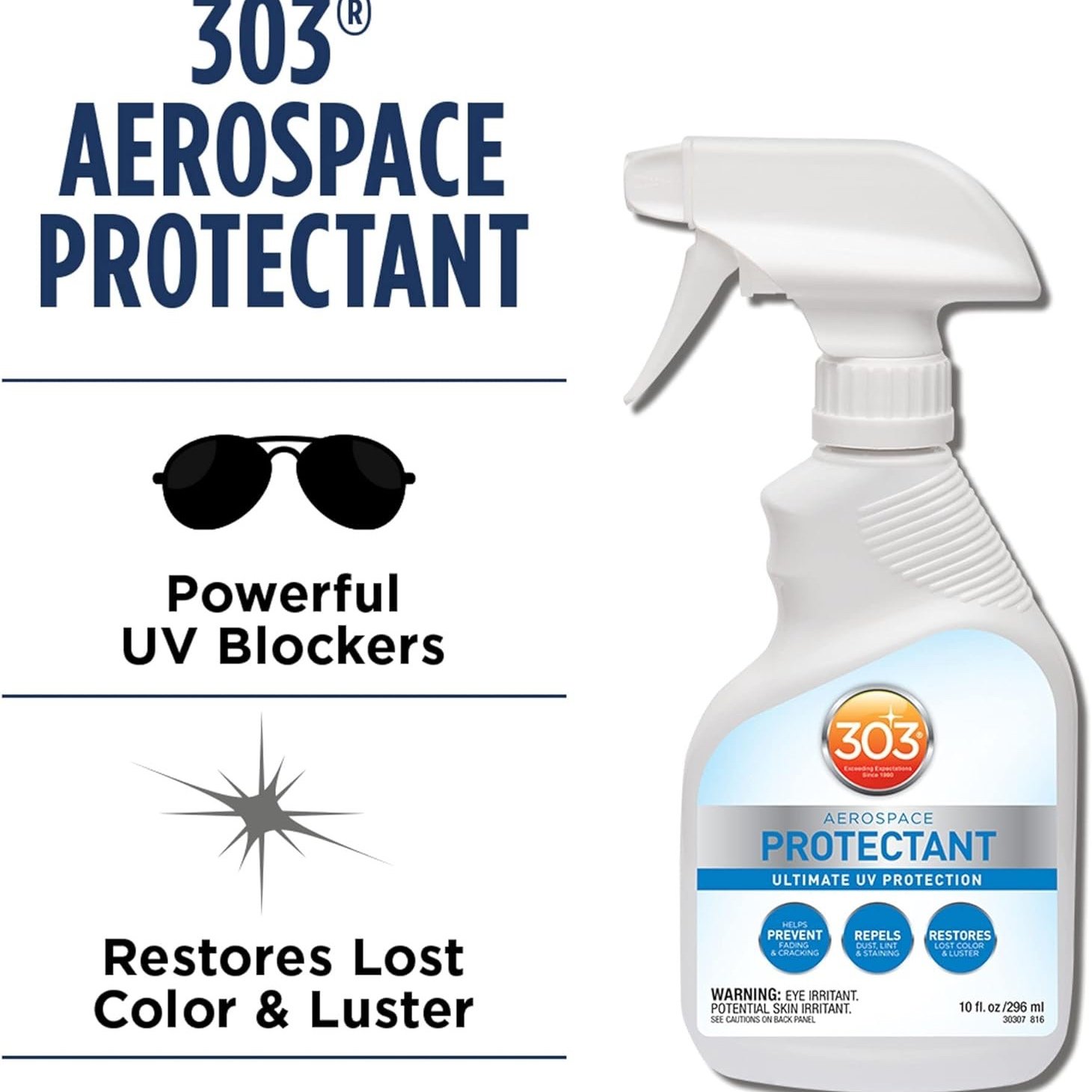
Provides SPF 40 UV protection for vinyl, plastic, and leather.
Repels dust and stains, keeping your dashboard clean.
Leaves a matte finish for a clean, non-greasy look.
Meguiar's Black Plastic Restorer

Restores faded plastics to their original color.
Offers long-lasting UV protection with enhanced gloss.
Perfect for bringing back the shine to aging dashboards.
CAR GUYS Plastic Restorer

All-in-one solution for plastic and vinyl.
Provides a non-greasy, deep black finish.
Includes UV inhibitors for protection against sun damage.
Dashboard Covers

Dashboard covers are an excellent option for preventing direct sunlight damage, especially if your car is frequently parked outside.
Custom-Fit Dash Mats
Tailored specifically to your vehicle’s model for full coverage.
Available in various materials and colors to match your car’s interior.
Helps prevent cracks, fading, and heat buildup.
Universal Sunshades
Blocks direct sunlight from entering the car when parked.
Reduces interior temperatures and protects the dashboard and other surfaces.
Easy to use and ideal for long-term parking in sunny conditions.
Alternative Protection: Dashboard Covers & Sunshades
Sometimes the best defense is blocking the sun entirely. Here are your non-chemical options.
Custom-Fit Dashboard Covers
What they are: Carpet or velour mats tailored to your specific vehicle model that sit on top of your dashboard.
Pros:
100% UV blockage (the sun never touches your actual dashboard)
Reduces interior heat by 15-20°F
Hides existing damage
Available in multiple colors to match your interior
Cons:
Can look aftermarket/cheap depending on quality
Reduces visibility slightly (covers dashboard edge near windshield)
Cost $30-$80 depending on vehicle
Best for: Vehicles parked outside in extreme heat climates, or if you want to hide existing cracks.
Recommended brands: Covercraft DashMat, Dash Designs
Windshield Sunshades
What they are: Reflective or insulated panels that cover your windshield when parked.
Pros:
Blocks direct sunlight from hitting dashboard
Reduces cabin temperature by 30-40°F
Protects entire interior, not just dashboard
Inexpensive ($15-$30)
Cons:
Only works when parked
Hassle to put up/take down daily
Can be stolen if left visible
Best for: Daily use if you park outside, or for long-term parking (airport, vacation).
Recommended brands: EcoNour, Shade-It
Window Tinting
What it is: Professional film applied to windows that blocks UV rays.
Pros:
Blocks up to 99% of UV rays while driving
Reduces heat by 35-50%
Protects entire interior, not just dashboard
One-time investment
Cons:
Cost: $200-$600 depending on vehicle
May not be legal in all states (check local laws)
Doesn't help when parked facing the sun
Best for: Long-term protection if you can afford the upfront cost.
How to Protect Your Dashboard from Sun Damage (Step-by-Step)
Here's the exact process we use on client vehicles. Follow these steps every 3-4 weeks for best results.
Step 1: Clean First, Protect Second
Never apply protectant over dust or dirt. You'll just trap debris under the coating.
What to do:
Use a microfiber cloth and an interior cleaner (diluted 10:1)
Wipe down the entire dashboard surface
Use a detailing brush for air vents and tight spaces
Let it dry completely (2-3 minutes)
Pro tip: If your dashboard feels sticky after cleaning, there's old protectant buildup. Use an isopropyl alcohol solution (70% alcohol, 30% water) to strip it, then clean again with interior cleaner.
Step 2: Apply Protectant in Thin, Even Layers
More product doesn't mean better protection—it just means more dust attraction.
What to do:
Spray protectant onto a microfiber applicator pad (NOT directly on the dashboard)
Work in 2x2 foot sections
Apply in circular motions with light pressure
Immediately buff with a clean microfiber towel to remove excess
Why this matters: Direct spraying creates pooling in crevices and causes overspray on windows. The pad gives you control.
Step 3: Don't Forget These Hidden Areas
Most people miss these spots:
Door panels (especially the top edge that gets direct sun)
Steering wheel (if vinyl or plastic, not leather)
Center console around the cupholders
Dashboard edges where it meets the windshield
Step 4: Reapply on a Schedule
UV protectants don't last forever. Here's the real-world timeline:
Every 3-4 weeks for cars parked outside daily
Every 6-8 weeks for garage-kept vehicles
Every 2 weeks if you live in extreme heat (Arizona, Nevada, Southern California)
Set a phone reminder. It takes 10 minutes and saves you thousands down the road.
Choosing the Right Protectant for Your Material (Vinyl vs. Plastic vs. Leather)
Not all dashboards are created equal. Using the wrong product can actually cause damage.
Vinyl Dashboards (Most Common)
Identification: Soft texture, slight give when pressed, found in most cars from the 1990s onward.
Best products:
303 Aerospace (our top pick for vinyl—won't leave residue)
Car Guys Plastic Restorer (great for maintaining deep black color)
What to avoid: Products with petroleum distillates or silicone. They cause long-term degradation of vinyl.
Hard Plastic Dashboards
Identification: Rigid feel, no flex, common in older vehicles and economy cars.
Best products:
Meguiar's Black Plastic Restorer (specifically formulated to restore faded plastic)
303 Aerospace (still works well for protection)
Special note: Faded plastic dashboards need a restorer first, then a protectant. Don't skip the restoration step or you're just coating faded plastic.
Leather Dashboards (Rare, High-End Vehicles)
Identification: Natural grain pattern, warm to touch, found in luxury vehicles (Porsche, Audi, etc.).
Best products:
Leather Honey Leather Conditioner (NOT the products listed above)
Dedicated leather UV protectants
Critical warning: Never use vinyl/plastic protectants on real leather. They'll dry it out and cause cracking. If you're not sure if your dashboard is leather, check your owner's manual or ask a detailer.
Common Dashboard Protection Mistakes (And How to Avoid Them)
Mistake #1: Using Household Cleaners
Why it's bad: Products like Windex, Lysol, or 409 contain ammonia and alcohol that dry out vinyl and plastic, causing cracking.
What to do instead: Use cleaners specifically designed for automotive interiors. They're pH-balanced and won't strip protective coatings.
Mistake #2: Applying Too Much Product
Why it's bad: Excess protectant creates a sticky surface that attracts dust like a magnet. You'll end up with a dirty dashboard within days.
What to do instead: Less is more. One light coat is sufficient. If you can see wetness after buffing, you used too much.
Mistake #3: Skipping the Cleaning Step
Why it's bad: Dirt trapped under protectant acts like sandpaper, wearing down your dashboard faster than if you'd done nothing.
What to do instead: Always clean thoroughly first. It takes an extra 5 minutes but triples the lifespan of your protection.
Mistake #4: Only Protecting the Dashboard
Why it's bad: Sun damage affects door panels, center console, and steering wheel too. Focusing only on the dashboard leaves other surfaces vulnerable.
What to do instead: Treat all UV-exposed vinyl and plastic surfaces in your interior at the same time.
FAQ Section
-
For best results, apply a UV protectant spray every 3-5 weeks. If your car is regularly exposed to intense sunlight, you may need to apply it more frequently.
-
No. Household cleaners often contain harsh chemicals that can damage your dashboard. Always use cleaners designed specifically for automotive interiors.
-
Yes. Dashboard covers provide a physical barrier that protects your dashboard from direct sunlight. Use them in conjunction with UV protectants for maximum protection.
-
Signs include fading, discoloration, cracking, and a dry or chalky surface. If you notice these, it’s time to take extra measures to protect your dashboard.
-
While parking in a garage reduces UV exposure, your dashboard can still benefit from regular protectant applications to guard against dust, stains, and wear from daily driving.
-
Some products, like Meguiar's Ultimate Black Plastic Restorer, can improve the appearance of a faded or damaged dashboard, but severe damage may require professional restoration.
Final Thoughts: Protection Pays Off
Here's the truth most people learn too late: replacing a cracked dashboard costs $1,000-$2,500. Preventing that damage costs less than $50 per year.
At Fresh Layer Mobile Detailing, we've seen countless cars where a little preventive care would have saved thousands in interior restoration. Don't let your dashboard be the next casualty of San Diego sun.
Action plan for this week:
Clean your dashboard thoroughly with interior cleaner
Apply one of the protectants from this guide (our pick: 303 Aerospace)
Set a monthly reminder to reapply
Get a windshield sunshade if you park outside daily
Your future self—and your wallet—will thank you.
Need help? Fresh Layer Mobile Detailing offers full interior protection services throughout San Diego County. We'll deep-clean your interior and apply professional-grade protectants that last